


Published : 02 Oct 2016, 07:40 PM
Updated : 19 Oct 2022, 05:30 PM


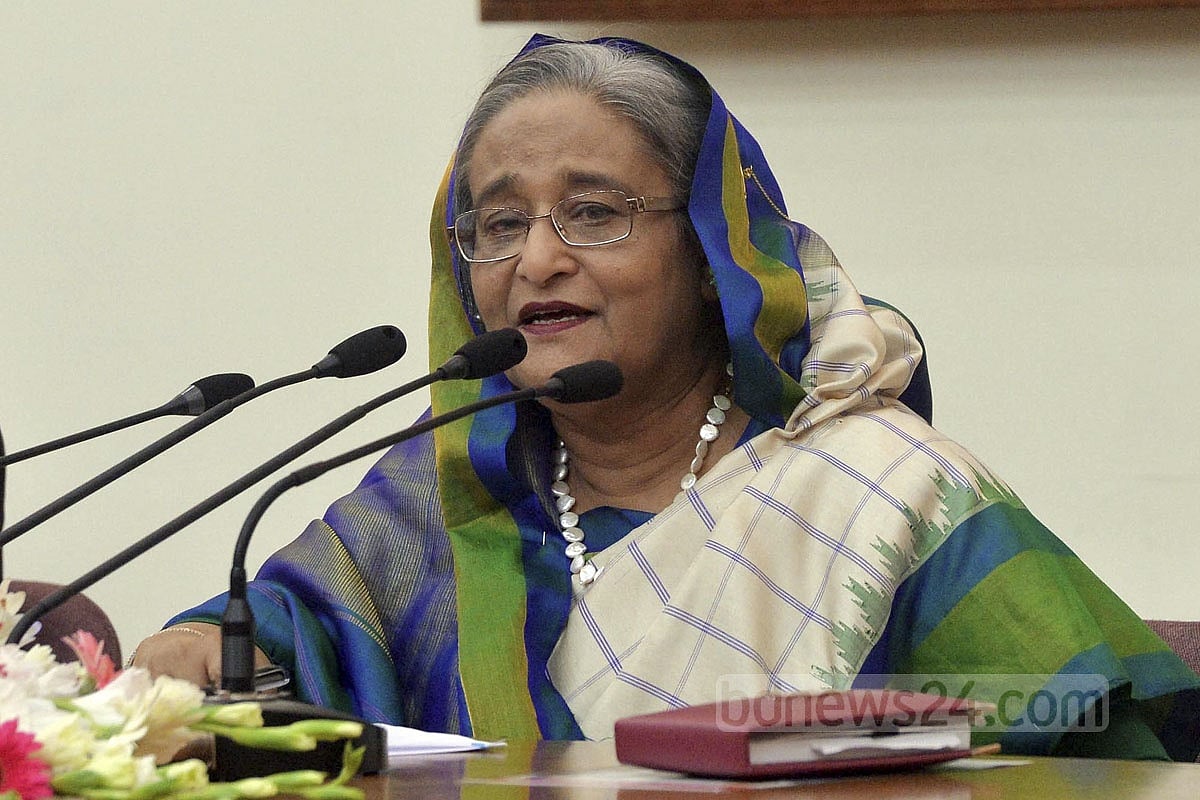
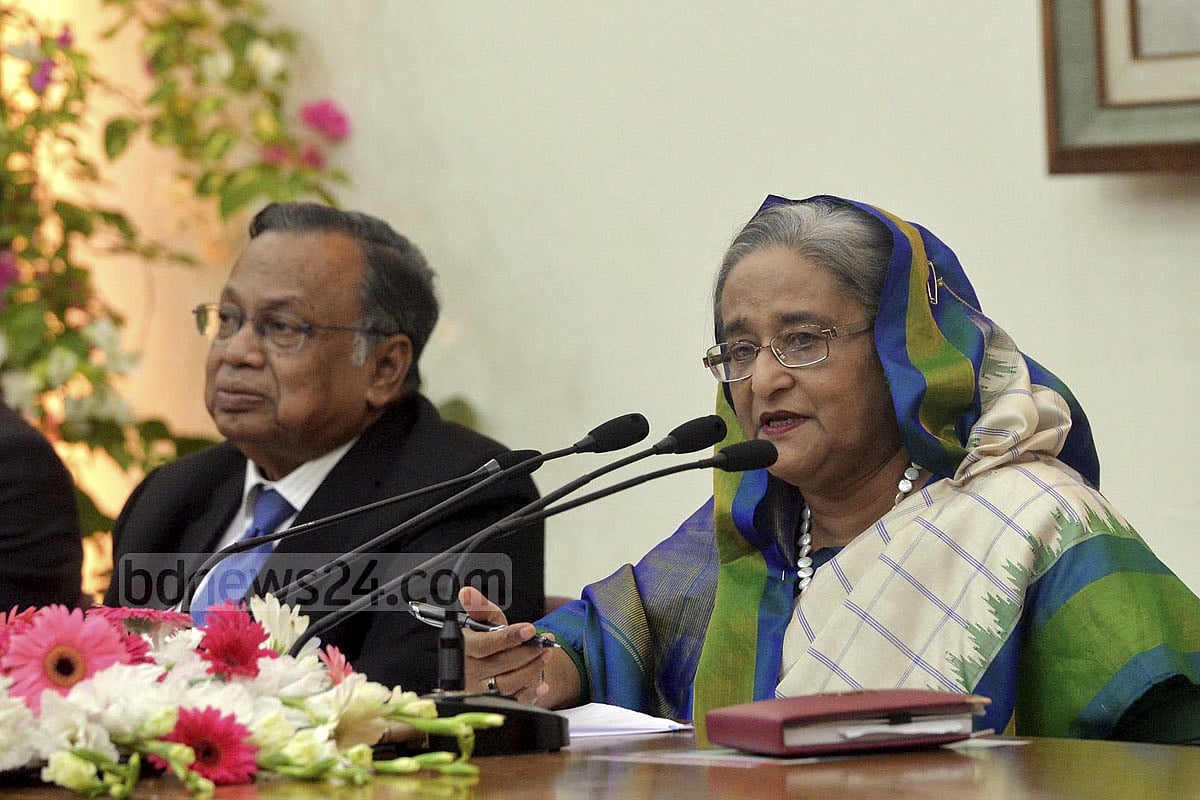
Her remarks came in response to a question on Sunday at a press conference at Ganabhaban on her recent visits to Canada and the US.
State-owned BTV and Bangladesh Betar broadcast the event live. Journalists, cabinet members and leaders of the ruling Awami League were present on the occasion.
Channel i journalist Tarikul Islam Masum asked the prime minister whether the government would re-assess diplomatic ties with Pakistan against the backdrop of Islamabad’s repeated interference in the war crimes trials in recent times.
He also wanted to know whether there were any plans to remove Pakistan from the South Asian regional organisation SAARC.
On the issue of Pakistan's stance on the war criminals, Sheikh Hasina said, "Pakistan has expressed its opinion... it doesn't matter to us what a defeated side says. We will continue doing what we must do."
She reminded the media of how BNP founder Ziaur Rahman, after seizing power through a coup, had stopped the trials of war criminals during his regime and how his wife, BNP chief Khaleda Zia, had given places in her 2001-06 cabinet to two collaborationist Jamaat-e-Islami leaders.
Sheikh Hasina wondered if Khaleda Zia and her party had any right now to be in the political arena of the country.
"I would like to say that the decision that needs to be made first is whether you want to sever your relations with them," she said.
Bangladesh became independent on Dec 16, 1971, after a nine-month-long bloody war with Pakistan.
Both the Jamaat and the Muslim League had collaborated with the Pakistani occupation army during the war to prevent the Bengali nation from achieving freedom.
They formed several militia forces, including Razakars, Al-Badr and Al-Shams, to aid the Pakistan army in perpetrating genocide in Bangladesh.
Khaleda Zia appointed top Jamaat leaders Motiur Rahman Nizami and Ali Ahsan Mohammad Mujahid, two notorious war criminals, ministers when the BNP-Jamaat alliance came to power in October 2001.
Bangladesh's war crimes tribunal in one of its verdicts had even observed that giving them ministerial berths was a slap on the faces of millions of martyrs.
Pakistan had criticised Bangladesh's judicial process and war crimes trials after Nizami, Mujahid and another Jamaat leader Mir Quasem Ali were hanged.
Lodging a strong protest, the Bangladesh government then said that Pakistan was continuing its 'malicious campaign' against the trials, behaviour that was an impediment to Dhaka-Islamabad bilateral relations.
Sheikh Hasina on Sunday said, "About severing relations with Pakistan ... we have made our protests and that's it for now."
About the SAARC issue, the prime minister said a summit usually gets postponed in line with the rules even if one state decides to boycott it.
"Bangladesh will go along with the other nations on the basis of decisions taken by all member states," she added.
She said Bangladesh decided to boycott the summit because of 'Pakistan's remarks regarding the trials of the war criminals'.
Nepal, the current chair of the eight-nation regional grouping, will decide about the next summit, she said.
About relations with Pakistan, Hasina quipped, "Diplomatic ties will remain along with the quarrel."
Responding to a question from Daily Samakal Editor Golam Sarwar, the prime minister said she cannot comment on whether SAARC would remain or break up.
She, however, mentioned that the SAARC charter does not address the issue of discussion over bilateral crisis. "The SAARC charter is not solving the problems."
Hasina was worried over an escalation of violence in disputed Kashmir between India and Pakistan.
"This is a matter of concern. This will hurt us, too. But this is a matter of those two countries. They can sit down on their own for talks and find a solution," she said while answering a question from Bangladesh Federal Union of Journalists President Manjurul Ahsan Bulbul.
Stretching her answer for another part of Bulbul's query, she rejected the BNP's proposal for a dialogue over the appointment of the chief election commissioner.
Hasina said the Election Commission (EC) formed during the BNP-Jamaat coalition regime had published a list containing more than 10 million fake voters.
"Do they want another such EC that will create another list of fake voters? You don't need anything else if you have 10 million fake voters."













