


Published : 29 May 2013, 06:03 AM
Updated : 23 Apr 2022, 05:25 PM


'Karo Posh Mash, Karo Sarbonash' -- the time-old Bengali proverb meaning 'blessing for some, curse for others' is apt for 'Mahasen'.
The recent cyclone ravaged crops in southern Bangladesh, but farmers in the country's north say they were blessed by the rains that came with the storm.
‘Mahasen’ weakened as it approached Bangladesh on May 16, but it caused much damage in the southern districts, where at least 12 died.
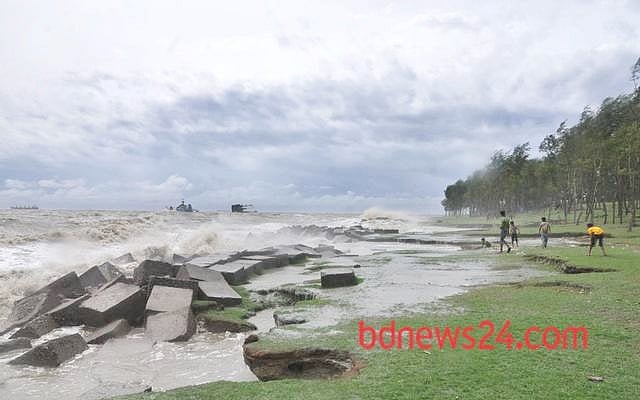
Chars of coastal areas were flooded due to overflowing tides. Heavy rains caused by the storm also inundated several other areas in the country's coastal south. But up north the picture was different.
The contrast emerged loud and clear when bdnews24.com contacted officials in charge of extension work in 10 agricultural zones across the country – Dhaka, Rajshahi, Rangpur, Sylhet, Mymensingh, Chittagong Hill Tracts, Chittagong, Barisal, Jessore and Comilla.
The interaction was to check on the impact of 'Mahasen' on the country's agriculture.
It seemed that Barisal zone was the worst hit. . Additional Director Reazul Karim said crops in 11 districts of the zone were badly damaged, except in Faridpur, Madaripur and Rajbari.
He said nearly 32,664 hectares under crops were ravaged in Patuakhali, Borguna, Barisal, Bhola, Jhalkathi, Pirojpur, Gopalganj and Shariatpur.
Patuakhali, where ‘Mahasen’ hit first, was worst affected -- 16,719 hectares cultivated by 98,369 farmers with Aus paddy, Bijtala, pulses, vegetables, nuts, chilli and others vegetables completely flattened.
Tidal flooding ruined ponds and water bodies used for fisheries in Patuakhali’s Sadr, Kalapara, Galachipa and Dashmina areas.
Nearly seventy percent of the Patuakhali farmers, having lost their crop, are weighed down by commitments to repay instalments of loans taken from the likes of BRAC and Grameen Bank, district administration says.
Chittagong zone chief Abdul Malek said extensive crop damages have been reported from Noakhali, Lokkhipur and Feni. But, many farmers were saved because they had harvested their crop before ‘Mahasen’.
Some 4,887 hectares sowed with Aus paddy, Bijtala, Soybean, vegetables, nuts and fruits and others vegetables were damaged. Soybean crop may be the worst hit.
Chittagong Hill Tracts zone Additional Director Udoy Shankar Mutsuddi said 1,788 hectares of hilly crops – Boro paddy and vegetables - were flattened by heavy rains ahead of ‘Mahasen’.
Jessore region chief Mohammad Abdul Mannan said Khulna and Bagerhat were badly but Jessore escaped unscathed. 370 hectares of crops – Aush, pulses, chilli, vegetables and others – were damaged.
Boro produce was good this year, though it did not meet the target, Mannan said. Wheat production was also good.
But pan to northern Bangladesh and you get a different picture.
Rajshahi zone Additional Director Ekram Hossain said the three-day rainfall around 'Mahasen' was a blessing for the farmers. “It was proving difficult to sow crops for insufficient soil moisture. The farmers were waiting for rain.”
Boro paddy was sown in 836,126 hectares of land in Rajshahi zone. Harvest had taken place in 90 percent of it (in 836,070 hectares).
He said the mango, litchee and guava plantations would have been severely affected in this zone without the rain that came with 'Mahasen'.
Farmers of Rangpur also profited from the rain. Official Mohammad Sikandar Ali said no crop were damaged, only lack of sunlight caused some problem for jute processing.
Sylhet zone chief Mohammad Mohsin Uddin Khan also described the heavy 'Mahasen' downpour as a blessing for farmers. 95 percent of Boro were harvested before the storm, he said.
In this region, almost 20,000 hectares was added to cultivation beyond the set target.
Dhaka zone Additional Director Mohammad Kamrul Islam said though ‘Mahasen’ did not affect crop, some fields were inundated. “But the water went away after one day.”
Harvest was good in this region with over a 1,000 hectares cultivated more than the target of 436,607 hectares.
Mymensingh zone chief said the rainfall did not affect his area as almost all crops were harvested before the storm.
Comilla zone Additional Director Amir Hossain said the same was true of his zone.
So it is all about harvesting cycles that vary in the regions -- and the kind of crop.
Up north, much of the crop had been harvested before 'Mahasen' struck and the rains were good for the fruits and vegetables. But down south, the storm flattened standing crops, sending farmers to tears.







