


Published : 19 Jul 2013, 08:52 PM
Updated : 09 Aug 2022, 10:56 AM


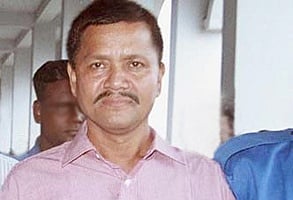
File Photo
He was arrested in Dhaka on Dec 21, 1997, under the Foreigners Act and Passports Act for illegal entry and carrying foreign currencies and a satellite phone.
Senior Home Secretary CQK Mustaq Ahmed and his Indian counterpart Anil Goswami discussed the modalities of his repatriation.
They also talked about the repatriation of Subrata Bain and Sajjad Hossain, two Bangladesh nationals being held in India.
Bain and Hossain were allegedly involved in grenade attacks on an Awami League rally in Dhaka in 2004. The assault had left 23 dead and many wounded, including Prime Minister Sheikh Hasina, who was then leading the opposition.
Bain is lodged in a jail in Kolkata, while Hossain is in Delhi's Tihar Jail. They are also wanted in several other criminal cases in Bangladesh.
Chetia, Bain and Hossain seem to be the first three prisoners to be exchanged after Bangladesh and India agreed on a bilateral legal framework for security cooperation with the signing of the extradition treaty in January this year.
The two countries had earlier signed the Agreements on Mutual Legal Assistance on Criminal Matters, Transfer of Sentenced Persons and Combating International Terrorism, Organised Crime and Illicit Drug Trafficking.
New Delhi wants Chetia back so that he could join other leaders of the ULFA’s political wing in the peace-process with the Indian government.
Paresh Barua, who heads the outfit’s military wing, is opposing all suggestions of peace talks with New Delhi.
Dhaka’s tacit cooperation with New Delhi in November and December, 2010 resulted in the arrest of as many as five ULFA leaders.
They were ULFA Chairman Arabinda Rajkhowa, Deputy Military Chief Raju Barua, Finance Secretary Chitraban Hazarika and Foreign Secretary Sashadhar Choudhury and Rajkhowa’s bodyguard Raja Bora.
Neither Dhaka nor New Delhi, however, recognised the role of Bangladeshi agencies in aiding the arrests. But, as New Delhi’s official versions go, all of them were held after BSF personnel spotted them near the Bangladesh-India border.
Barua, however, continues to remain elusive and is believed to have shifted base to another country, after the security cooperation between Dhaka and New Delhi made it difficult for Indian insurgent outfits to use Bangladesh as base for subversive activities in India.
The ULFA has, since 1979, been pursuing an armed rebellion against the Indian government with the professed objective of liberation of Assam from what it calls “colonial rule of New Delhi”.
Also Read:
Bangladesh, India sign landmark pactsAlso Read:
'Bringing Chetia back'Also Read:
ULFA wants Chetia repatriationAlso Read:
Chetia being repatriated






