


Published : 09 Jan 2019, 11:33 AM
Updated : 08 Apr 2022, 01:58 PM


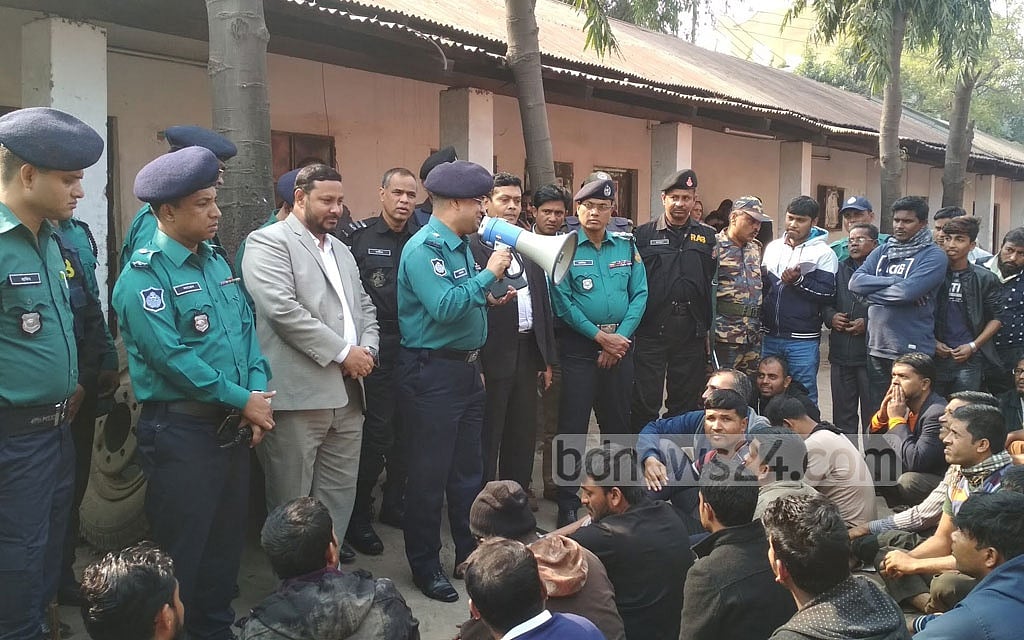
On Tuesday, workers locked the gates to the bus depot to press a number of demands including the release of their pending salaries.
The drivers and workers have once again set out to demonstrate on Wednesday, after their demands for the back pay went unheeded following a full day’s strike the day before, a protester said.
BRTC Chairman Farid Ahmed Bhuiyan met the agitating workers on Tuesday afternoon and urged them to return to work, assuring them of clearing dues in the next three months.
But BRTC workers announced they will continue the indefinite strike until the back pay is cleared.
“The chairman did come here but he didn’t say anything about the back pay,” said a driver named Mizanur Rahman.
“He has once again asked for three months to clear the dues as he’d done on three previous occasions. But nothing has come of it.”
The strike has halted government-provided public bus service on the Abdullahpur-Motijheel, Gabtali-Gazipur, Kuril Biswa Road-Pachdona routes and staff buses for government institutions.
Earlier on Tuesday, BRTC directors Nasim Ahmed and Mahbubur Rahman held a long meeting with depot manager Md Noor Alam, who then sat for talks with the workers around 1pm.
He told the workers that the authorities are discussing their demands and urged them to get back to work, adding that otherwise they will be faced with legal action. But the workers refused to work without first securing their dues.
The BRTC Joar Sahara Bus Depot operates 120 buses including double-deckers and air-conditioned buses. The workers are paid from the fares charged on these buses.
But losses in recent years have meant that the nearly 500 workers employed at the depot face regular delays to their salary.
The bus drivers at the depot had launched a protest in July of last year. At that time, they were owed 10 months in back pay.
The BRTC has 22 depots across the country, six of which are in Dhaka. About 3,000 drivers, technicians, office assistants and security guards work at these depots. They receive third- and fourth-class pay according to the public sector wage scale.







