


Published : 08 Jan 2015, 10:26 PM
Updated : 23 Apr 2022, 12:15 PM


He said he was “very sad” to see the loss of lives and disruption of daily life in the past few days over the first anniversary of the 10th parliamentary elections.
“I have urged (since his arrival in Bangladesh) all stakeholders in the political field to get together to talk about the issues and try to break the cycle of disruption and violence,” he said on Thursday.
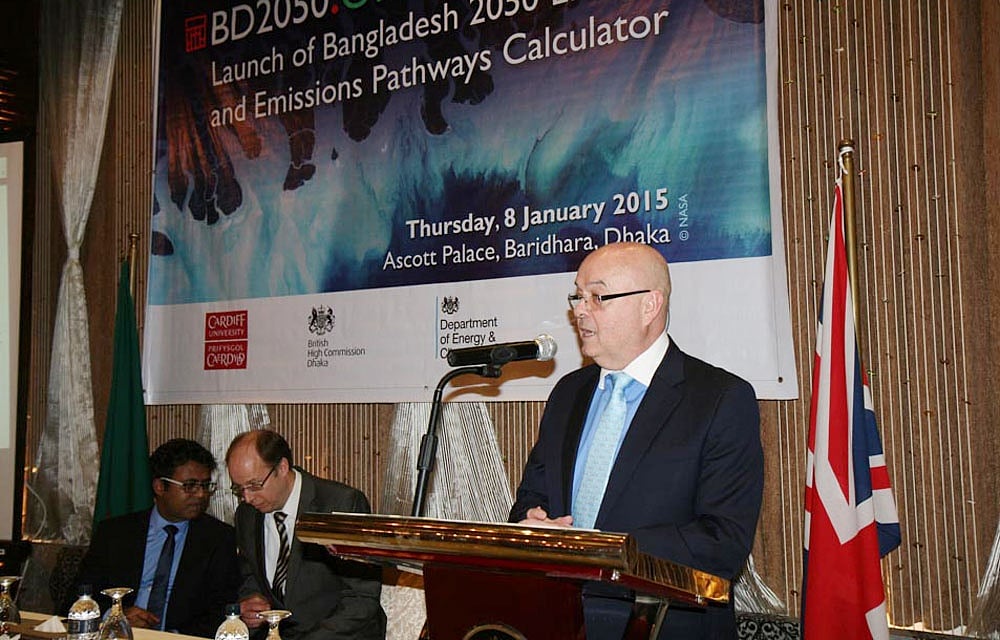
Gibson was replying to journalists’ questions on the recent political development after launching the UK-Bangladesh jointly tailored ‘Bangladesh 2050 energy pathway’s calculator’ (BD2050).
The calculator can indicate the future impacts of any energy source in Bangladesh.
After the launching, journalists sought his views on the recent political development after the BNP was prevented from observing ‘black day’ on Jan 5, the day ruling Awami League was supposed to celebrate first anniversary of its election victory.
BNP boycotted last year’s Jan 5 poll.
When asked about the prospect of a dialogue between the two major parties after the “unfortunate house imprisonment” of BNP chief Khaleda Zia, the high commissioner said he did not mean dialogue only between the two major parties.
It’s between all stakeholders in the political field, including civil society, he explained.
Asked about the High Court’s ban on publishing “fugitive” BNP vice-chairman Tareq Rahman’s speech, he said, in the UK, the media regulations were “very difficult and complex issue”.
“We do support free speech, we do support freedom of press but free speech has responsibility as well,” he said.
“….that (responsibility) is the very difficult balance every country, including the UK, struggles through,” the envoy said.













