


Published : 26 Sep 2019, 05:43 PM
Updated : 17 Oct 2022, 11:46 AM


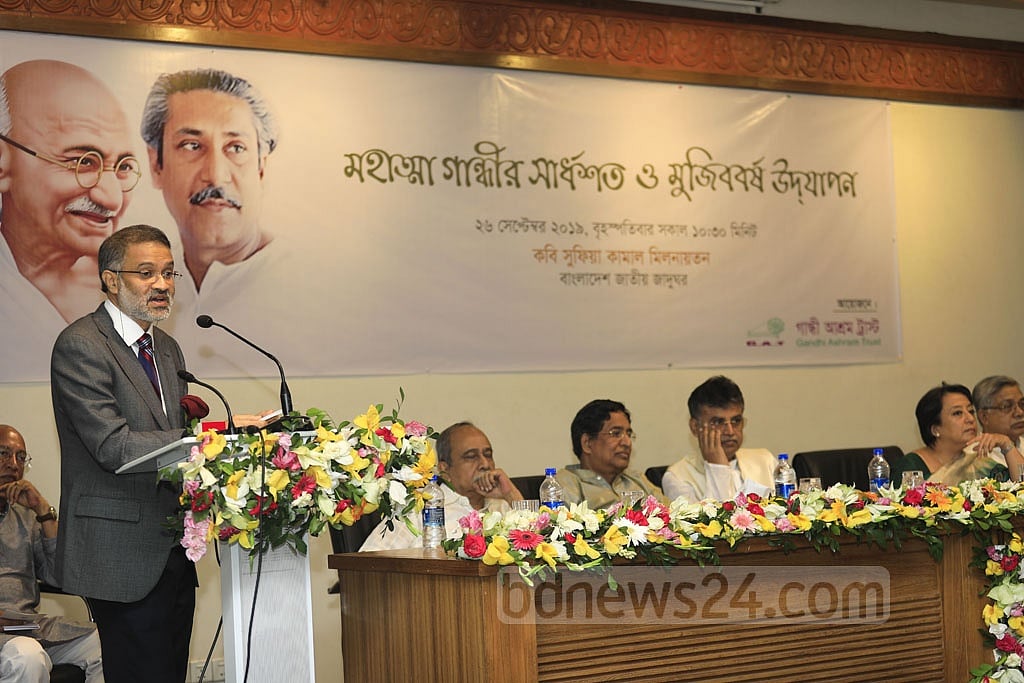
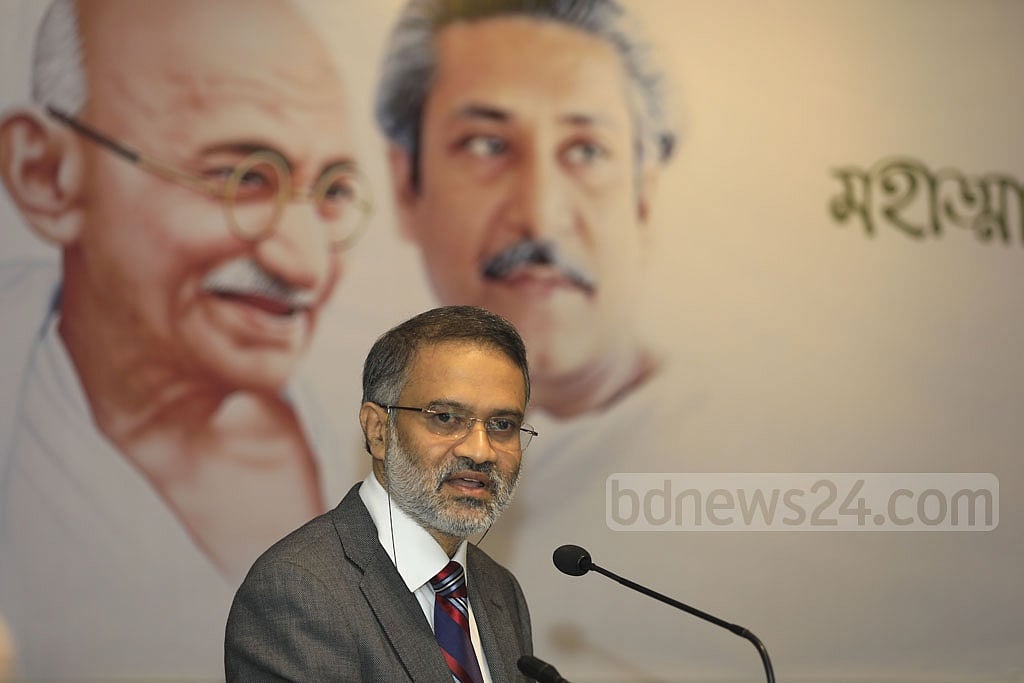
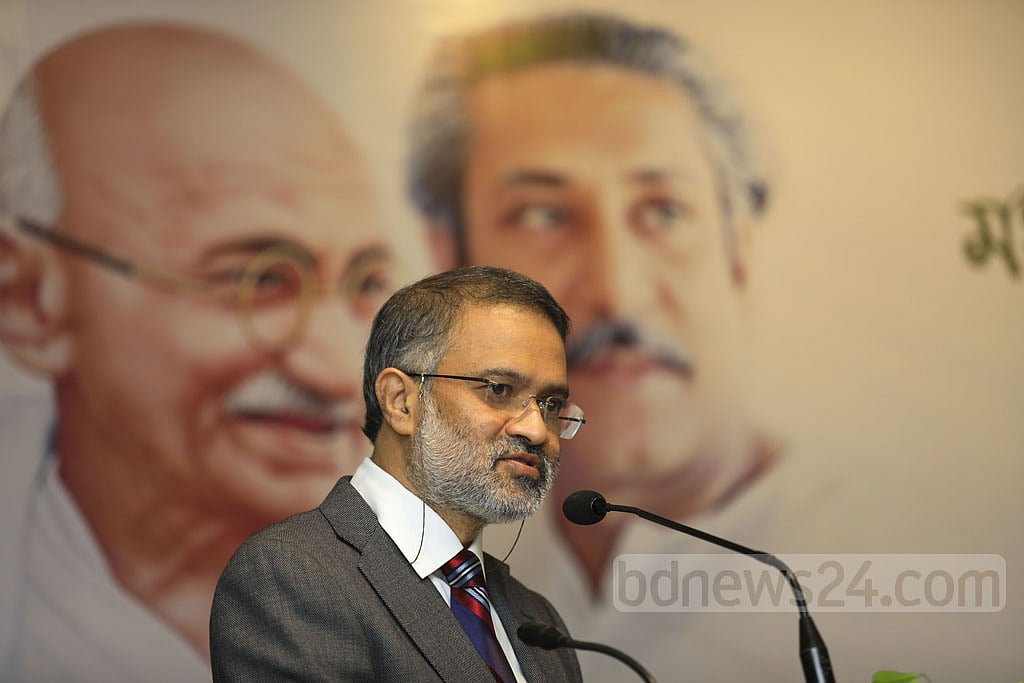

In the latest round of climate protests across the world, people power is making all the impact, Khalidi said at an event organised by Gandhi Ashram Trust in Dhaka on Thursday.
“Both initiated or organised non-violent noncooperation movement against the powers that be. Both were faced with villainous opponents who turned things violent,” he said.
In Gandhi’s case, it was caused in an indirect way: post-1947 India saw terrible violence, with more than a million deaths, nearly 15 million displaced, families separated, thanks to the forces he defeated.
As for Bangabandhu, his non-violent protests were met with brutal, massively disproportionate military power of the Pakistani army.
“Resistance followed, in both cases, in different forms, both our heroes emerged victorious.”
Earlier this week, the #ShutdownDC was the culmination of a series of protests organised by young activists around the world. Thousands descended on the US capital bringing traffic to a halt and without even firing a gunshot in trigger-happy America.
"This relentless onslaught on nature, on this tiny planet that is home to seven billion of us, in addition to numerous, countless other creatures, plants and trees, is more damaging than probably all the wars in human history put together," said Khalidi.
Highlighting the protesters’ call for action against the extremities of climate change and its impact on the global population, Khalidi said: “In their lifetime, Mahatma Gandhi and Bangabandhu worked for fair, equitable and safe societies. These climate protesters have a similar objective.”
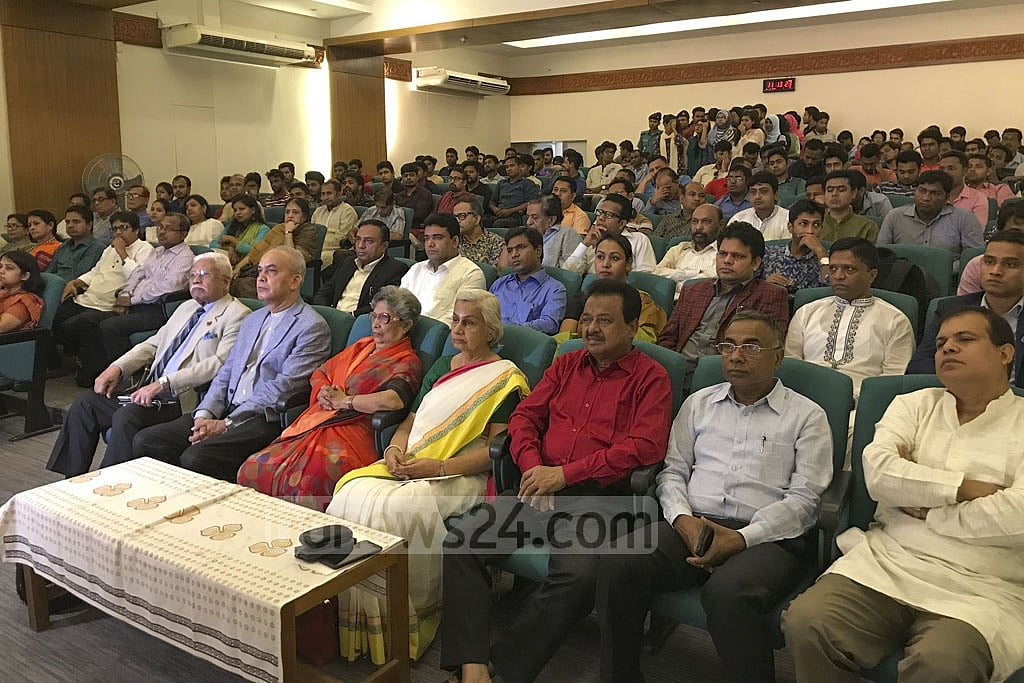
Khalidi was addressing a seminar on the founding fathers of India and Bangladesh along with historian Dr Muntasir Mamun, organised by the Gandhi Ashram Trust to commemorate their 150th and 100th birth anniversaries.
The programme at the National Museum in Shahbagh was also attended by Agriculture Minister Dr Mohammed Abdur Razzaque, former fisheries and livestock minister Narayon Chandra Chanda, Indian High Commissioner to Dhaka Riva Ganguly Das and Gandhi Ashram Trust’s Chairman Swadesh Roy.
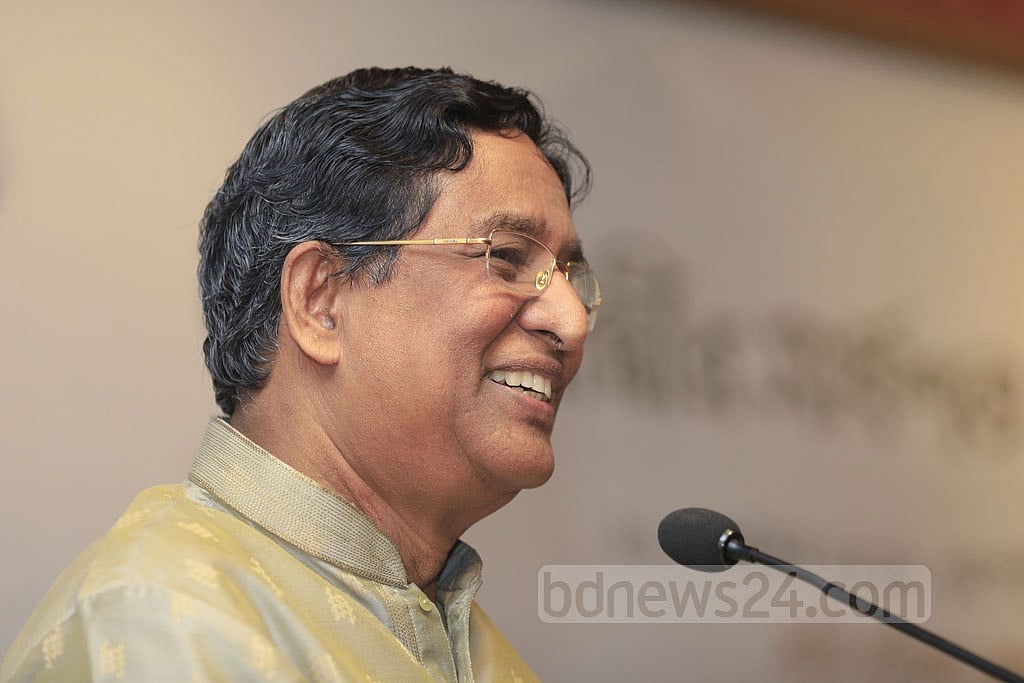
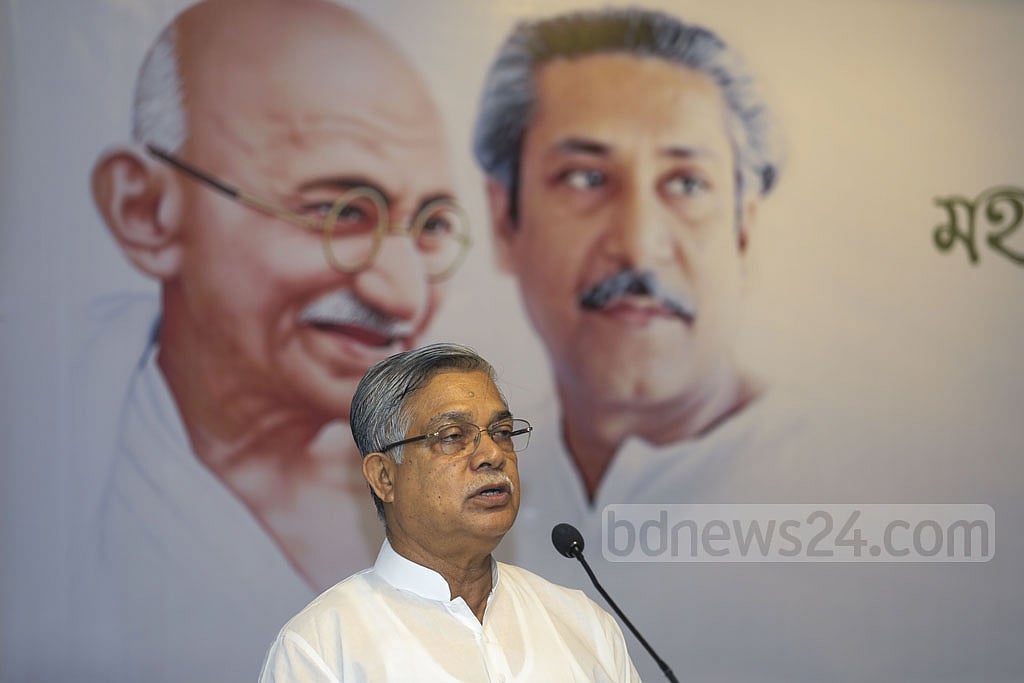
Agriculture Minister Abdur Razzaque speaking at a discussion organised by Gandhi Ashram Trust at the Begum Sufia Kamal Auditorium of Bangladesh National Museum on Thursday to mark the 150th birth anniversary of Mahatma Gandhi and the 100th birth anniversary of Bangabandhu Sheikh Mujibur Rahman. Photo: Mostafigur Rahman
Religion greatly influenced politics in the times of Mahatma Gandhi and Bangabandhu, but they never pursued religion-based politics, the agriculture minister said.
“Bangabandhu realised from the very beginning that religion cannot be used in politics. Gandhi too said religious fanatics who use religion are enemies of the people. Bangabandhu believed it wholeheartedly,” he said.
He recalled how the Awami Muslim League was founded by breaking away from the Muslim League and later dropped the word “Muslim” from its name.
“The Muslim League was equivalent to religion at the time. To speak against the Muslim League meant speaking against religion. He (Bangabandhu) took those steps,” Razzaque, a member of the Awami League’s presidium, said.
Gandhi’s words and strategy are relevant, to this day, the minister said. He proved in his movement against the disciplined, mighty British forces time and again that nonviolence and non-coopetation movement is no less effective.
“At the heart of Mahatma Gandhi’s nonviolent (movement) was his belief that strength comes from righteousness not force; power comes from truth not might; victory comes from moral courage not imposed submission. History, both past and contemporary, confirms violence only begins violence in an unending spiral, fostering hatred and revenge, violence seeks to impose and overwhelm,” she said.
Giving example of the leaderships of Nelson Mandela and Martin Luther King Jr as well, she said many things are possible to achieve through non-violence but not through use of force.
She urged all to apply the ideals of Mahatma Gandhi and Bangabandhu in their daily life instead of limiting these to events only.
To the youth of Bangladesh, she said they need to hold the Liberation War spirit in their hearts while treading the path of development so that they can repay Bangabandhu and the freedom fighters for their sacrifices by building a multicultural nation of many ethnicities.
Narayon Chandra Chanda, a member of the parliament, speaking at a discussion organised by Gandhi Ashram Trust at the Begum Sufia Kamal Auditorium of Bangladesh National Museum on Thursday to mark the 150th birth anniversary of Mahatma Gandhi and the 100th birth anniversary of Bangabandhu Sheikh Mujibur Rahman. Photo: Mostafigur Rahman
Many allegations of corruption were levelled against Bangabandhu, but even his killers could not find any such thing as he never compromised on his ideals.
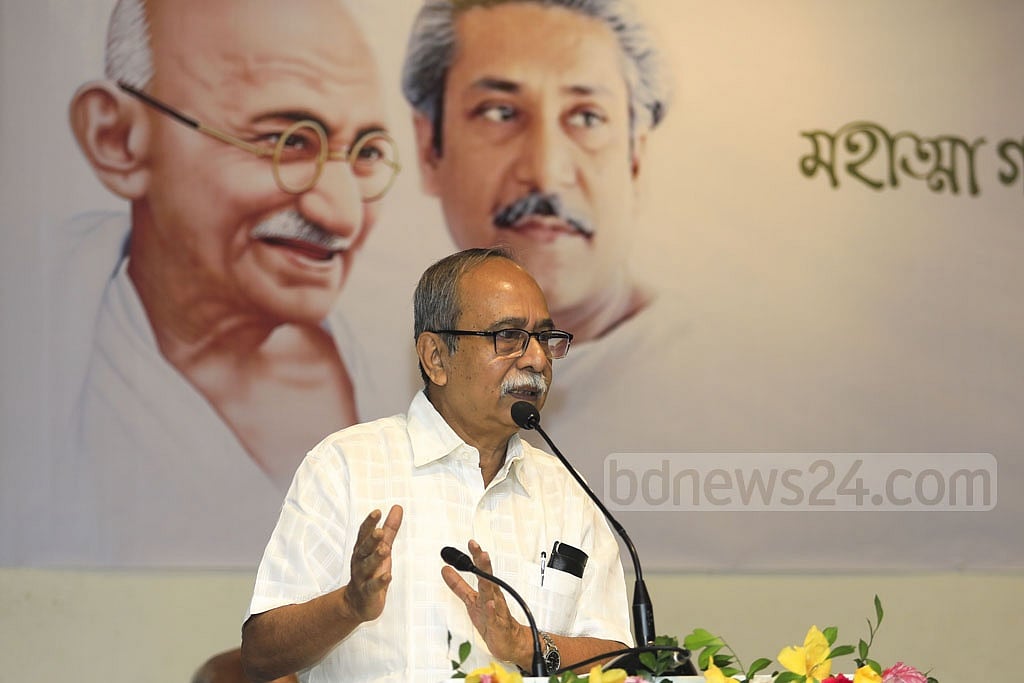
Professor Muntasir Mamun of Dhaka University’s history department speaks at a discussion organised by Gandhi Ashram Trust at the Begum Sufia Kamal Auditorium of Bangladesh National Museum on Thursday to mark the 150th birth anniversary of Mahatma Gandhi and the 100th birth anniversary of Bangabandhu Sheikh Mujibur Rahman. Photo: Mostafigur Rahman
Referring to intelligence reports on Bangabandhu, which are being published as a book, he said no-one can say that Bangabandhu used religion in politics.
Even his daughter Prime Minister Sheikh Hasina and the Awami League used religion in some way after his death, Prof Mamun said, criticising the ruling party’s policies. “Only Bangabandhu Sheikh Mujibur Rahman was the exception who never wanted to use religion as a tool of politics.”
The Trust’s Director Raha Naba Kumar moderated the seminar.
“STILL RELEVANT TO OVERCOME CONTEMPORARY ILLS, INJUSTICES”
In leading their countries’ struggle for freedom, both Gandhi and Bangabandhu drew on their extraordinary networking skills, ability to love people and make personal sacrifices to inspire the masses, said Khalidi.
The impact of the two leaders transcends their own lifetimes and their stories are especially relevant to overcome the contemporary ills and injustices across the world, he noted.
“The saddest part is, the key climate criminals are the rich and the powerful; the high and the mighty. The biggest polluters are the so-called advanced economies, the most mechanised societies.”
These are the countries that are capable of destroying human civilisation in minutes or seconds, and that too many many times over, Khalidi said.
“In their lifetime, both our heroes fought the mighty and the powerful. Both taught the world how to deal with them, how to defeat them. In afterlife, they are believed to be doing more.”
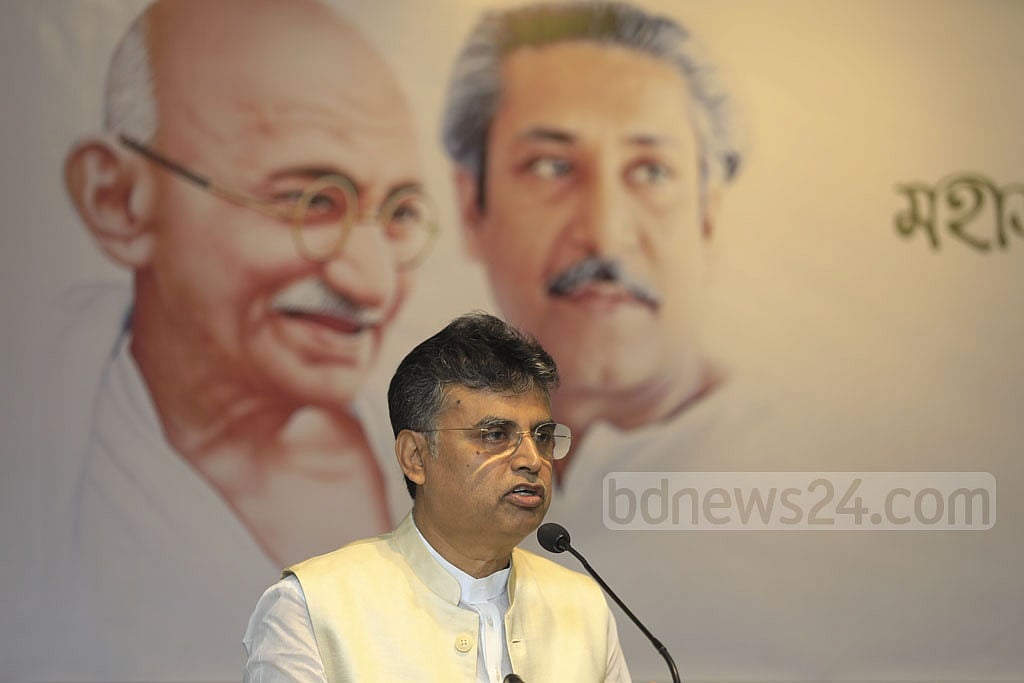
bdnews24.com Editor-in-Chief Toufique Imrose Khalidi speaking at a discussion organised by Gandhi Ashram Trust at the Begum Sufia Kamal Auditorium of Bangladesh National Museum on Thursday to mark the 150th birth anniversary of Mahatma Gandhi and the 100th birth anniversary of Bangabandhu Sheikh Mujibur Rahman. Photo: Mostafigur Rahman
According to a British think tank, Bangladeshi households are spending almost Tk 158 billion taka a year on repairing the damages caused by climate change and preventive measures.
“This sum is 112 times what international donors give Bangladesh and twice the amount what the Bangladeshi government spends,” said Khalidi.
Rural families are therefore forced to divert their resources to counter the effects of climate change.
“Families are forced to borrow from informal sources at high-interest rates, pushing them into deeper poverty. That’s the report from the International Institute for Environment and Development.”
Both Gandhi and Bangabandhu would have raised their voices in a bid to alleviate the plight of these families, said Khalidi.
But even in their absence, they continue to impact the course of the world. “Take the case of Bangabandhu. Even his leadership in absentia galvanised global support despite strong opposition from some of the very powerful nations to the cause of Bangladesh in 1971.”













