Headquartered in Dhaka, the inter-governmental alliance PPD collaborates among 26 member states in family planning, reproductive health, population and development.
It was created at the International Conference on Population and Development (ICPD) in Cairo in 1994.
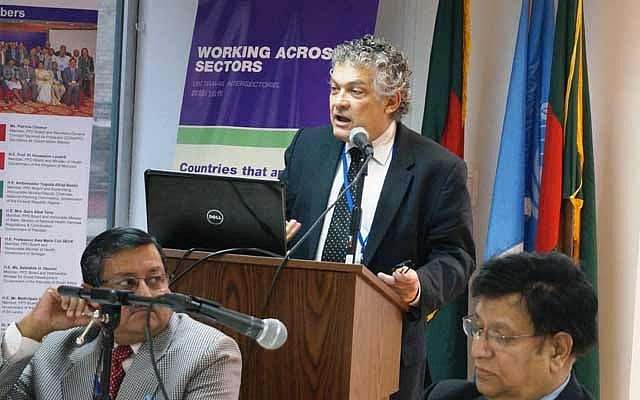
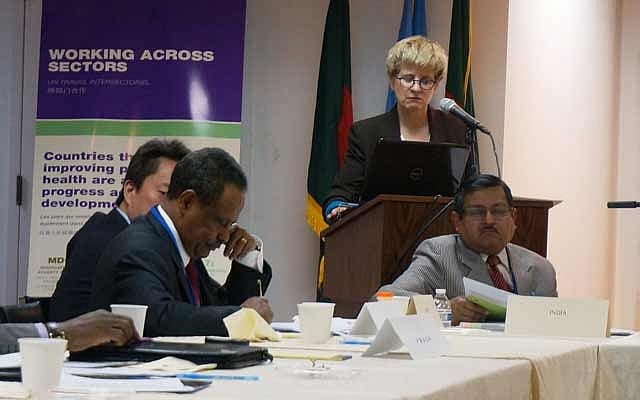
Speaking at a high-level breakfast meeting in New York on Wednesday, State Minister for Health and Family Welfare Zahid Maleque commended the contribution of PPD in family planning and reproductive health.
He said Bangladesh has “full confidence” in this collaboration and was “committed” to support the alliance.
Bangladesh’s Permanent Mission to the UN, PPD, and the Partnership for Maternal, Newborn & Child Health (PMNCH) co- hosted the meeting highlighting the rights of women and child.
Bangladesh’s Permanent Representative AK Abdul Momen chaired the meeting that took place on the sidelines of the 47th Commission on Population and Development (CPD), the PPD said in a media release.
The meeting brought together ministers of health, senior officials of PPD member states and key partners including WHO, UNFPA and International Planned Parenthood Federation (IPPF).
The meeting also highlighted the need to put “people’s health” at the centre of the post-2015 development agenda.
Momen also reiterated Bangladesh’s commitment for “continued support” to PPD.
He stressed the need to invest in health and education for sustainable development, as opposed to areas such as defence which he said “consumed disproportionate resources, without contributing to development”.
PPD member states represent over half the world’s population, have the largest youth population, and also grappling with aging population while at the same time dealing with development challenges among other things.
PPD Executive Director Joe Thomas said in developing countries, unlike in the developed world, “aging of the population is occurring even before the countries are economically developed, which makes south-south learning critical”.
He underlined that PPD is now moving from being a donor funded partnership to “one that is Member State funded, and therefore sustainable”.
Uganda’s Minister of State for Finance Matia Kasaija also echoed the sentiments of Bangladesh by reaffirming his country’s commitment to PPD.
UNFPA Deputy Executive Director Kate Gilmore spoke about the critical role of the PPD in putting people and human rights at the center of the development agenda.
She reminded that sexual and reproductive health and rights is “an integral part of human rights and inclusive development”.
India’s Health Secretary Lov Verma outlined the comprehensive nature of the Rasthriya Kishore Swasthya Karyakram – or National Adolescent Health Program of India.
He said the program covers not only sexual and reproductive health, but malnutrition, substance abuse, mental health, communicable and non-communicable diseases, and violence including gender-based violence.
China’s Deputy Director General of the Department of Family Development He Zhaohua hailed PPD as “an important platform” in South South Collaboration, particularly for a country like China with the world’s largest population.
China has a long association with PPD and it has already committed over $2 million in commodities, training and technology to follow population trends among member states.
Bangladesh, Benin, China, Colombia, Egypt, Ethiopia, The Gambia, Ghana, India, Indonesia, Jordan, Kenya, Mali, Mexico, Morocco, Nigeria, Pakistan, Senegal, South Africa, Sri Lanka, Thailand, Tunisia, Uganda, Vietnam, Yemen and Zimbabwe are the members of PPD.