


Published : 03 Nov 2020, 11:46 AM
Updated : 17 Oct 2022, 11:15 AM


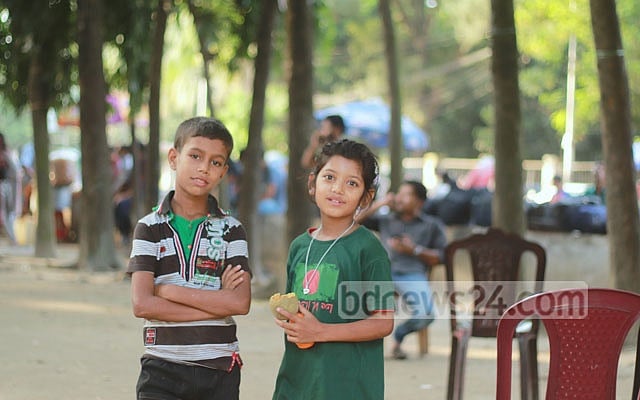
Khatun enrolled Tahmid in a school this year, but Tahmid did not like it. He began roaming on the streets with other children. Just like his father, he ended up living under the open sky. He currently lives at the Central Shaheed Minar premises.
Thousands of children in Dhaka live in the rail stations, bus terminals and outside the stadiums in Dhaka. Losing their ties with the families due to different socio-economic troubles, these children are deprived of a proper childhood. They are known as ‘street children.’
According to a 2004 survey by Bangladesh Institute of Development Studies or BIDS, the country had at least 1.3 million street children at that time.
The Ministry of Women and Children Affairs and the Department of Social Services refuted the survey, though they have not done one by themselves.
Five years have passed after Prime Minister Sheikh Hasina gave specific directives to the ministry for the rehabilitation of the street children at the inauguration of World Child Rights Week 2015. The ministry and Dhaka City Corporation have established the rehabilitation centres for the street children, but the initiatives have proved unsuccessful.
No efforts to resolve the issue will be fruitful without a long-term plan, believe top officials of the organisations working for the street children.
The ministry has now bolstered its strategy after long. It has sent proposed projects to the Ministry of Planning.
CHILDREN DEPRIVED OF LOVE
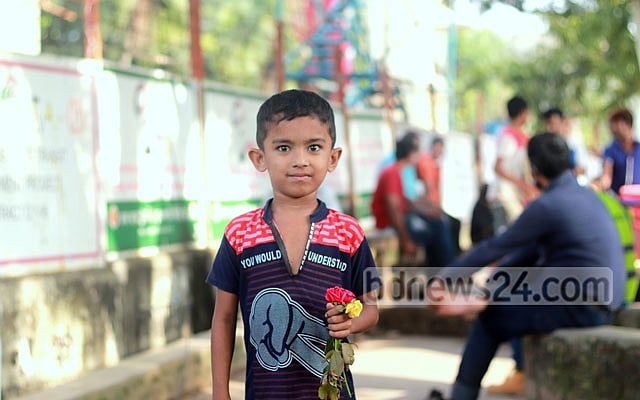
It was a quiet afternoon when he was selling flowers near the Teacher-Student Centre in Dhaka University. Four-year-old Emon said he had no proper place to live in. His father died long ago, while his mother married another man.
“I have no home. I used to live with my grandparents at a slum in Mirpur. They could not help me anymore and I began to live on the streets. Now I live in this park,” the boy said.
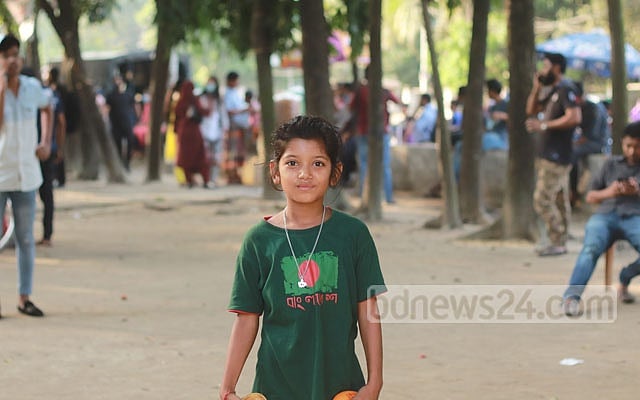
The parents of Afrin (not her real name) got divorced when she was 10. When her grandfather died after another year, she and her grandmother moved from one place to another for a living. The 14-year-old and her grandmother now lives in the Shaheed Minar area.
“I could not keep her from spoiling," sighed Afrin's grandmother. Living on the streets for long brought an adverse effect to Afrin's life. She became a sex worker and also got addicted to drugs.
The father of Russel lost his job due to the coronavirus pandemic and began working as a farm worker in Tangail’s Gopalpur, but his income was not enough to feed his three children.
"I have two younger sisters who don't get a square meal per day. One day a senior friend asked me to go to Dhaka and we travelled by train. He promised to give me a job, but never did. I got a temporary job in a garage but not anymore. Now I need a job. I won't go back home without a job," the 13-year-old boy said.
There is no official estimate on how many children live on the streets now.
The 2004 BIDS study has become obsolete now, said Abul Hossain, who heads the Cell on Street Children Affairs in the Ministry of Women and Children Affairs.
“The number of vulnerable children has been increasing every day since the study and they face new problems,” he said.
The ministry will soon begin the work to determine the number of street children as it will be hard to design a realistic plan for them without knowing the exact number, he added.
According to a 2005 survey by the Department of Social Services, 41 percent of the street children do not have a bed to sleep on; 40 percent do not have access to bathing facilities while 35 percent defecate outdoors.
At least 84 percent of these children do not have winter clothes and 54 percent have no one to take care of them during sickness. As much as 75 percent street children do not have access to health care.
A report by Bangladesh Shishu Adhikar Forum showed 85 percent street children are addicted to drugs. They smoke and take heroin, different types of tablets and intravenous drugs.
At least 80 percent of the street children work to make a living while 20 percent confront physical abuse and 14.5 percent face sexual assaults.
The Street Children Activist Network, or SCAN, conducted a survey on their living conditions in eight areas of the capital - Mohakhali, airport area, Kamalapur, Gabtoli and Sadarghat - from Mar 26 to 31.
“We saw that the street children face a terrible situation. They are totally unaware of COVID-19 illness or the coronavirus,” said Jahangir Nakir, president of SCAN.
“They live in groups without following the health rules and can be the carrier of the virus as they roam around the city,” he said.
The street children are passing their days in starvation now after losing their sources of income due to the pandemic, according to SCAN.
GOVERNMENT AND OTHER INITIATIVES
The street children are kept with adults at five vagrant centres run by the government, said Mahfuza Begum, additional director of social protection at the Department of Social Services.
The department had established a children’s shelter at Betila in Manikganj, but it has been closed since 2017. Mahfuza could not confirm if the shelter will be reopened.
Shishu Kalyan Trust or Child Welfare Trust, formerly Patakhali Trust, has 205 Shishu Kalyan Bidyalaya or schools providing primary education to more than 32,000 students from the streets and poor families in Dhaka division.
Formed in 1988, it runs nine technical training centres for the destitute children in different parts of Bangladesh, including Dhaka, with an objective to ensure their necessary education and training.
Different quarters have appealed to the government for providing the street children with secondary education, but it has “no such plans” yet, said Habibur Rahman, director of Child Welfare Trust.
The trust also has no plan to ensure secondary education for the street children but it is pondering primary school infrastructural development and scholarships for them.
“We have sent a development project proposal to the Ministry of Primary and Mass Education for funds. We can increase the scholarships for children and set up more schools if we get the funds,” said Habibur.
Shishu Kalyan Primary School is continuing online classes amid the pandemic, he said, but could not confirm how the children were joining classes.
“You know there are lessons broadcast on TV; they can learn from there,” he said.
The Trust has given the scholarship to 4,301 students in nine years until 2019.
Both city corporations of Dhaka have been running programmes for the street children in collaboration with a development organisation - Concerned Worldwide.
They have established four shelters in Dhaka South and six in Dhaka North for the street children, said Anwar Hossain, assistant social welfare officer in Dhaka North City Corporation.
The project provides assistance to a beneficiary child and its family until the age of six, he said. These children are enrolled in pre-primary grade. At least 9,000 families and 1,000 children have received help under this project.
Hossain could not explain where the children would go for education after completing the pre-primary level.
“In fact, both city corporations don’t have their own initiatives. We’re working with an NGO. This project will last for 5-6 years and I don’t know what will happen after it is over,” he said.
Recently, the Ministry of Women and Children Affairs has come up with different recommendations following an online meeting organised by its Street Children Rehabilitation Programme. The participants stressed the need for conducting a survey to realise the actual picture.
The recommendations are:
>> To continue the government and private initiatives to assist the street children until the coronavirus crisis is over.
>> To take new initiatives to overcome the crisis created after the vagrant shelters stopped accepting new children during the lockdown in the end of March.
>> To gradually transform the private initiatives on temporary shelter and food into regular programmes.
>> To share the good practice by the government and private organisations that left a positive impact on the development and protection of the street children with others.
>> To conduct a survey immediately to get a proper picture of the present conditions of the street children in Dhaka.
>> To conduct a wider survey to identify the vulnerability of the families affected by COVID-19 pandemic, river erosion and other natural disasters.
>> To launch a platform to coordinate the efforts of the government and private organisations.
>> To monitor the street children in order to prevent harassment, and physical, sexual and drug abuse.
>> To take initiatives to send back home the street children who have families.
“We are focusing on the survey first as that will let us identify the reason why those children lost their ties with the families. We must remember that children become vulnerable once they are away from their families. Some of them get engaged in crimes while some get subjected to physical and sexual abuse,” said Abul Hossain, director of the Street Children Rehabilitation Programme.
“We have already forwarded a project plan to the planning ministry and will begin our work in full swing once the plan is finalised,” he added.













