


Published : 01 Oct 2017, 09:34 PM
Updated : 05 Aug 2022, 07:29 PM


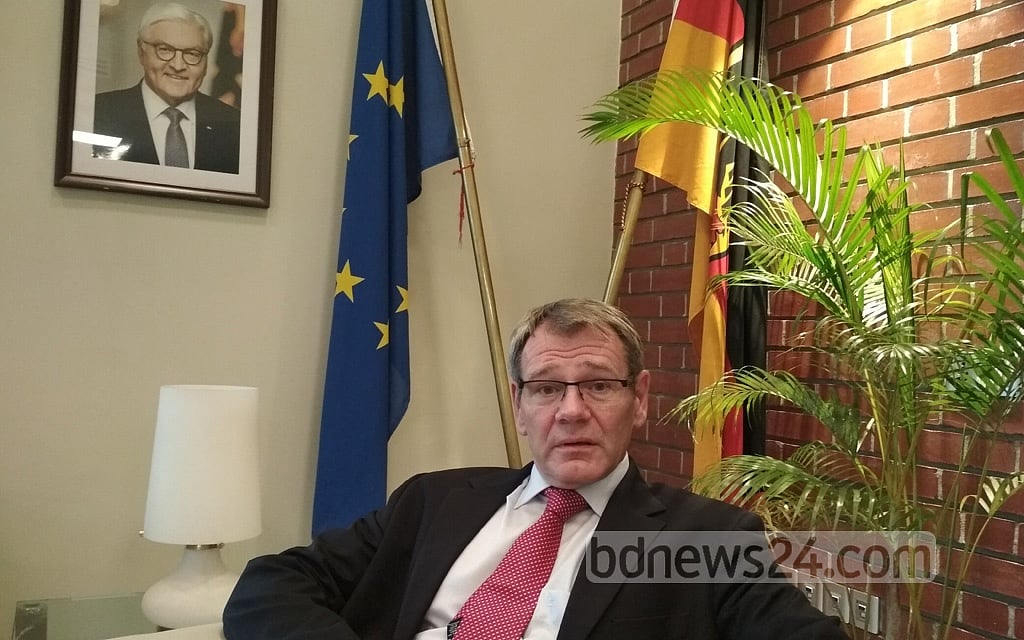
“Bangladesh should not be left alone in this situation,” he told bdnews24.com in an interview on Sunday amid an ongoing crisis in which half a million Rohingyas from Myanmar’s Rakhine State fled ‘ethnic cleansing’ in a month and took shelter in Bangladesh.
Even before the current influx that began on Aug 25, Bangladesh has been hosting nearly 400,000 Rohingyas for three decades, creating what the government says “a multidimensional problem” for the country.
Prinz said at this point of time, the focus should be on the humanitarian aspect. “We do not know yet how big the crisis will be. Therefore, it is extremely difficult to discuss solutions."
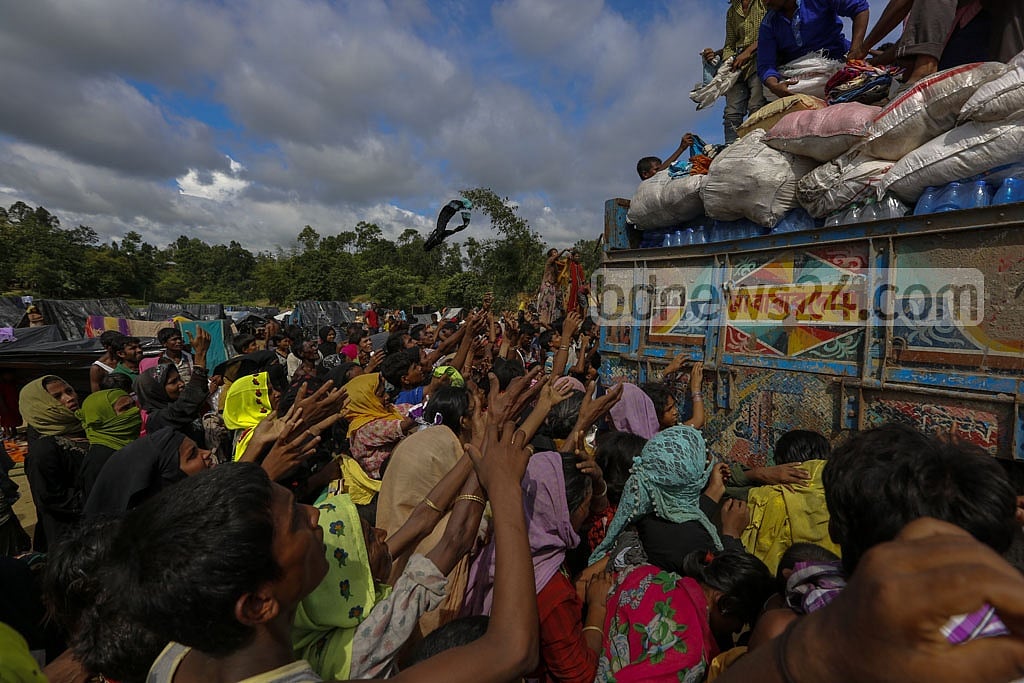
Rohingya refugees scrambled for relief materials at Palongkhali in Ukhia, Cox's Bazar on Saturday as aid workers threw clothes from a truck. Photo: muhammad mostafigur rahman
Bangladesh is not a party to the 1951 convention and does not certify Rohingyas as refugees to avoid legal obligation. Bangladesh officially calls them “forcibly displaced Myanmar nationals” and the authorities are working on ensuring their basic needs such as food, shelter, and healthcare.
Their movement has been restricted within the camps.
The ambassador, however, said it is “important” to avoid camp situation.
“We have distributed refugees into the towns and villages all over the country. It helps them to integrate in the country. Camp situation creates a lot of security problem by increasing criminal activities along the border. It can be a recruiting space for Islamic radicals,” he said.
“The integration is much easier when they are in normal environment, not put together in a camp,” Prinz said, but “we had to spend lot of money for this integration”.
However, the ambassador said for Bangladesh it was a “very complicated situation” since Rohnigyas are denied citizenship in their own country and Burma often calls them Bengali despite repeated protests from Dhaka.
Analysts say any integration move for Rohingyas in Bangladesh can stall the political process of ensuring their rights in Myanmar.
“I cannot advise how to handle it politically,” the ambassador said. “I see their return is unlikely. Camp situation create problems. We have to find something new,” he said, adding that international conference on the Rohnigyas under the UN leadership can find such a solution.
“I cannot tell you at the moment how that might look like. I know that we should not leave Bangladesh alone,” he said.
“First of all, I think we have to make sure these people have enough to eat and that there is no disease outbreak such as cholera…we have to prevent that,” the ambassador said, adding that the humanitarian situation is “the biggest task”.
“I don’t think these people will have the chance to go back in Myanmar,” he said, referring to the previous instances in which Myanmar never kept the promises of taking them back. "We have seen reluctance of taking them back over the years.”
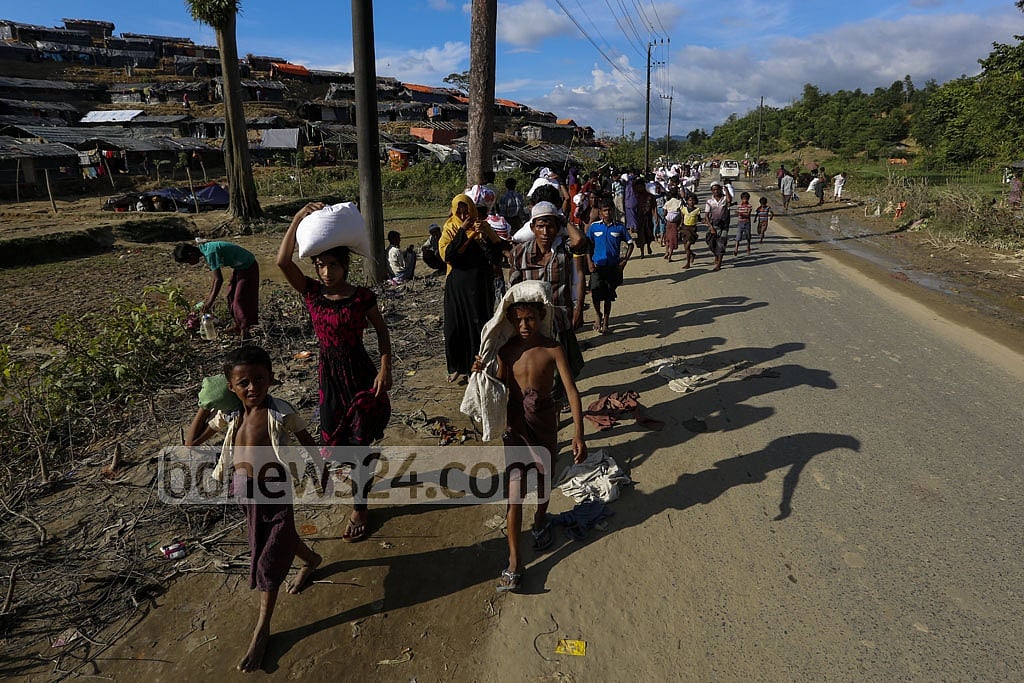
Rohingyas return to a makeshift refugee camp at Balukhali in Ukhia, Cox's Bazar with whatever aid they could collect on Saturday. Photo: muhammad mostafigur rahman
“But the government has to make sure that there is security from cyclones, and floods and they have to ensure other conditions concerning schooling, healthcare and so on.”
“And that move should be on a voluntary basis,” he said.
Prinz, however, said the international community is reluctant to support that idea. “Many people are a little bit afraid to send those people to a place which is vulnerable to natural calamities."
Germany is the third largest contributor to the UN’s central emergency rehabilitation fund. This year, it has contributed 6O million Euros to this fund.
The first 7 million Euros from this fund has been made available to UN organisations of Bangladesh to deal with the Rohingya crisis.
Germany has also made 5 million Euros available for the Red Cross and Red Crescent Society to spend for Rohingyas.
“We know it's not enough,” he said, adding that Caritas Germany has already registered with the NGO Affairs Bureau following the influx to work in Cox’s Bazar and provide humanitarian assistance.
They will bring a lot of private funds for their humanitarian assistance, the ambassador said.













