bdnews24.com
Home +
  • Bangladesh
  • Politics
  • Campus
  • Education
  • Media
  • Environment
  • Health
  • Fashion
  • People
  • Automobile
  • Aviation
  • World
  • Science
Sport +
  • Sport
  • Cricket
World +
  • Middle East
  • Europe
  • Neighbours
Business & Economy +
  • Business
  • Economy
Features +
  • Opinion
  • Technology
  • Lifestyle
  • Entertainment
  • Hello
  • Stripe
Others +
  • Photos
  • Tube
  • Mobile

June 17, 2026

  • Bangladesh
  • Sport
  • Technology
  • Opinion
  • Politics
bdnews24.com
বাংলা
  • World Cup
  • World
  • Opinion
  • Entertainment
  • Lifestyle
  • Economy
  • Business
  • Cricket
  • Recent
bdnews24.com
Home
  • Bangladesh
  • Politics
  • Campus
  • Education
  • Media
  • Environment
  • Health
  • Fashion
  • People
  • Automobile
  • Aviation
  • World
  • Science
Sport
  • Sport
  • Cricket
World
  • Middle East
  • Europe
  • Neighbours
Business &
Economy
  • Business
  • Economy
  • Budget 2025-26
Features
  • Opinion
  • Technology
  • Lifestyle
  • Entertainment
  • Hello
  • Stripe
Others
  • Photos
  • Tube
  • Mobile
  • Bangladesh

Bangladesh's National Committee for Intelligence Coordination (NCIC) has ambiguities, says book

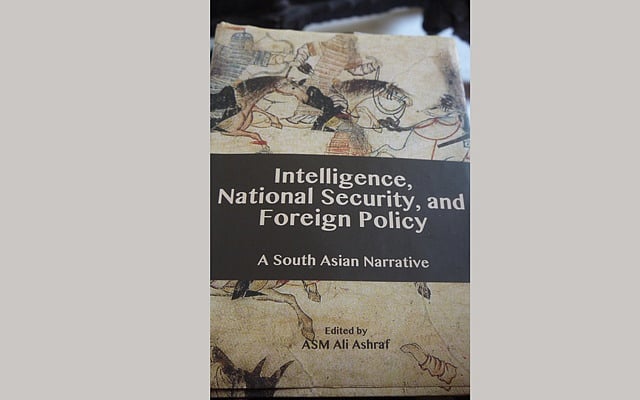
ASM Ali Ashraf's newly published 23-article volume 'Intelligence, National Security and Foreign Policy: A South Asian Narrative' has pointed to ambiguities in the way Bangladesh's NCIC functions.

Subir Bhaumik

bdnews24.com

Published : 03 Dec 2016, 11:24 AM

Updated : 03 Dec 2016, 11:24 AM

Ashraf, in his own article 'Discourse of Security and Intelligence in Bangladesh,' has raised these 'ambiguities' over the functioning of the country's National Committee for Intelligence Coordination (NCIC).

The NCIC was set up after the 2009 BDR mutiny to synthesize efforts of various intelligence agencies in Bangladesh.

It is a powerful committee, chaired by the Prime Minister and coordinated by her security adviser. It comprises of the Cabinet Secretary, the Principal Secretary to Prime Minister, chiefs of Directorate General of Forces Intelligence (DGFI) and National Security Intelligence (NSI) and Inspector General of Police.

Police's Rapid Action Battalion (RAB), Special Branch and Criminal Investigation Department (CID) assist the NCIC.

"A close look at the NCIC's composition suggests that the Bangladesh case is unique and ambiguous for at least two reasons," says Ashraf, who teaches international relations at the Dhaka University (DU).

"First by including the prime minister's defense and security advisor along with chiefs of various intelligence agencies and top civilian bureaucrats in NCIC, Bangladesh has created an ambiguity as to the position of the national intelligence coordinator.
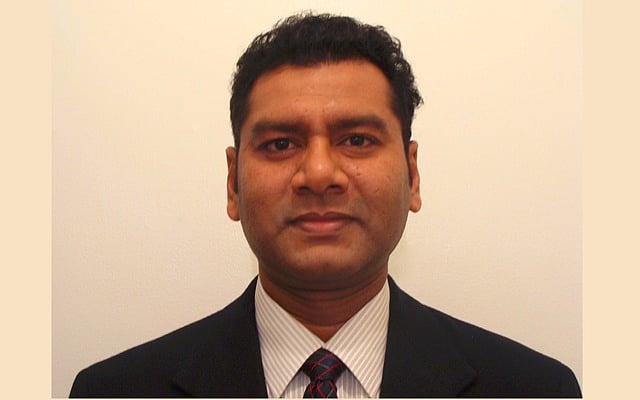
ASM Ali Ashraf

ASM Ali Ashraf

"Bangladesh has neither followed the British or the Indian model where a top cabinet secretariat bureaucrat serves as national intelligence coordinator, nor has it followed the US model of appointing a separate national intelligence coordinator."

Ashraf says that the ambiguity is further increased by having the prime minister as chairperson of the NCIC.

"That may indicate the prime minister is both a consumer and a coordinator of strategic intelligence," observes the DU associate professor.

But despite the ambiguities, he says the formation of the NCIC has been driven by 'a need to synthesize the national intelligence effort in support of government's priorities.'

"The NCIC attempts to integrate intelligence on foreign, defence and internal security matters by bringing together the principal civilian and military intelligence organisations of the country."

Ashraf also raises the role of intelligence agencies in fighting terror.

He says that there were 'turf battles,' when the NSI opened in counter-terrorism cell in 2004, after the DGFI had set up its Counter-Terrorism Intelligence Bureau (CTIB) in 2002.  The RAB has also set up its counter-terrorism cell in 2004.

"A turf battle between various agencies emerged ...  While the DGFI, NSI and RAB official speak about high level intelligence sharing among them, the three organisations, with contrasting authorities, assert their status as the lead counter-terrorism agency in the country," says Ashraf.

He talks of the 'militarisation of the counter-terrorism apparatus' in Bangladesh, which he says, "is premised on the belief that existing law enforcement capabilities are inadequate in the fight against transnational organised crime and terrorism."

"This is perhaps one reason why RAB, being a paramilitary force, has never seen a civilian police official to head its intelligence wing," said Ashraf, adding that senior military officials in RAB and DGFI feel a military official heading RAB's intelligence is good for intelligence sharing.

The volume edited by Ashraf is the product of a research project of Bangladesh Institute of Law and International Affairs (BILIA) entitled 'Intelligence, National Security and Foreign Policy.'

Senior intelligence professionals and military officials from South Asian countries as well as academics have contributed to the volume.


Follow bdnews24.com on Google News
Related Stories
I returned from India immediately in protest: Advisor Zahed
Husband kills wife over ‘TikTok’ addiction
bKash agent hacked, ‘robbed’ in Adabor
Tarique will be rooting for England at WC
Read More
Netanyahu set to face voter fury over Iran deal
'I'm the boss', Trump says at G7
Iran ready to boost oil exports as Trump hails Gulf flow
World Cup fever grips Argentina fans at DU
Read More
Opinion

Shakila Mim

The greatest love triangle in football

The greatest love triangle in football

Towheed Feroze

WC 2026: Three cheers for the Asian sides!

WC 2026: Three cheers for the Asian sides!

Anika Tahsin

Misunderstood truths about studying English

Misunderstood truths about studying English

Arshi Fatiha Quazi

When hospitals become death chambers

When hospitals become death chambers
Read More
Editor-in-Chief and Publisher: Toufique Imrose Khalidi
News
  • Home
  • Bangladesh
  • Business
  • Politics
  • Economy
  • World
  • Technology
  • Science
  • Environment
  • Health
Op/Ed
  • 1971
  • Achievement
  • CHT
  • Corruption
  • Culture
  • Democracy
Social
  • Facebook
  • Twitter
  • Instagram
  • Youtube
  • WhatsApp
Features
  • Tech
  • Lifestyle
  • Entertainment
Others
  • Stripe
  • Hello
  • Mobile
Sport
  • Sport
  • Cricket
Follow us
  • Disclaimer & Privacy Policy
  • About Us
  • Contact Us

Copyright © 2026, bdnews24