


Published : 02 May 2017, 06:01 PM
Updated : 05 Aug 2022, 07:19 PM


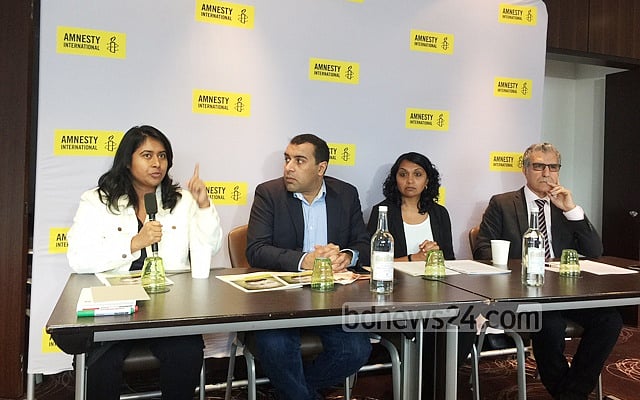
“Between the violence of armed groups and state repression of the state, secular voices in Bangladesh are being consistently silenced,” said Amnesty’s Bangladesh researcher Olof Blomqvist.
“Not only is the government failing to protect people’s freedom of expression, it has been blaming them for the threats they face and criminalising the work of bloggers and journalists through a slew of repressive laws.”
Armed groups in Bangladesh have acted with impunity, succeeding in several high-profile killings with little consequence, according to the report, titled ‘Caught between fear and repression: Attacks on freedom of expression in Bangladesh’.
It notes that only a single case against these attacks has been successfully tried.
Activists receiving death threats have been forced to leave the country after authorities refused to protect them, according to the report.
The government even blamed the victims, said Amnesty, as in the case of online activist Nazimuddin Samad, who was hacked to death in April 2016. It cites Home Minister Asaduzzaman Khan’s comments that Samad’s work would be scrutinised for ‘objectionable’ content and Prime Minister Sheikh Hasina’s denunciation of the writing of secular bloggers as ‘filthy words’.
Amnesty claims the government is also involved in supressing public debate and criticism by harassing the media through a network of draconian laws and interference.
“The Bangladeshi government treats journalism as if it were a crime,” said Blomqvist. “Through imprisonment, threats, intimidation, and constant interference in their work, Bangladesh’s government has done all it can to silence critical voices in the media.”
Journalists are afraid of crossing ‘red lines’, especially regarding criticism of the prime minister and her family, Amnesty said.
Awami League supporters filed a flurry of 83 politically motivated cases against Mahfuz Anam, the long-time editor of The Daily Star.
Anam appeared on a talk show on a private television station last year and admitted that in 2007 and 2008, his paper had published unsubstantiated corruption allegations against Hasina.
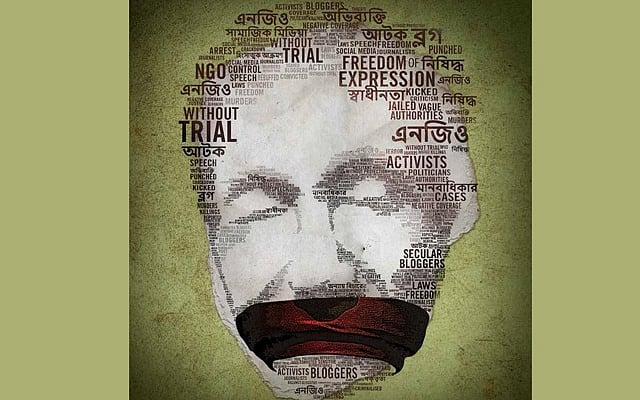
The report cited Anam as saying he had printed the allegations under pressure from military intelligence and that many other media outlets published similar articles at the time. He called the stories in The Daily Star “a big mistake”.
Shafik Rehman, an elderly opposition supporter and the editor of the weekly Mouchake Dil magazine, was held in solitary confinement for over three weeks on a trumped-up charge of “conspiring to abduct and assassinate” ruling party politician Sajeeb Wazed Joy.
Bangladesh’s authorities have frequently invoked archaic, colonial-era criminal defamation and sedition laws against critical journalists, according to the report.
The Information and Communications Technology Act has been used to muzzle critics. The law has allowed the government to intimidate the media through threats and violence, Amnesty alleged.
“The crackdown on dissent and secular thought in Bangladesh must end. The very first steps must include providing protection to those who are threatened for raising their voices, and to repeal or reform the draconian laws that are used to punish anyone voicing inconvenient opinions,” said Blomqvist.













