


Published : 06 Jul 2018, 08:58 PM
Updated : 19 Oct 2022, 02:15 PM


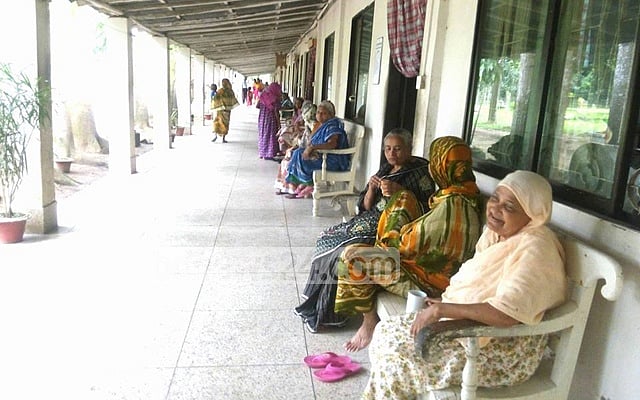

The policy says ‘Parents Maintenance Committee’ can send those parents to care centres whose children are not alive or there is no other option for their maintenance. Rules will be drafted on how these parents would be taken care of in the centres.
The policy also mentions designing a ‘maintenance fund’ formed with government sanction as well as foreign donation.
“The policy will be finalised soon after opinions from stakeholders are received,” the ministry’s Additional Secretary Rupon Kanti Sheel told bdnews24.com.
The ministry is drafting the policy based on ‘Parents Care Act 2013.’
The 25-page draft policy has proposed seven committees regarding parents care.
It also provides detailed code of conduct both by parents and children, as well as duties by the children to perform for their parents.
Every child has to arrange for their parents to stay together with them, it says. If there are more than one child, parents’ wish will be given priority as to who they are to stay with.
In case of multiple children, the amount to be paid will be equally divided among them.
Committees that are proposed in the draft policy- National Committee on Parents maintenance headed by the social welfare minister, District Committee headed by the deputy commissioner, Upazila Committee headed by the UNO, City Committee headed by the CEO or REO of city corporation, Municipal Committee headed by the CEO of municipality, Union Committee headed by the Union Parishad chairman and Facilitation Committee led by members of city corporation, municipality and Union Parishad.
There will be fixed fund and current fund under the name of ‘Parents’ Maintenance Fund’ and the government will donate to the fixed fund once it is created, the draft policy reads.
Any person, organisation or institution can donate immovable or movable property to the fixed fund. If the donation paper names any particular parents, it will be spent on meeting their necessities first, and then the government can spend the surplus.
The current fund will be created with donation by local authorities, financial help from different commercial organisations, businesspeople, rich and affluent people, lottery, financial help from expatriates and donation from foreign development organisations.
PARENTS CARE CENTRE
The government will make a policy based on which it will establish and run Parents Care Centres to ensure their maintenance.
The government can certify any institution to be parents care centre with a gazette notification.
Also, an institution or organisation can be allowed to establish and run private parents care centre if they fulfill certain criterion.
There should be separate ‘day care corner’ and ‘night shelter’ in both government and private centres so children can opt for any one suitable for them.
However, sending parents to care centre should be considered as the ‘last option,’ the policy suggests.
DECISION BASED ON REALITY
The policy has been drafted to decide how old people will be staying in government-run care centres, MM Mahmudullah, Principal of the National Academy of Social Services told bdnews24.com.
It is not mandatory for children to send their parents to care centres in case they are unable to take care of them, he said.
“There is no obligation between parents and children; the relevant committee can step in only when parents lodge a written complaint.”
“If the children do not comply with the committee’s decision, it can assist the parents in filing complaints to the court; the court will resolve the issue.”
“Family ties in Bangladesh do not let children to leave their old parents even if they cannot make both ends meet. These children are the majority. However, there are a few people who have to leave their parents, and it is the duty of the state to take care of those people. We need to think about it,” said Mahmudullah.
“Even if parents make a written complaint, they would definitely withdraw it once they hear their children to be presented in court or have been jailed; we had to draft the policy keeping all these in mind,” he added.













