Published : 13 Dec 2016, 10:28 PM
Updated : 19 Oct 2022, 05:35 PM


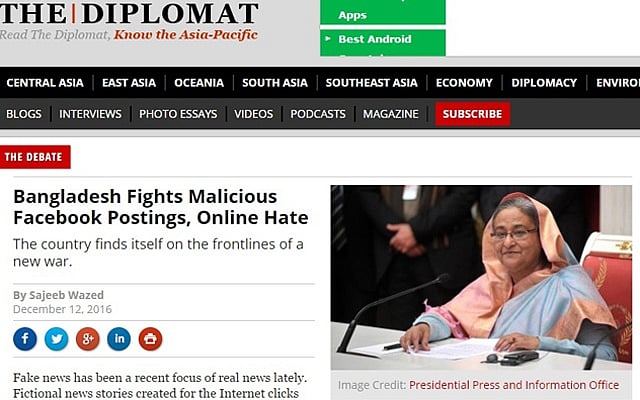
He made the observations in an article titled 'Bangladesh Fights Malicious Facebook Postings, Online Hate', published on Monday in The Diplomat, a Tokyo-based magazine for Asia-Pacific region.
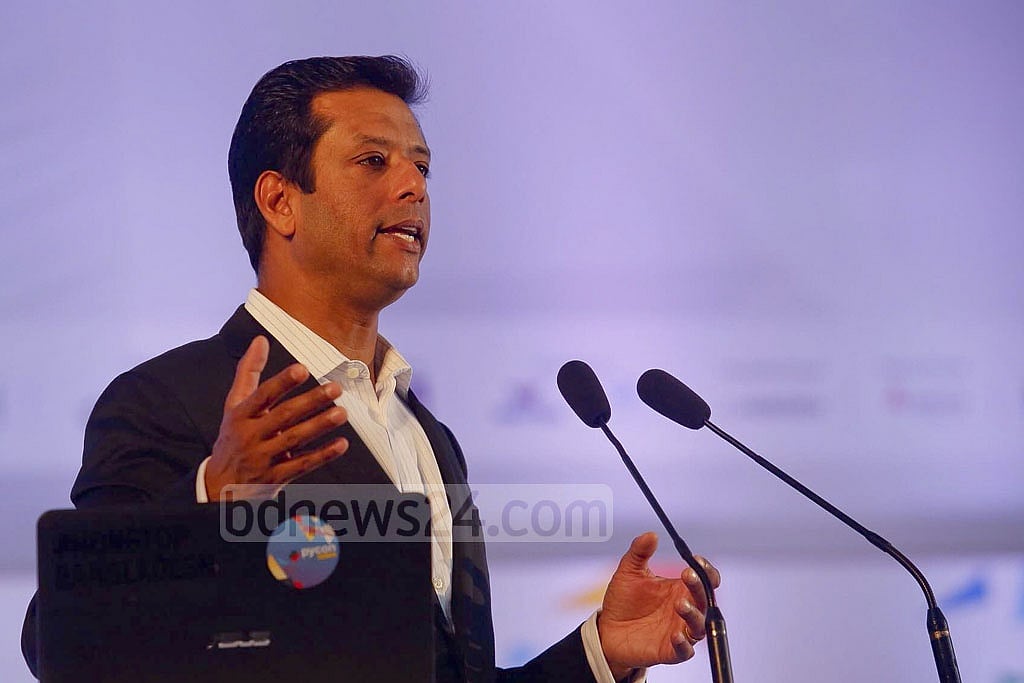
"Fake news has been a recent focus of real news lately. Fictional news stories created for the Internet clicks and ad dollars they generate have been identified as a problem both in the US and elsewhere, including, of all places, Bangladesh," Joy, the prime minister's son, wrote.
"Bangladesh is a constitutional democracy committed to protecting the rights of its citizens. As in the US, Bangladesh has suffered acts of harassment against religious minorities. Militants in Bangladesh have used social media to spread hate by using fake news disseminated on Facebook," according to Joy.
"The government of Bangladesh is committed to peaceful free speech and a free press, but will not allow terrorists to use the internet to spread falsehoods or to multiply the effects of horrific actions," he added.
As an example for spread of religious hate through the social media, he mentioned the attacks on the Hindus in Brahmanbarhia's Nasirnagar following a Facebook post, in which a fake image of a Hindu deity placed inside Kaba Sharif at the centre of Islam’s holiest mosque in Makkah.
Terming the attackers 'Islamist extremists', he wrote, "It didn’t matter to radicals that the image was clearly, and poorly, photoshopped. The image was used as a pretext for extremist elements to vent their hatred against Hindus, who are a religious minority in Bangladesh."
He claimed the government took 'swift' action to protect its citizens.
According to the article, nearly 80 people were arrested for their roles in the crimes. He said the arrests were based on a video from the crime scenes.
"The government announced these cases would be handled by its Speedy Trial Tribunal to make sure that victims received justice quickly," Joy wrote.
The prime minister's son wrote that nations worldwide have seen the 'force-multiplier effect' of hate spread over the internet. "Extremists in France, Belgium, the US and Bangladesh have been remotely radicalized by inflammatory words and images spread over the internet."
He noted that militants used customers’ phones to post images of the attack on Holey Artisan Bakery in Dhaka.
"While the government of Bangladesh is cracking down on those who use the power of the internet for evil, it is also using the reach and immediacy of the internet to do good," he wrote.
He mentioned that 'internet blackout' drills in August to practice how to refrain users of a certain area from using internet in order to interrupt internet service around an extremist attack or hostage situation to prevent militants from posting video, images and other real-time content to the internet.