


Published : 28 Sep 2020, 11:47 AM
Updated : 17 Oct 2022, 11:13 AM


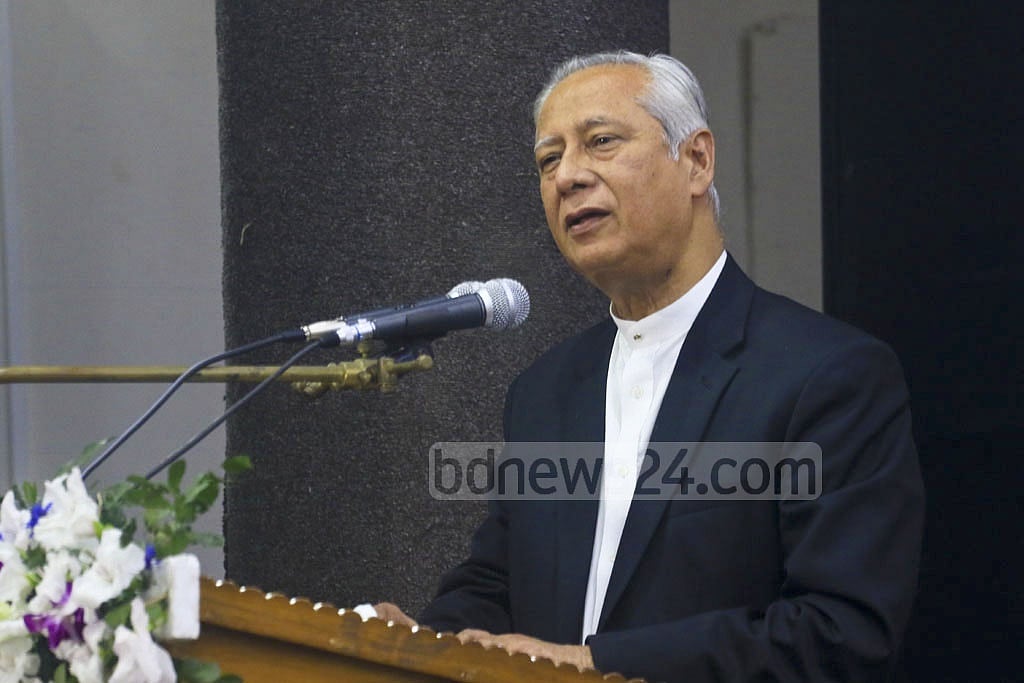
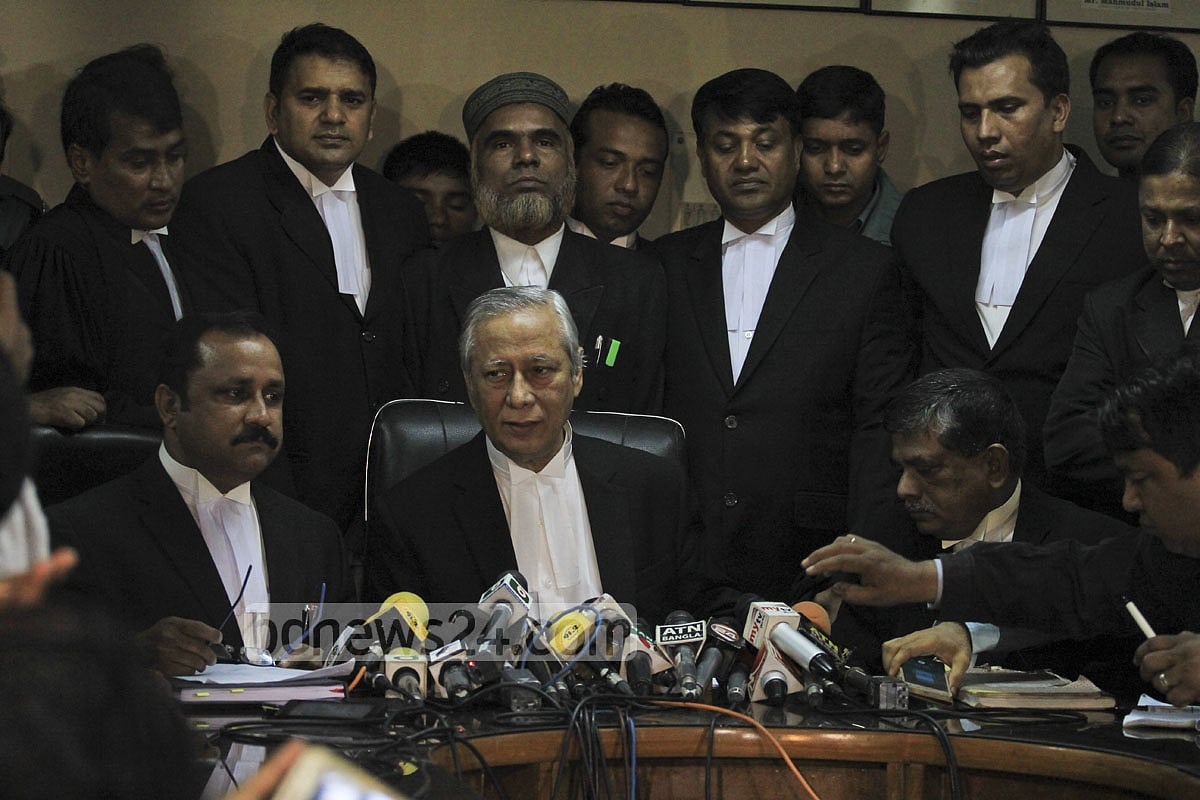
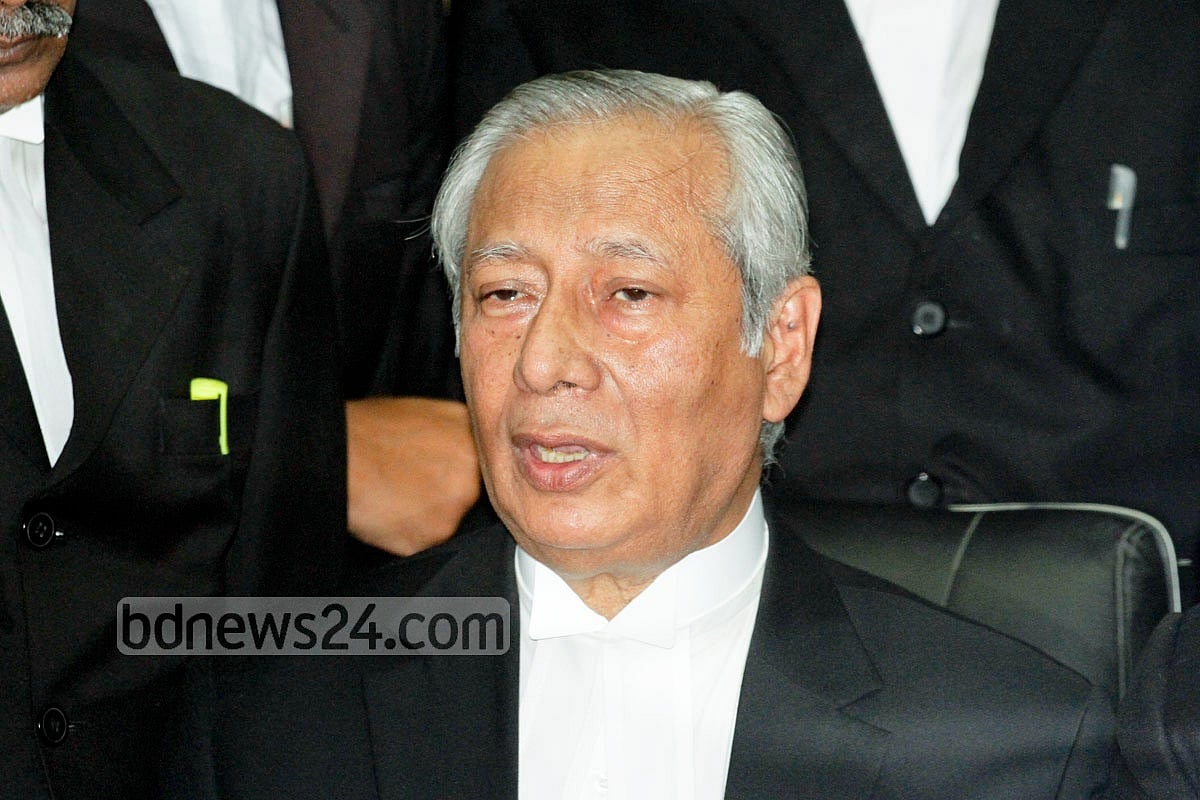
Chief Justice Syed Mahmud Hossain made the announcement at around 9:45 am on Monday. No sessions will be held on Monday as part of the top court’s homage to him, Justice Hossain said.
Alam breathed his last in intensive care at the Combined Military Hospital at 7:25 pm on Sunday at the age of 71.
He is survived by his artist wife Binota Mahbub, journalist son Sumon, and lawyer daughter Shishir Kona.
He was hospitalised with a high temperature on Sept 4 and later tested positive for COVID-19 and remained in hospital care ever since.
Alam was kept in intensive care at the hospital after his vital signs worsened during treatment on Sep 18.
File Photo
As the state’s chief legal officer, he played an immensely significant role in ensuring the trial of the crimes against humanity committed during the 1971 Liberation War.
He also played a key role in a number of crucial cases, including those involving the Fifth, Seventh, 13th and 16th Amendment to the constitution.
He was involved in the Bangabandhu Sheikh Mujibur Rahman murder case.
Alam worked as the state’s chief counsel in the case over the killings during the BDR mutiny.
Born in Munshiganj’s Louhajang on Feb 17, 1949, he graduated in political science from Dhaka University in 1968.
He received a degree in public administration the next year and completed LLB in 1972.
He had been involved in leftist politics as a student and later worked as a vice-president of Bangladesh Youth Union.
When the Communist Party of Bangladesh split following the fall of the Soviet Union, Alam quit politics and devoted his time as a lawyer.
He was listed as a lawyer on Bangladesh Bar Council and became a member of Dhaka Bar Association in 1973.
File Photo
He was elected the general secretary of the Supreme Court Bar Association in 1993-94 and worked as an additional attorney general for three years from 1998.
He had been the president of the SCBA before the 2007-’08 emergency.
Many top lawyers backed off when Hasina was arrested during the military-controlled government, but Alam stood firm.
That was the apparent reason behind Hasina choosing him as attorney general in January, 2009 after the Awami League returned to power.
Alam had sought to become the party’s candidate for a Munshiganj seat during the last parliamentary election, but Hasina insisted he continued as attorney general.













