Published : 24 Aug 2026, 10:46 PM
Updated : 08 Sep 2026, 09:35 AM


Bangladesh and India have discussed reopening closed border markets, bringing land ports into full operation, and withdrawing the existing restriction on importing yarn through land routes in an effort to make bilateral trade more dynamic and strengthen commercial ties between the two countries.
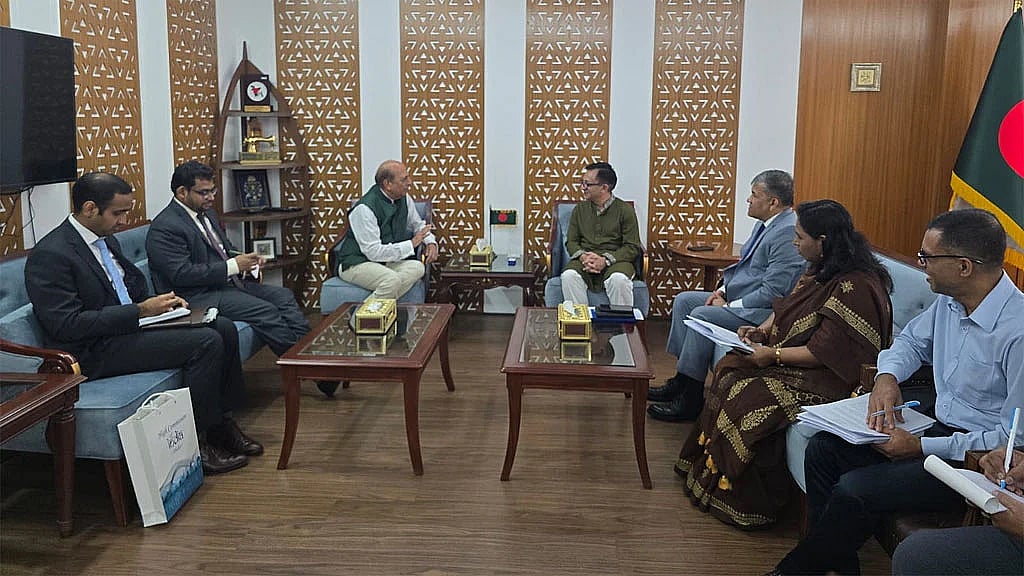
The issues came up during a meeting between Bangladesh Commerce Minister Khandaker Abdul Muktadir and Indian High Commissioner Dinesh Trivedi at the Secretariat on Monday. The meeting focused on expanding bilateral trade and removing obstacles faced by businesses.
After the meeting, the commerce minister said bilateral trade between Bangladesh and India currently stands at around $13 billion.
“However, some obstacles have emerged over the past one and a half years, slowing down commercial activities to some extent. We discussed identifying these problems and finding ways to make trade relations between the two countries easier and more effective in the future.”
The ministry issued a press release quoting the minister.
Following the July Mass Uprising, diplomatic relations between Bangladesh and India deteriorated significantly. As both sides adopted tough positions, regular visa operations also came to a halt.
However, since Bangladesh remains dependent on India for many essential commodities, trade between the two countries has continued, although with fluctuations. There have also been obstacles to imports and exports through land routes on both sides.
Against this backdrop, New Delhi appointed veteran politician Trivedi as its high commissioner to Dhaka in an effort to strengthen the two countries’ economic and diplomatic relations. Bangladesh has also been showing signs of seeking to improve trade relations with India.
After his meeting with Trivedi, the commerce minister said India is Bangladesh’s second-largest trading partner after China and that the two countries have longstanding economic ties.
“The issues of bringing the land ports into full operation, reopening the closed border markets, and withdrawing the existing restriction on importing yarn through land routes received particular attention at the meeting.”
There were also proposals to establish a joint task force to increase cooperation between businesses from the two countries and to improve digital infrastructure. The minister said these initiatives are intended to create new investment opportunities, expand business ties and accelerate trade.
He also said that, through the Indian high commissioner’s initiative, Bangladesh-India relations would become stronger in the coming days and economic cooperation would reach a new level.
Indian High Commissioner Trivedi said, “Although there are some differences between the two countries on political and economic issues, ordinary people want development and progress. The two countries need to work together, particularly for the future of the younger generation.”
He emphasised that Bangladesh and India are two independent and sovereign countries, and that neither is bigger or smaller than the other.
“Everyone is equal. The two countries must continue working on the basis of this equality.”
He said economic cooperation is the most important factor in improving bilateral relations. If economic ties are strengthened, cooperation in other areas will also increase, he added.
Emphasising joint investment and production, the Indian high commissioner said Bangladesh’s ready-made garment sector has been highly successful globally. India can support the sector by supplying zippers, machinery, buttons and other materials, he said. This would further increase mutual dependence between the two countries.
He said he feels proud when he sees garments bearing the label “Made in Bangladesh” in international markets.
“Bangladesh’s garment sector can move forward on a much larger scale through joint initiatives between the two countries.”
It is hoped that greater cooperation between businesses from Bangladesh and India, the creation of new areas for investment, and stronger supply chains will further expand commercial relations between the two countries in the coming days.