Published : 12 May 2026, 03:46 AM
Updated : 21 Aug 2026, 03:43 PM


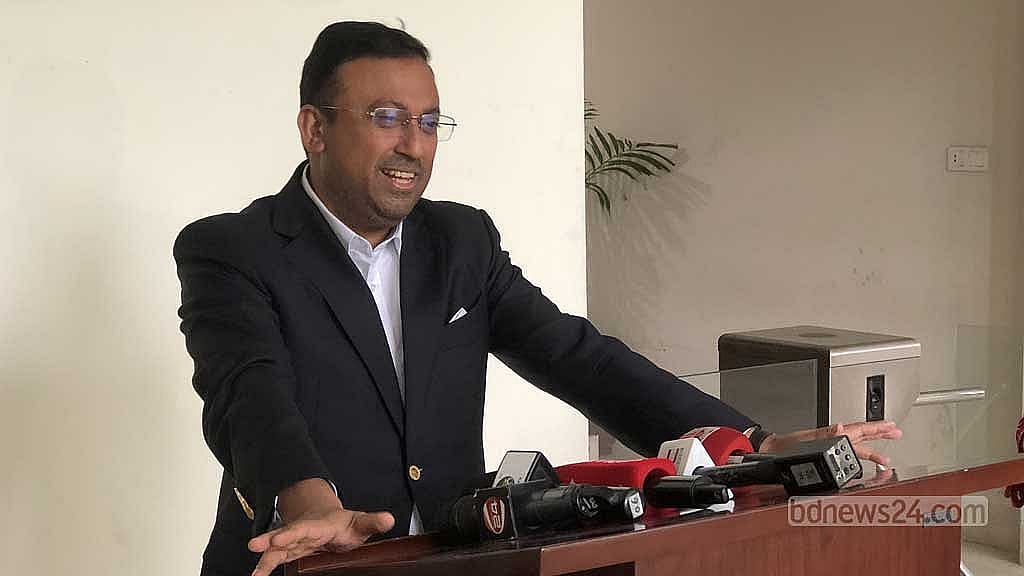
Prime Minister’s Foreign Affairs Advisor Humaiun Kobir has said Bangladesh will not be intimidated by attempts to extend barbed-wire fencing along the border, after West Bengal’s new BJP government decided to provide land to the BSF for the project.
Speaking at the foreign ministry on Monday, he said the matter would be addressed at an “appropriate place”, if necessary.
Kobir added that there is a clear distinction between election rhetorics and governance.
“We want to observe for some time whether what was said during elections is reflected in governance,” he said, referring to Chief Minister Suvendu Adhikari’s administration.
He stressed that Bangladesh would respond based on developments, maintaining a watchful and measured diplomatic stance on the issue.
“There is no way to intimidate a country like Bangladesh with barbed wire now. Look, if you want to have a relationship with people … the people of Bangladesh are not afraid of barbed wire,” Kobir said.
“The government of Bangladesh is also not afraid of barbed wire, (and) where we need to talk, we will talk.”
Kobir suggested that the Indian government show a “humanistic approach” in resolving border security issues if it wants a people-to-people relationship.
Earlier in the day, West Bengal’s newly formed government in its first cabinet meeting decided to transfer land to the Border Security Force (BSF) to erect a fence along the Bangladesh border.
Chief Minister Suvendu said the land will be handed over within 45 days.
This reflects a key election pledge by his Bharatiya Janata Party (BJP).
Hours later, Dhaka clarified that the Border Guard Bangladesh has been put on maximum alert along the frontier with India since the West Bengal assembly elections.
In January, the Calcutta High Court directed the then West Bengal government to hand over land in nine border districts to the BSF by Mar 31.
Tensions arose between the two countries during Bangladesh’s interim government over the construction of “unauthorised” barbed-wire fencing.
In light of the 1972 India-Bangladesh Friendship Treaty, a policy was formulated for the border authorities in 1975.
During the interim rule, former home affairs advisor Jahangir Alam said no one can build any defence establishment within 150 yards of the zero line without each other’s consent.
Regarding the political developments in West Bengal, Kobir said: “And our relationship is primarily with the central government. Here, we do not want to get into their internal politics."
Regarding border killings, Kobir, also a senior BNP leader, warned that Dhaka will “not sit back and watch” if its people are killed on the border.
He said many were killed randomly during the Awami League regime and border violations of “that level” will never take place again.
"If someone wants to make a border in that model, the present Bangladesh, which is no longer subservient, won’t sit back and watch. This Bangladesh has a plan on what to do,’ he said.
According to Kobir, the Indian border fencing will not be controversial.
Highlighting Bangladesh's position on regional stability and peace, he objected to former prime minister Sheikh Hasina’s stay in India.
He said Hasina took refuge in India after “killing 1,500 people” in Bangladesh, demanding that New Delhi does not give her the opportunity to create instability at home from there.
“We hope and we have been assured by the Indian government that they will not give that opportunity."
He said Bangladesh wants to advance bilateral relations amid challenges.
“However, when the door to dialogue is open, you can take some initiatives to resolve it. Some will be resolved quickly, and some will take time,” said Kobir.