Published : 22 Dec 2024, 08:23 AM
Updated : 28 Aug 2026, 01:15 AM


Sakib Ahmed, born during the COVID-19 pandemic, started attending school this year.
The 4-year-old, who previously stayed up late but had the opportunity to sleep during the day, now falls asleep around 2am and has to wake up at 8am for school.
His father, Shahriar Ahmed, shared that Sakib now gets only 5 to 6 hours of sleep on average each night.
Shahriar explained that he and his wife are working professionals and, out of necessity, often give their son a mobile phone to keep him occupied.
“We get back late, and even when we do, there's still work to do. That's why we can't spend much time with him, and we have to give him the phone,” he told bdnews24.com
“When we try to take the mobile back to put him to sleep, he cries and gets upset. We can’t sleep on time either.”
According to the National Sleep Foundation in the United States, children need varying amounts of sleep depending on their age.
• 3-month-old infants: 14 to 17 hours of sleep daily
• 4 to 11-month-old infants: 12 to 15 hours of sleep daily
• 1 to 2-year-olds: 11 to 14 hours of sleep daily
• 3 to 5-year-olds: 10 to 13 hours of sleep daily
• 6 to 13-year-olds: 9 to 11 hours of sleep daily
• 14 to 17-year-olds: 8 to 10 hours of sleep daily
However, following these recommendations seems impossible for Sakib, according to his father.
He said, “In the morning, we have to drag him out of bed to go to school. He cries and struggles to get ready.”
The World Health Organisation has set guidelines on the appropriate age for children to use digital devices and the recommended screen time duration.
Mahbubul Alam, director of Bangladesh Shishu Hospital and Institute, said although children stay up late, they have to wake up early for school.
"This causes sleep deprivation. When parents return home, they work on their mobiles or computers. When children see their parents using devices, they refuse to sleep. Ultimately, they end up going to sleep around 12 or 1am."
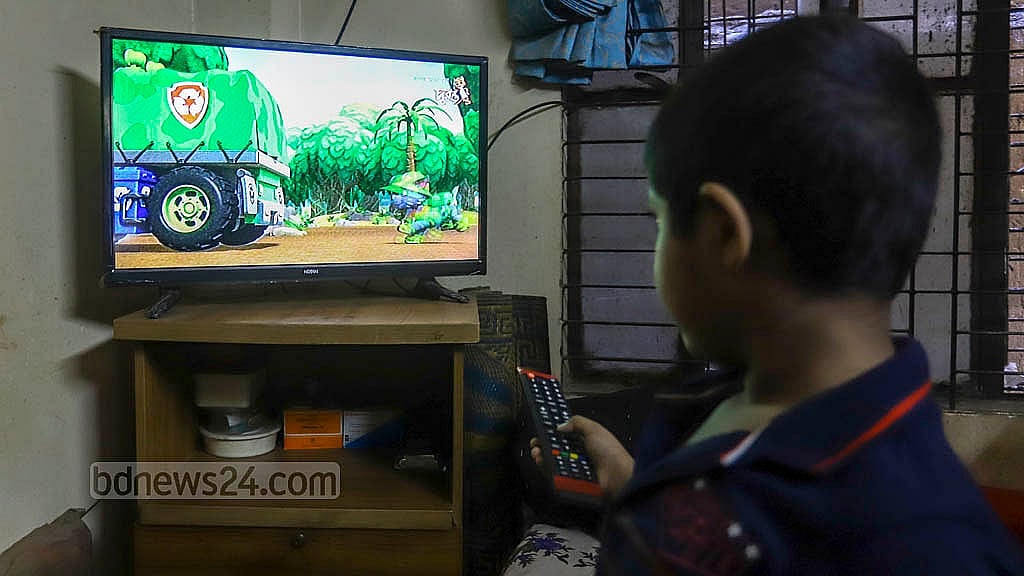
Mahbubul also pointed out that the family environment, city lights, and noise contribute to sleep disruption.
Sadman Azwad Suhas, 2, whose sleep was often disturbed by vehicle sounds near his home in Gendaria, now sleeps peacefully after moving to a quieter area in Keraniganj.
His father, Junayed Ahmed, explained that since moving, Suhas no longer experiences sleep disturbances.
"He used to wake up whenever the train, bus, or truck passed by, as there was a train line and a road next to the house. The noise would wake him up,” he said.
“During the day, the problem was worse, but at night, he would wake up 2 or 3 times. After crying for half an hour or an hour, he would fall asleep again. Now, it's a quiet area."
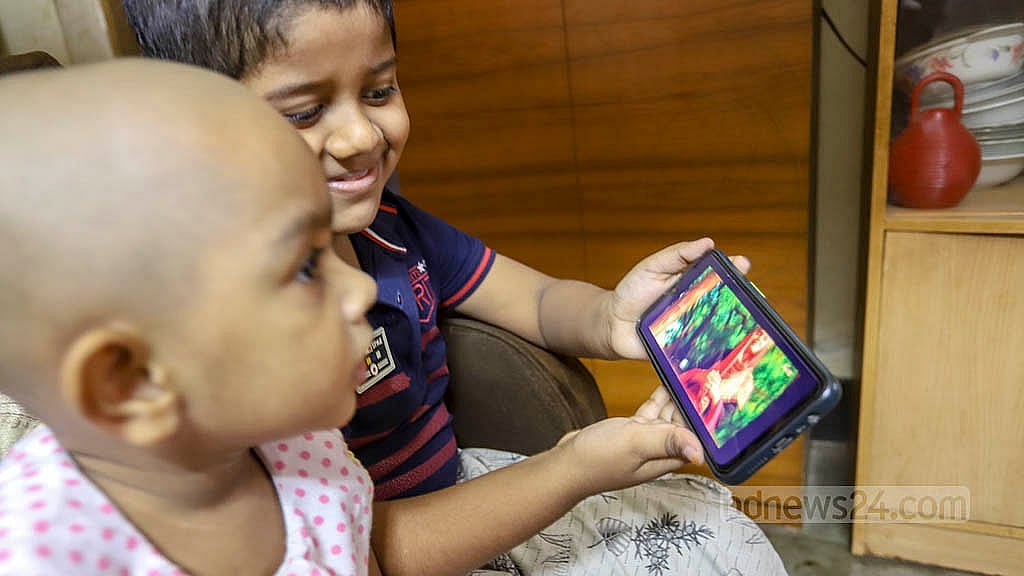
Mobile phones, however, remain the primary culprit for many children's sleep issues.
Suborna, a 4th-grade student at BIAM Laboratory in Eskaton, often stays up until midnight. She has to wake up at 7am.
Her mother, Shiu¬li Shabnam, a private sector employee, said that although she tries to put the child to sleep by 10:30pm, it is often not possible due to her late return from work.
"I can't get her to sleep until I get home. Sometimes I don't return until midnight, and that makes it even harder for her to fall asleep. She doesn't get proper sleep,” she added.
While describing her child's daily routine, her mother shared that after school, the child spends some time playing before returning home.
Then, she has to go to coaching classes. In the evening, after studying with her father, the child spends time on her phone until 11pm.
"We don't have any other options since we're often not home. We've tried to encourage reading books and creating habits with a cat, but she still ends up using the device. It's hard to maintain consistency," said Shiu¬li.
She continued, “It's really up to the family members to maintain discipline. Some say their children don’t sleep before 1 or 2am, and that affects their own sleep too.”
“If we set a specific time for device use, they understand. Yelling doesn’t help, but motivating them does."
A study by Prof Mohammad Nazmul Huq from Jahangirnagar University in 2023 revealed that 86 percent of children in Bangladesh are addicted to smartphones, with 29 percent showing severe addiction.
This addiction leads to disrupted sleep.

Prof Nazmul explained that parents often give their children phones for convenience, believing they can learn from them.
“But they fail to realise that prolonged usage is problematic. As a result, children are not getting quality sleep,” he said.
Associate Professor Salim Hossain of Dhaka University’s psychology department believes that children’s uncontrolled sleep patterns are often caused by their constant use of mobile phones.
"As a result, a part of their subconscious mind remains focused on the phone even during sleep, which disrupts the quality of their sleep," he said.
Dhaka University’s Clinical Psychology Professor Kamal Uddin Ahmed Chowdhury told bdnews24.com that children used to have the opportunity to fall asleep quickly in the past. However, the situation has changed, and they no longer get that chance.
"Previously, after school, children could sleep during the afternoon or evening. That is no longer possible; they have to attend coaching classes now."
Shyamol Atique, who counsels children at the Quantum Foundation, explained that in order to ensure children fall asleep on time, they need to be removed from mobile phones by 9pm.
"The effects of the phone linger in the brain for the next two and a half to three hours, which disrupts their sleep,” he said.
“In addition, children who sleep in separate rooms tend to stay on their phones, which also causes sleep deprivation."
Shyamol also pointed out the lack of playtime opportunities for today's children, saying: “In our childhood, we played a lot, and the exhaustion would help us fall asleep. Parents also go to bed late, and the light that seeps in through the curtains disturbs children’s sleep too.”
CONSEQUENCES OF SLEEP DEPRIVATION
Experts highlight a range of physical and mental health issues caused by sleep deprivation in children.
Professor Kamal explains that a lack of sleep can lead to several long-term problems, including high blood pressure, reduced work efficiency, and premature ageing.
"Children may experience early loss of productivity, attention deficits, and fatigue. Without proper rest, they miss out on the vital energy that comes from a good night's sleep,” he said.
“Irritability is another common issue that arises when sleep is insufficient.”
Parents often seek counselling for their children’s behavioural issues, such as refusing to study, reluctance to go to school, crying before school, vomiting at school, sleeping on the bench, forgetting homework, mood swings, and the loss of facial softness.
Counsellor Shyamol pointed out that these problems are often due to sleep deprivation, something many parents fail to recognise.
He said, "Temper tantrums, loss of appetite, and falling behind academically are the main consequences of insufficient sleep. The pressure of studies today is immense, leaving children with little opportunity to sleep during the day."
Shyamol also expresses concern about the rising number of children facing issues due to lack of sleep, calling the situation "alarming”.
Expert Mahbubul highlights the consequences of insufficient sleep, saying: "Inadequate sleep hampers growth, hinders focus at school, and when children enter higher education or the workforce, their attention span continues to suffer. Mental development is also impeded.”
“Nowadays, children have little time to rest at home due to coaching sessions and extracurricular activities."
Prof Salim discussed how the body’s regulation of sleep and wake cycles is affected by disrupted sleep patterns.
“When children stay awake at night, the hormone melatonin does not get released properly, leading to a feeling of being 'out of sync’,” he said.
“Sleeping late prevents the body from rejuvenating fully, and daytime naps are ineffective.”
He concluded, “With less sleep, children lose their ability to stay alert during the day, and this can lead to long-term health issues such as diabetes, high blood pressure, and heart disease.”

HOW CAN THIS PROBLEM BE SOLVED?
The WHO has issued guidelines on children’s screen time.
According to these guidelines, children aged 0 to 1 should not be exposed to devices, while those aged 2 to 4 can spend a maximum of one hour with them each day.
Experts recommend that in order to ensure uninterrupted sleep, children's device usage should be regulated according to these guidelines.
Prof Kamal said the current situation does not allow for such regulations to be easily implemented, meaning alternative solutions must be explored.
"Children need to engage in physical activities or outdoor games, but this is not always possible,” he said. “As a result, they turn to devices. If they could play in open fields or roam about, they would tire themselves out and naturally fall asleep by 10pm."
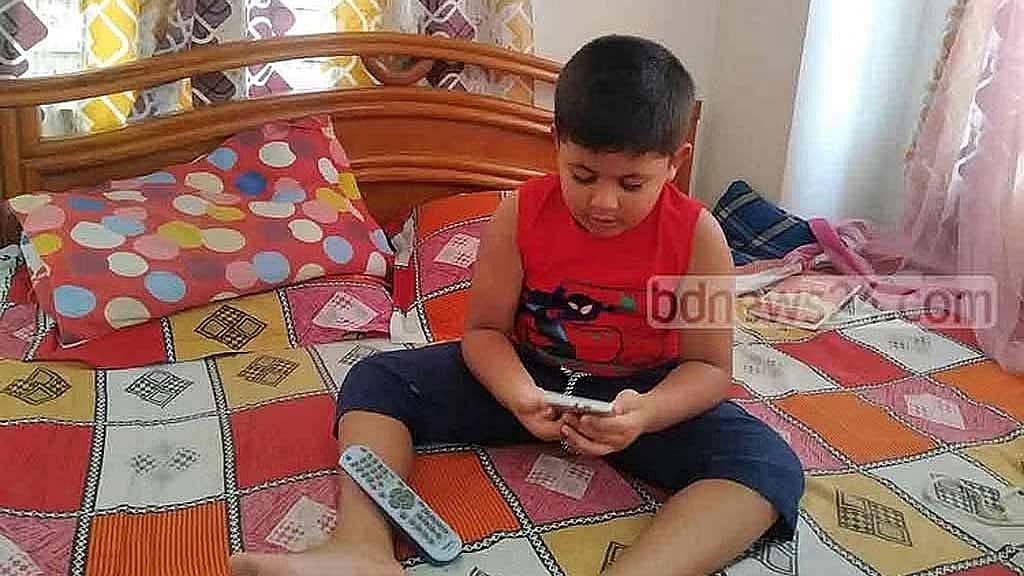
He added, “The situation had become such that parents, for the sake of family stability, were often going out, which impacted the children. But they had no choice but to work.”
With the increasing use of phones and computers, many children are exposed to content on the internet that is inappropriate for their age.
Mahbubul stressed the importance of creating a conducive environment for sleep, even amidst academic pressures.
"By 10 or 11pm, children must be prepared for sleep," he said.
"Parents, too, need to set an example by putting away their devices and going to bed within this timeframe."
Prof Salim recommended prioritising sleep during ideal hours.
He said, "In Bangladesh, the best sleep occurs between 9pm and 4am.”
“Children must complete their basic sleep cycle within this period. Screen time must be limited and should not exceed this window.”
Counsellor Shyamol recommends avoiding sugary and date-based foods for children in the evening.
These foods can provide a burst of energy, disrupting their sleep.
Shyamol said, "Fast food should be completely avoided. To make up for any lost sleep, children should be encouraged to nap during the day.”
“If outdoor play is not possible, indoor movement-based games should be introduced to ensure they exert some effort. Also, ensure the room is dark, as light can prevent deep sleep," he added.
[Writing in English by Sheikh Fariha Bristy]