Published : 25 Jan 2024, 03:37 AM
Updated : 25 Jan 2024, 04:01 AM


When examining the aftermath of pedestrian deaths caused by negligent handling of materials during building construction, the question invariably arises: Are those responsible ever held accountable?
In a prominent case from 13 years ago, a family settled for a Tk 1.5 million compensation after a fatal incident at a construction site. However, the High Court emphasised that compensation and legal accountability are distinct issues.
Seven years ago, a university student suffered a similar fate when he was struck by a falling masonry - a pellet of bricks that plummeted from a building site onto a pavement. The owner managed to escape scrutiny after providing financial assistance for his treatment, but the medical expenses were threefold the amount that his family received.
Two years ago, a police investigation into a similar incident in Narayanganj resulted in a chargesheet that omitted three of the four named in the case. The plaintiff is currently abroad. After the victim's family raised objections, the Police Bureau of Investigation (PBI) conducted a further inquiry. Yet, the family remains in the dark about the investigation's outcome.
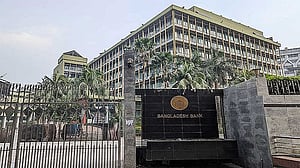
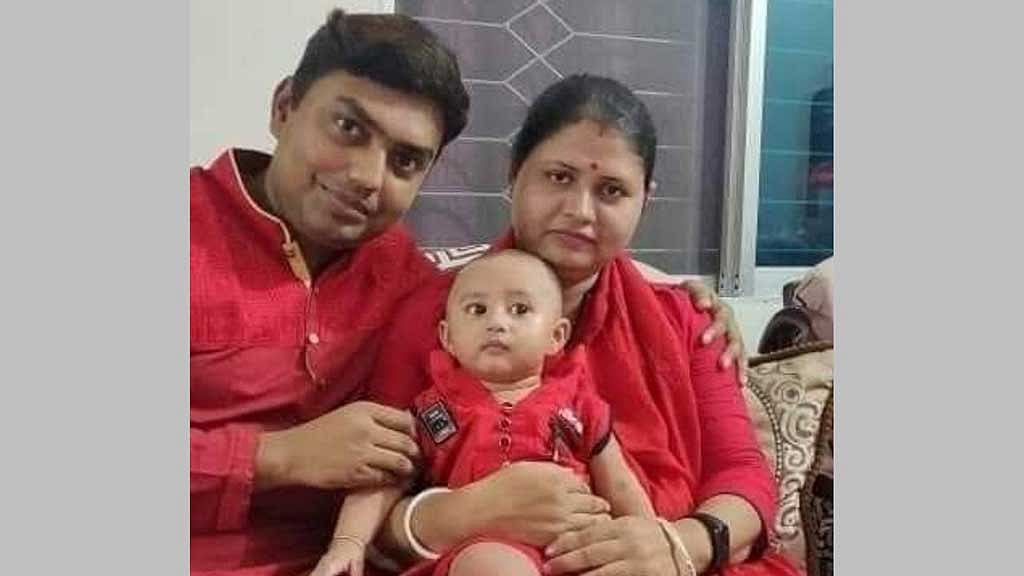
The recent death of Bangladesh Bank official Dipu Sana, who was struck by a falling concrete slab in Dhaka's Siddheshwari on Jan 10, has reignited concerns about pedestrian safety. Her husband, Tarun Kumar Biswas, filed a lawsuit in the wake of the incident.
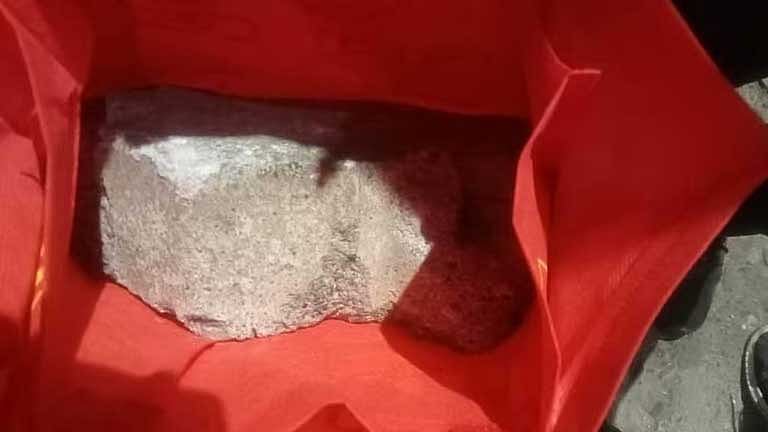
A probe is ongoing, with footage from the scene showing a brick falling from a building, according to Utpal Barua, chief of Ramna Police Station.
However, it is unclear whether the brick originated from the under-construction building or the adjacent flyover. Authorities are analysing the footage from various perspectives to determine the source, said Utpal.
The law mandates adequate safety measures during construction to prevent injuries or deaths caused by building materials. However, it does not specify distinct penalties for violations resulting in injury or death.
In most cases of accidents at construction sites, the victims' chances of survival are markedly slim.
While media outlets frequently report on lawsuits related to fatal accidents at construction sites, the coverage gradually tails off over time.
Cases involving negligent homicide charges against doctors and reckless drivers are frequently pursued. But building owners rarely, if ever, face charges over mishaps at construction sites, according to a Supreme Court lawyer.
FAMILIES SEARCH FOR JUSTICE
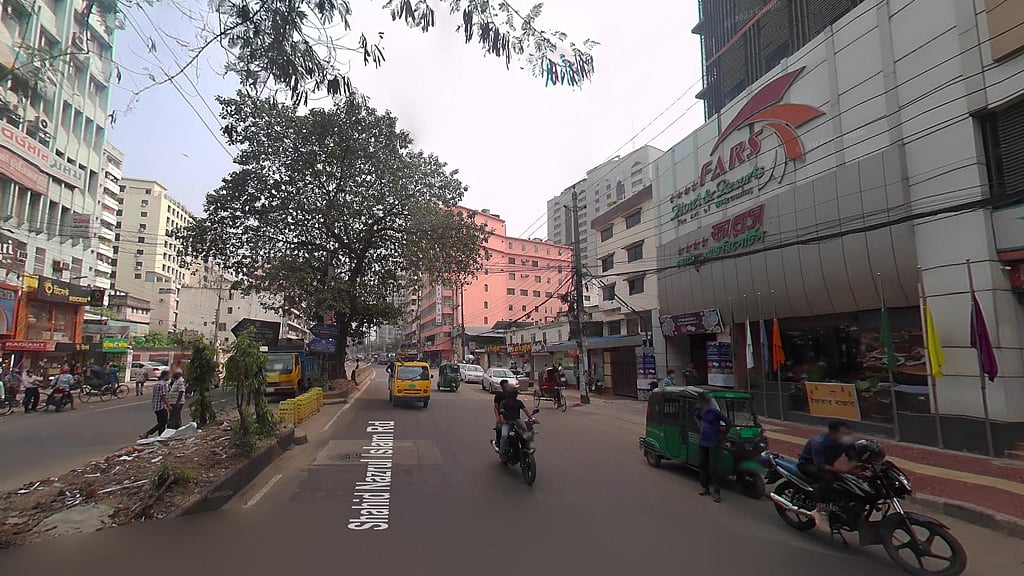
On Jul 16, 2011, tragedy struck when Habibur Rahman, a student of Tejgaon College, was fatally injured on his way back from visiting his sick mother in the hospital. A brick fell from an under-construction 18-storey building in front of Samrita Hospital, which led to his untimely death.
In the wake of the incident, the High Court swiftly issued a rule, asking why those responsible should not face legal consequences.
The court summoned the head of the construction company Sagufta Group, the chairman of RAJUK, and the chief of the local police station for an explanation. It subsequently ordered a compensation payment of Tk 1.5 million to Habibur's family.
Nasreen Hossain, Habibur's elder sister, lodged a case at Mohammadpur Police Station over the incident. The building owner, Mosharraf Hossain, and his son Faisal were apprehended but later released under the condition of providing financial assistance for the victim's medical expenses.
However, there is uncertainty surrounding whether the family received any compensation.
"Yes, a student died. However, we didn't get any information about whether his family received the compensation later or the developments in the case," said Amjad Hossain, then president of Bangladesh Chhatra League’s Tejgaon College unit.
A senior officer from Sher-e-Bangla Police Station confirmed that the compensation was indeed paid to the family. The High Court also ordered the continuation of the case.
According to Saidur Rahman, a constable from the Sher-e-Bangla Nagar Police Station, the case was started on Jul 16, 2011, and settled on Mar 15, 2012.
Another victim, Akhidul Islam, faced life-altering consequences after he was hit by a falling brick at an under-construction site in Mohammadpur over seven years ago.
At the time, he was a second-year student in the fine arts department at the University of Development Alternative (UDA). He has yet to complete his higher studies.
The severity of his injuries meant that his life was hanging by a thread at one point as he spent a significant period in intensive care and a year recovering.
Despite surviving, Akhidul's life has never been the same. He missed three semesters and is still listed as a final year post-graduate student.
Although his family received Tk 500,000 immediately after the accident for his treatment, his medical expenses eventually climbed to Tk 800,000, which were not covered by the construction company.
"The total hospital expenses reached Tk 1.3 million. We have continued to incur costs over the years and still require financial support," Akhidul said, highlighting the ongoing financial burden and the detrimental impact on his education and health.
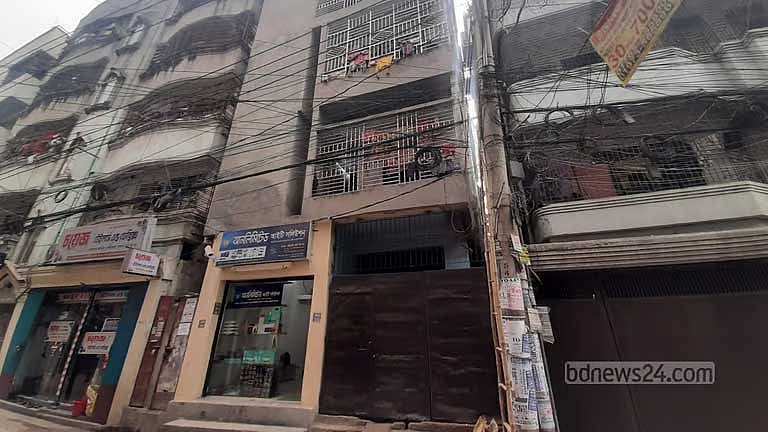
Uttam Kumar Saha Chowdhury, Akhidul’s teacher, also noted the lasting effects of the accident on his eyesight and memory.
Addressing the family's grievances, Monir Hossain Farooq, elder son of building owner Mosharraf Hossain, said, "The construction was carried out with proper safety measures. Unfortunately, a brick, along with bamboo, accidentally fell and injured him.
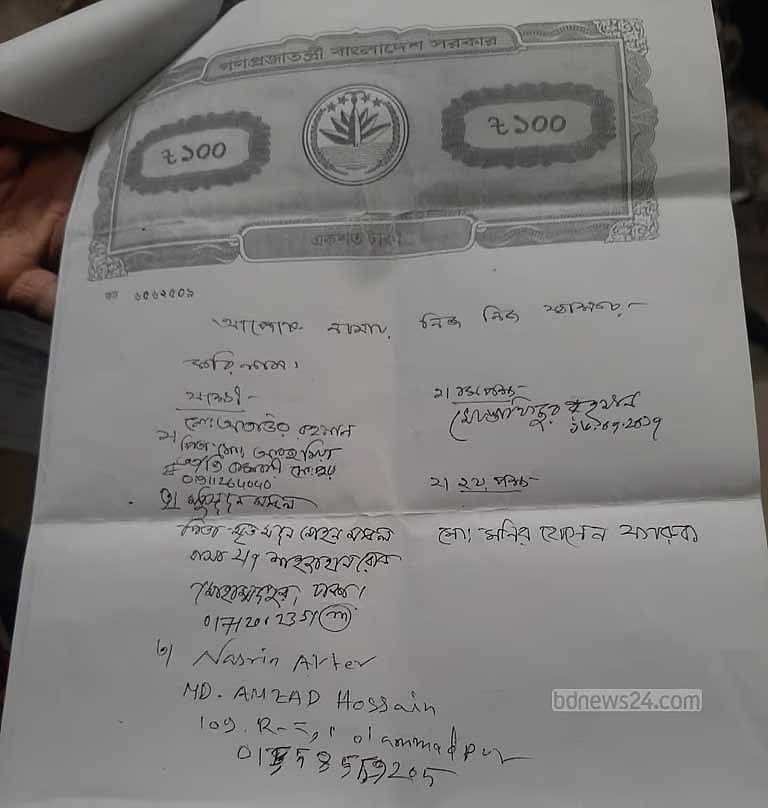
"We immediately provided medical assistance. His family demanded Tk 500,000 for his treatment, which we settled on in the presence of the police, and his elder sister signed on a stamp paper attesting to it."
ACCUSED LET OFF THE HOOK
On Dec 22, 2021, Narayanganj resident Jahanara Begum Baby was returning home after taking her grandson to school. But she never made it back.
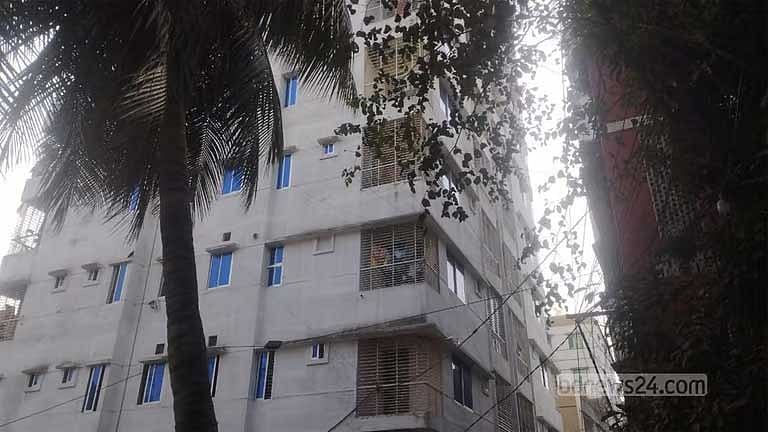
Jahanara died instantly when she was struck by a falling iron cable from a 10-storey building under construction in the Jannat area of Missionpara's Chashara Bagh.
Jahanara's son, Jihatil Jahan, subsequently filed a legal case implicating Tota Mia, the building owner, Aman Ullah, owner of Sunrise Developer Limited, and construction workers Sana Ullah and Md Sarwar.
The police sprung to action, arresting the two workers named in the case.
However, the subsequent developments in the case have raised concerns as the police decided to drop charges against Tota Mia, Sana Ullah, and Sarwar. The decision prompted Jihatil to voice his objection to the chargesheet.
Jahanara's brother-in-law, Asaduzzaman Khan Rinku, said that Jihatil is currently studying in Portugal. "The construction firm proposed a settlement, but Jahanara's family declined the offer. Now, the case is being managed by Jahanara's daughter and her husband, Mohammad Riad."
Riad, Jahanara's son-in-law, expressed frustration with the police's handling of the case. "After about six to seven months, the police did not bring charges against three of the accused. We were dissatisfied with this outcome.
"Consequently, the PBI took over the investigation. The PBI has recently presented their chargesheet, but we haven't reviewed it yet. We plan to examine it and decide on our next steps. Our hope is for a fair and just trial."
WHAT THE LAW SAYS
Section 17 of the Building Construction Rules, 2008, mandates necessary and appropriate safety measures at construction sites.
It provides that if construction activities disrupt public access or pose a danger to the public on roads or other places, the responsible party must ensure public safety by creating temporary barriers, life-saving enclosures, and alternative pathways.
However, the law lacks explicit provisions detailing consequences when a failure to provide these safety measures results in injuries or fatalities.
Supreme Court lawyer Tanzim Al Islam highlighted this legal lacuna.
"We often encounter case files involving bus or truck drivers and doctors in incidents of negligent homicide. "Yet, he said, "instances where building owners are penalised for deaths caused by negligence at construction sites are not commonly seen in my experience."
Tanzim pointed out that while some pieces of legislation impose penalties for deaths due to negligence, the key issue lies in the enforcement of these laws. He emphasised the importance of legal application and the pursuit of compensation, noting that some cases are making their way to the High Court and showing progress.
Regarding instances where families of victims do not pursue cases after receiving compensation, Tanzim said: "If the victim's family accepts compensation, there's little that can be done."
However, he stressed the state's responsibility to ensure justice in such situations.
"The police should take a more proactive role. Even if a family accepts a lower compensation amount, it's the state's duty to investigate the cause and ensure that those responsible are held accountable.”