Published : 05 Aug 2026, 05:06 AM
Updated : 08 Sep 2026, 09:30 AM


Ballots, Reforms and Unfinished Promises
Democracy restored: A historic election ended 18 months of interim rule and returned the BNP to power
State reform under way: 120 of 133 reform-linked ordinances have taken effect, with more awaiting implementation
Economic challenge: Urgent action is needed on youth employment and social inequality to fulfill the core demands of July
Shifting geopolitics: New Delhi, Beijing and Western powers recalibrate relations as Dhaka navigates a new diplomatic era
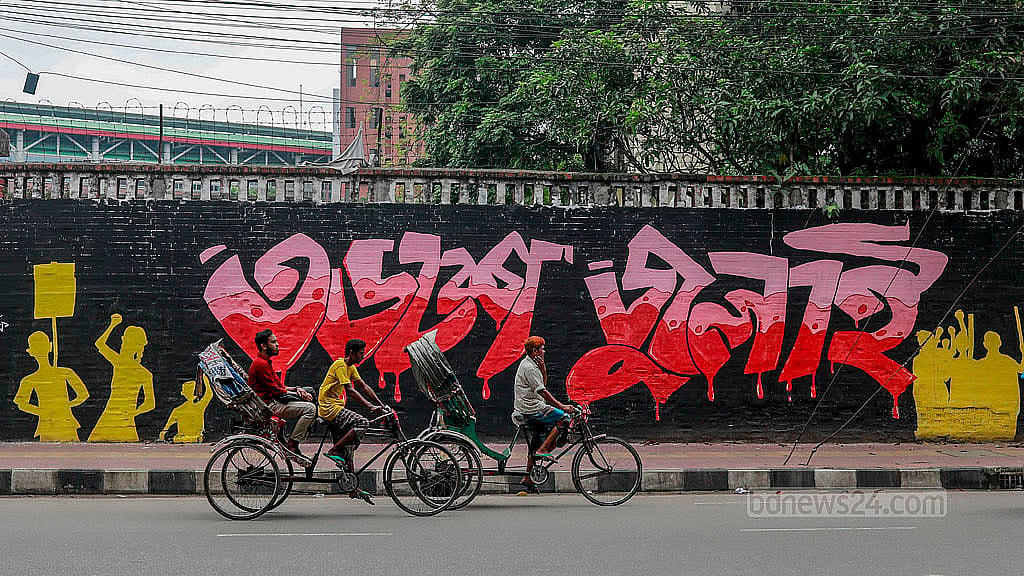
Bangladesh’s streets became the battleground for a political rupture few could have imagined. A protest over government job quotas escalated into a mass uprising, bloodshed followed, and Sheikh Hasina’s 15-year rule came crashing down.
What followed was not simply a change of government, but a profound shift in the country’s political order.
An 18-month interim administration under Muhammad Yunus gave way to a February election that returned the Bangladesh Nationalist Party (BNP) to power with a two-thirds majority.
Now, with the political landscape reshaped, the new government is promising economic recovery, stronger diplomatic ties and a return to full law and order.
The BNP, one of the principal forces behind the uprising, says it is carrying forward the aspirations that fuelled it.
Yet the defining question remains: how much of what Bangladesh demanded in the streets has found its way into the country it is becoming?
Political analyst Prof Kazi Mohammad Mahbobor Rahman says expectations were exceptionally high.
“We wanted a full democratic system. But it is a reality that it takes time to enter a full democracy in line with expectations.”
The Dhaka University political science professor says Bangladesh has nevertheless crossed an important threshold.
“So, first of all, we have now been freed from fascism and authoritarianism because of this democracy. After a long time, we were able to vote. Besides, after an autocratic government, an elected government is coming to Bangladesh.”
But he says the durability of that democracy remains to be tested.
“Through the election, we are getting a message of democracy, but the future will tell how sustainable it is. Now we have to work to keep the democratic process effective and activate it.”
He also points to greater accountability in law enforcement, saying the new government has not become involved in enforced disappearances and killings as during the Awami League era.
“Besides, we have been freed to a large extent from the lack of accountability in the law-and-order situation that existed during the previous regime. From the standpoint of accountability.”
The reform process launched under the interim government is another significant gain, Mahbobor says. Of 133 ordinances introduced through the reform process, 120 have taken effect, while committees have been formed to implement the remainder.
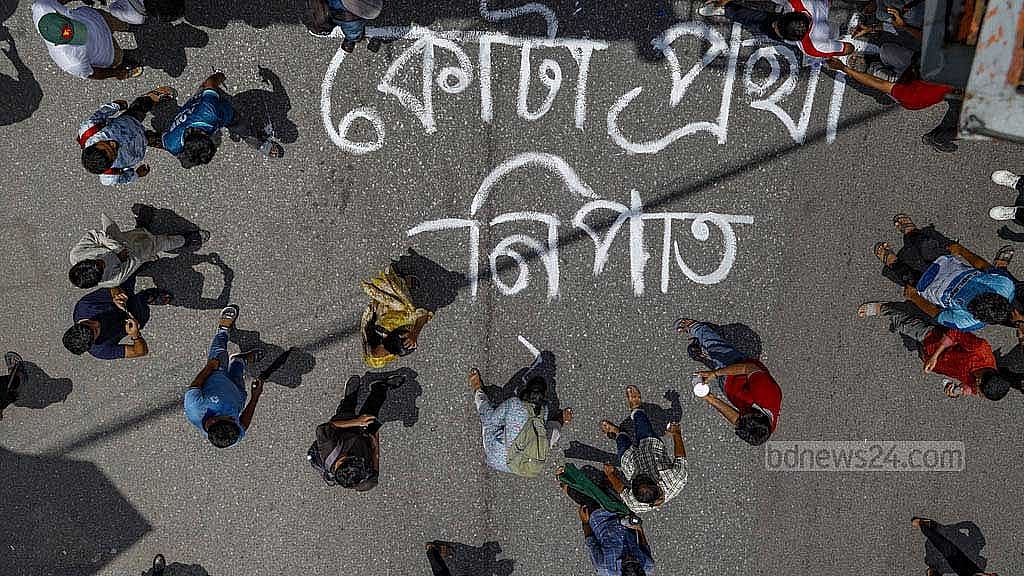
But reducing inequality will require jobs, particularly for young people.
“We have some more expectations, especially the need to create employment opportunities for young people. However, this will take time continuously. The process of reducing inequality socially has to begin.”
What July Changed
The movement began in early July 2024 with demands for reform of government job quotas. It soon spread from Dhaka University to educational institutions nationwide.
Hasina said the quota issue would be settled in court. At a press conference, she asked: “If the grandchildren of freedom fighters do not get [jobs], then will the grandchildren of Razakars get them?”
“Razakar” is a derogatory term in Bangladesh for those who collaborated with Pakistani forces during the 1971 Liberation War.
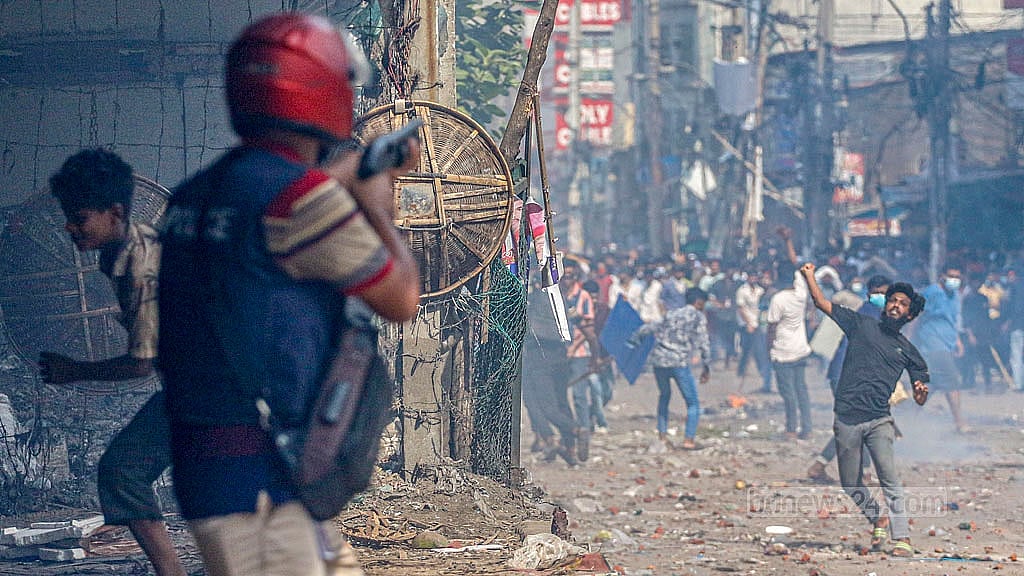
That night, protesters at Dhaka University responded with chants of “Who are you? Who am I? Razakar, Razakar”, deepening the confrontation.
Instead of pursuing dialogue, the government responded with force — shootings, arrests and alleged torture at the Detective Branch office. Bullets, tear gas and batons met growing crowds. Facebook was blocked first, followed by the internet.
The strategy backfired.
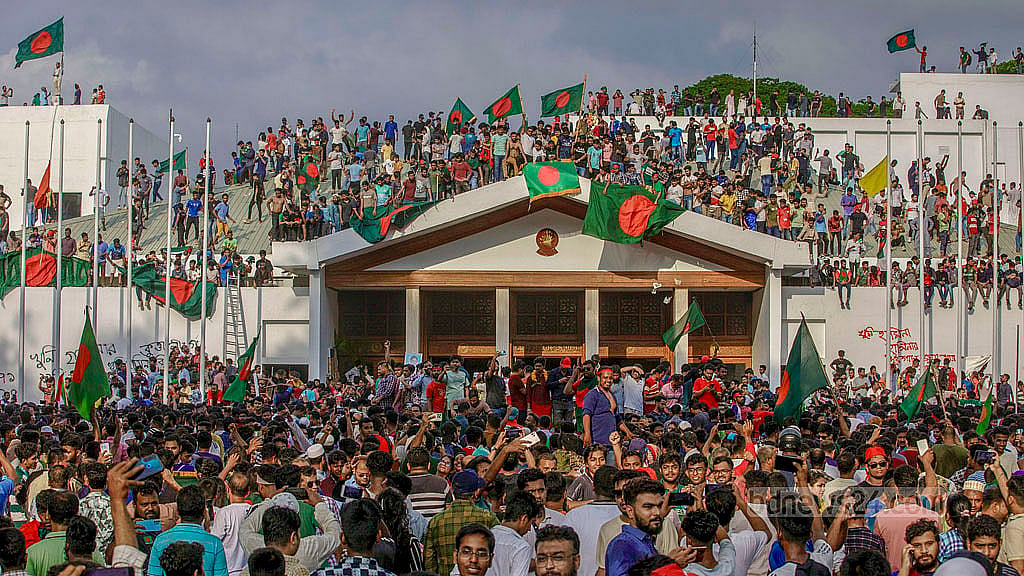
Within 20 days of the bloodshed beginning, Hasina’s government collapsed. On Aug 5, the day she fled, Ganabhaban, police stations and government installations across the country were attacked and looted. Bangladesh went three days without a government before Yunus took charge on Aug 8.
The following month brought robberies, neighbourhood patrols and demonstrations over competing demands, leaving the administration largely paralysed.
A UN human rights fact-finding report said nearly 1,400 people were killed and several thousand injured between Jul 15 and Aug 5.
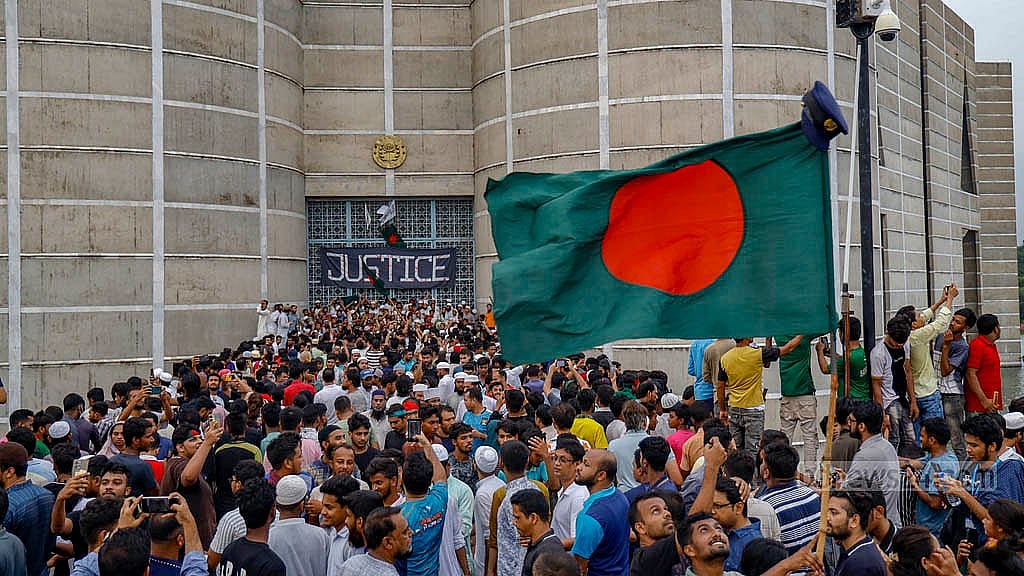
Election Brings BNP Back
After 18 months of trials over the Uprising killings, reform efforts and political instability, the interim government held the election on Feb 12.
With the Awami League barred from political activity, the BNP and Jamaat-led alliances were the main contenders. The BNP brought together its anti-Awami League allies, while Jamaat joined 10 parties, including the National Citizen Party (NCP) formed by student leaders from the July movement.
The BNP returned to power after nearly two decades. Tarique Rahman, who had spent 17 years in exile, returned home and became prime minister.
Jamaat, once a BNP coalition partner, became the main opposition in parliament. A central dispute is the implementation of the July Charter, drafted during the interim government.
The 11-party Jamaat-led alliance wants constitutional changes based on the referendum held alongside the election, including a second parliamentary chamber based on vote shares, restoration of the caretaker government system and changes to appointments to constitutional institutions.
The BNP wants amendments based on its note of dissent to the July Charter. A special committee has been formed, but the Jamaat-led alliance has declined to join it.
During the interim government, the Awami League’s political activities were banned under the Anti-Terrorism Act.
Most of its leaders and activists remain in hiding. Despite announcing return programmes online, the party has managed only sporadic flash processions followed by arrests.
Hasina, living in Delhi since fleeing in 2024, has said she will return in December. Indian media have reported plans for her to address an event virtually on Aug 5.
The BNP government says it is awaiting a court decision on whether the Awami League can resume political activity.
Economy and Diplomacy
The BNP says it is working to restore stability and revive the economy. But energy supplies have been disrupted amid global fuel-market turbulence linked to the war in West Asia and an accident at an LNG terminal.
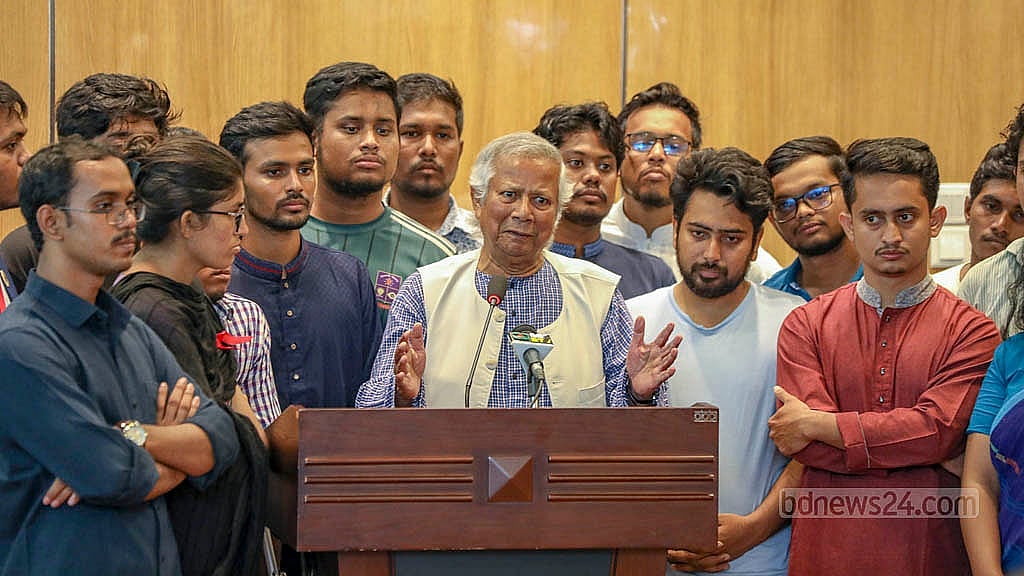
The government has reversed several interim-government initiatives while continuing to foreground the July Uprising.
Dhaka and New Delhi are also seeking to normalise relations. Indian Prime Minister Narendra Modi invited Tarique to Delhi soon after his government took office. India has also invited him to the BRICS summit in September as Bangladesh takes over the BIMSTEC chair. No decision has yet been made on an India visit.
Tarique’s first foreign trips were to Malaysia and China. US officials have also visited Dhaka, while the government says it wants stronger strategic ties with Saudi Arabia, Turkey and other Muslim-majority countries.
Marking the Uprising
The government will observe July Mass Uprising Day 2026 nationwide on Wednesday under the slogan “We will build the country in the spirit of July, Bangladesh first”.
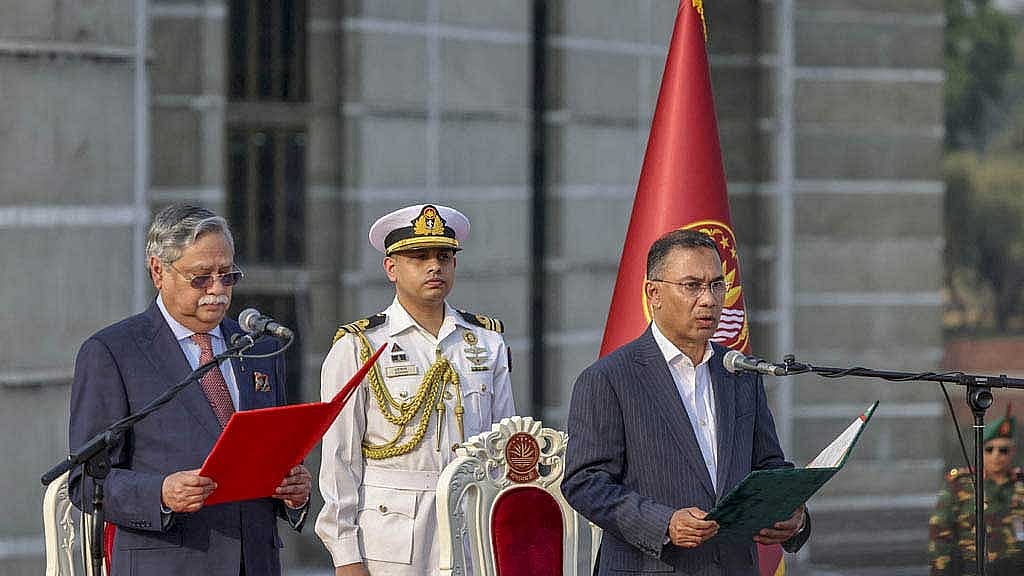
The Ministry of Liberation War Affairs will host a reception for families of July slain and protesters at the Bangladesh-China Friendship Conference Centre in Dhaka at noon, with Acting President Hafiz Uddin AhmAd Bir Bikram in attendance.
Tarique will inaugurate the July Mass Uprising Memorial Museum at Hasina’s former residence. Culture Minister Nitai Roy Chowdhury said it would be reserved for special guests and families of those slain in the protests on opening day and opened to the public from Thursday.
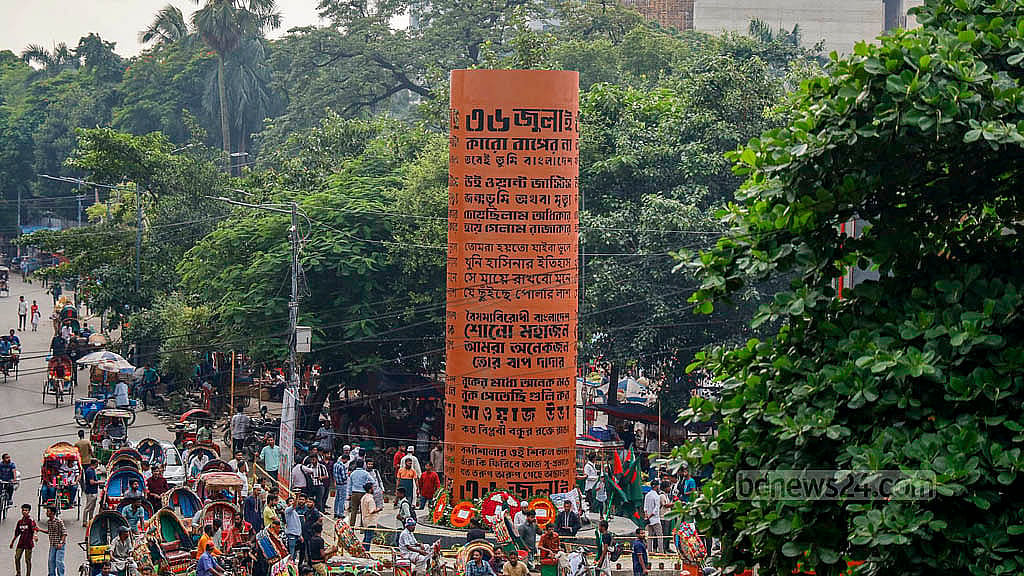
Senior government officials will lay wreaths at the July Martyrs Memorial in Shahbag at 6:01am. Events will also be held nationwide and at Bangladesh’s diplomatic missions abroad.
In his anniversary message, Hafiz Uddin called for unity to build a democratic, just, humane, discrimination-free and prosperous Bangladesh.
Tarique said, “1971 was the war to achieve independence, while 2024 was the war to protect the independence of the country and its people.
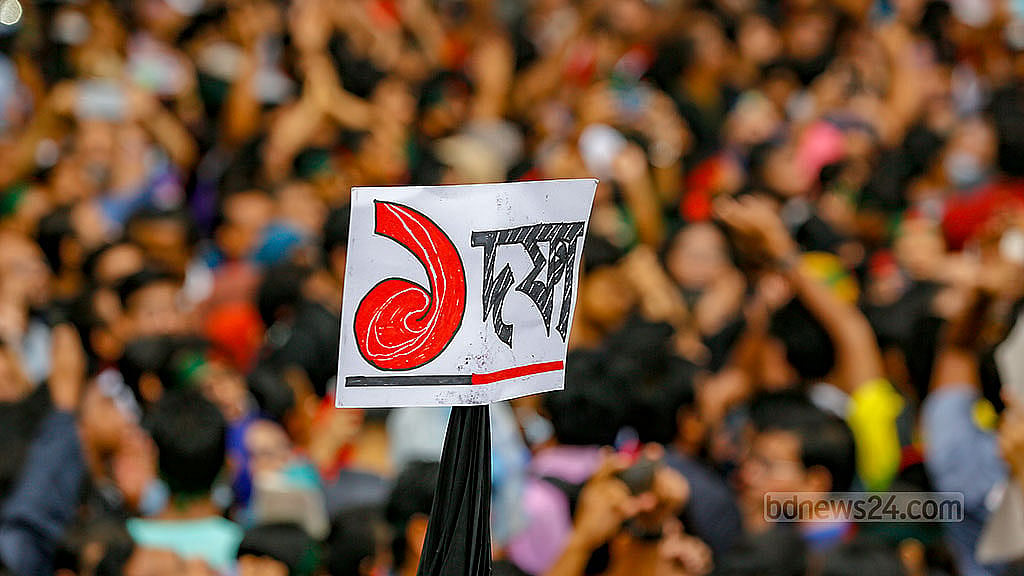
“Bangladesh has never forgotten the martyred freedom fighters of 1971, nor will Bangladesh ever forget the martyrs of the 2024 mass uprising.”
He warned that differences of opinion must not turn into hostility and pledged that “there will never again be an autocracy, fascism, extremism or militancy in Bangladesh, nor will the country ever be allowed to become a client state”.
The ballot box has returned, governments have changed and reforms have begun. But the deeper promise of July -- a democratic, accountable and less unequal Bangladesh -- remains a work in progress.