Published : 14 Feb 2024, 12:42 PM
Updated : 16 Feb 2024, 12:54 PM


From birth, a child begins to navigate a web of emotions, sensing feelings of distress and yearning even before they truly grasp the concept of their own physical existence.
As they reach adolescence, the complexities of love start to stir within them, triggering a natural desire to both love and be loved.
However, society denies this basic right to some, making love seem like an unattainable dream.
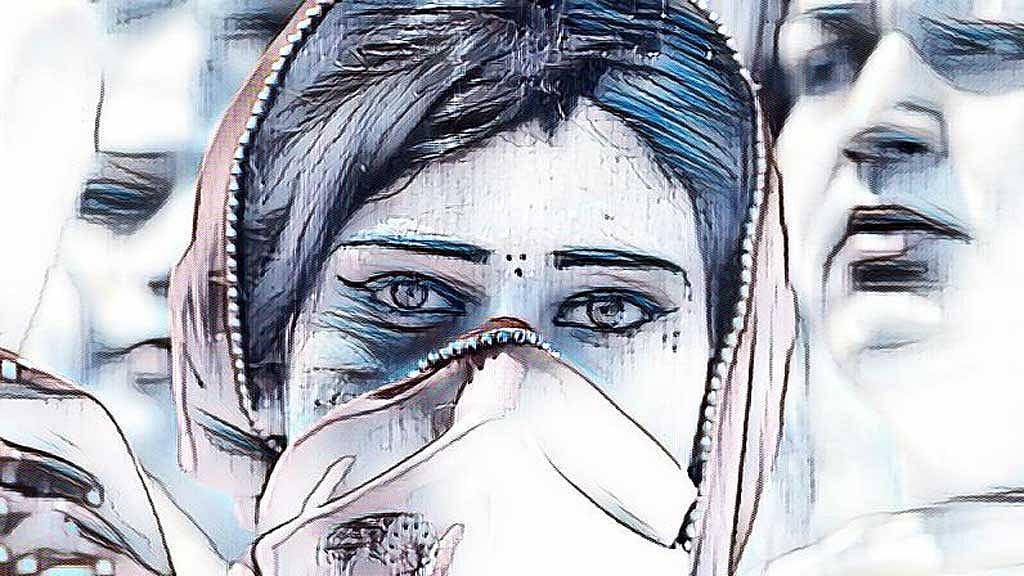
Priya Khan is one such person. Now 39, Priya has been in relationships with various men over the years, yet none have truly reciprocated her feelings. Society's prejudices and betrayals have left her to face a life of solitude.
Priya began to sense she was different from her peers when transitioning from sixth to seventh grade, when she understood her feelings diverged from those of her peers. By eighth grade, as she noticed her body undergoing changes, she came to a profound realisation: she did not identify as a man.
Reflecting on her journey of self-discovery, she said, “At an age when boys typically find girls attractive, I found myself drawn to a boy. It was clear to me that I harboured another identity within."
During her school years, Priya had her first crush on a classmate. "Let's say his name was Prattay. To everyone, I appeared as a boy, attending school in shirts and pants. Yet, I harboured feelings for another boy."
She developed a close friendship with Prattay, feeling a sense of longing whenever she didn't see him. This led her to question her identity. "Am I a boy? A girl? Or someone from a different realm altogether?”
Recounting the heartbreaks and hurdles she has faced throughout her life, Priya likens transgender women to "unscented paper flowers", valued more as novelties than for their true essence.
"People play with us, use us, and then discard us. Don't we deserve love too?”
From a young age, Priya was passionate about dancing and singing, which subjected her to ridicule and harassment. She was often derogatorily labelled as 'Hijra' or 'effeminate', among other slurs.
Priya completed her SSC exams in 1999 from a school in Savar. "We were close until the SSC exams. After that, I moved to Dhaka from Savar for my intermediate studies, and the affection between us faded."
Upon entering college, Priya left her family home and relocated to Gulistan in Dhaka. In 2007, when joining a dance academy, she formed a bond with another man, with whom she remained until 2014.
"Back then, the idea of us getting married was unthinkable. There was no legal recognition for our kind of relationship. Marriage wasn't an option, so we were together simply because we liked each other. He worked at a computer shop," Priya explained.
In 2014, this relationship ended when the man moved abroad, leaving Priya without any further contact. "That's when I realised, perhaps love isn't meant for people like us. Maybe he left because his family would never accept me."
Following the breakup, Priya faced numerous challenges and eventually chose to avoid romantic relationships altogether. She harboured deep-seated anger and resentment towards society and even herself.
Yet, despite the hardships, Priya holds onto a sliver of hope, albeit with a sense of resignation.
In late 2019, Priya encountered a young man in Shahbagh, and they quickly fell in love. However, this relationship, like her previous ones, did not have a happy ending.
For over two years, Priya and the man shared a close bond until tensions led him to return to his village home. His family was aware of their relationship, which deteriorated further when he started abusing substances. Eventually, he cut off all contact with her.
The situation escalated when the man disappeared in November 2021, leading his family to blame Priya and file a legal case against her.
"He returned home over a month later from Lalon's Ankhra in Kushtia after reading my messages. Upon his return, his family confiscated his phone, detained him, and later admitted him to a mental hospital before eventually restraining him at home with chains.”
"He had expressed a willingness to marry me, but his family refused, likely due to societal pressures. It's tragic how his life has been derailed."
Now, Priya wants to avoid further emotional turmoil in society that does not welcome her. "I no longer possess the mental strength for it," she said.
Yet, Priya questions whether this means her life should come to a halt. She stressed the importance of self-reliance and expressed a yearning to reconnect with her lover.
"I've even spoken to the local mayor. Our personal disputes may have strained our relationship, but I haven't ruined his life. If his family consents, I'm willing to welcome him back."
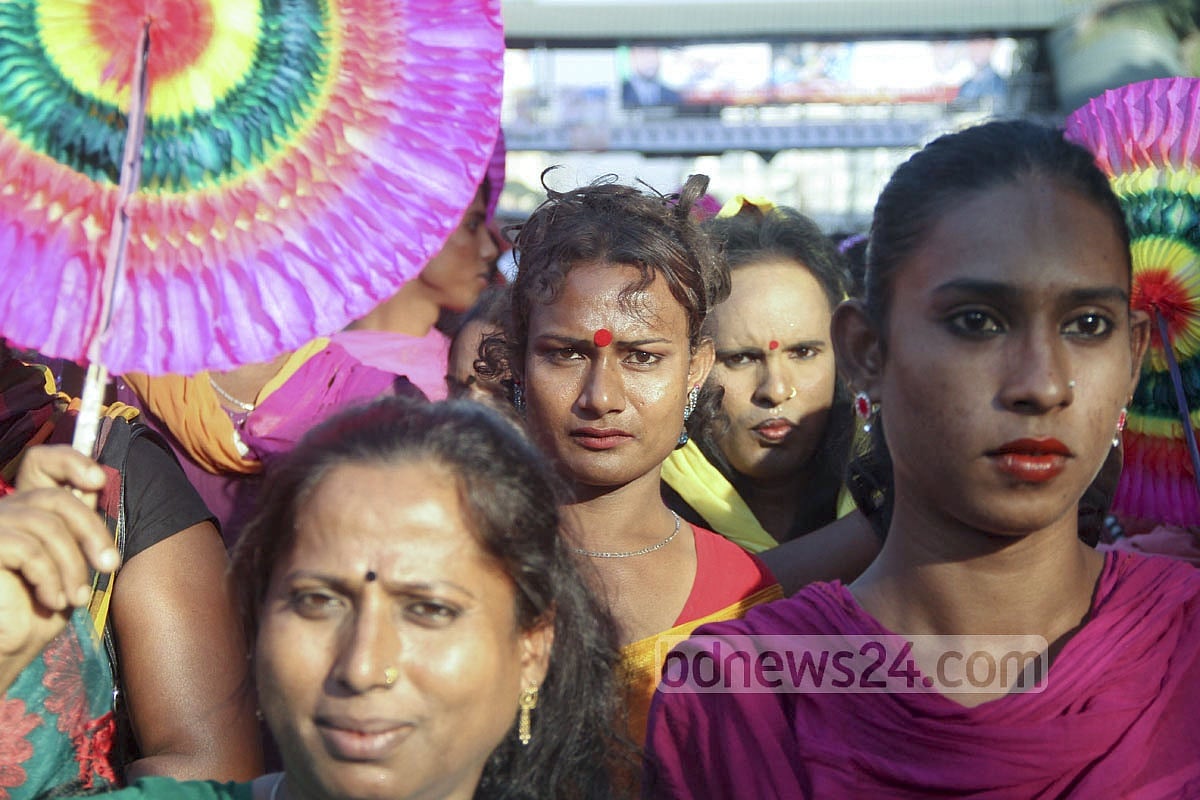
Priya's experiences underline a broader societal issue: the reluctance to accept members of the Hijra community, a community consisting of members of many groups marginalised for their gender identity and sexuality, including people who are transgender, intersex, and queer.
"Are we not deserving of love? Don't we also wish to love?" she lamented, challenging the stigma that marginalises the desire for affection and belonging from members of her community.
CHEATED, AGAIN AND AGAIN
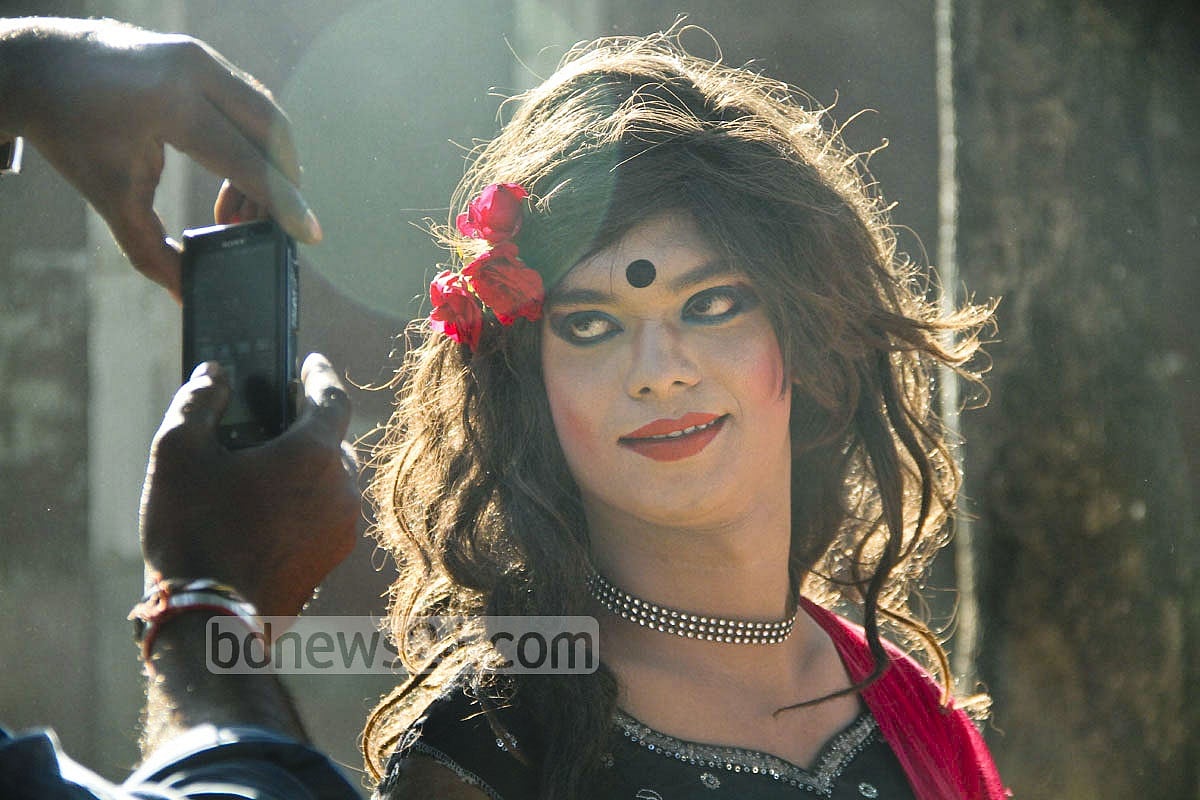
Fariha Farha, an alumnus of Titumir Government College in Dhaka, lives her life under the societal label of 'Hijra'.
During her intermediate studies at Tongi Government College, Fariha fell in love for the first time with a man from her neighbourhood. But the relationship was short-lived.
Determined to avoid further heartache, she decided against falling in love again.
Yet, post-graduation, Fariha found herself in love once more. Despite the absence of any legal recognition, they exchanged vows informally. This union lasted only five months.
"I couldn't stand the loneliness. He loved and cared for me deeply... We made a verbal commitment to each other, a promise akin to marriage. My family was aware, but his was not."
The relationship ended when the man could no longer face his friends and family, leaving Fariha feeling abandoned and emotionally shattered. Despite this, she maintains a belief in the universality of love, unbound by gender or religion.
Fariha questions the fairness of being left adrift partway through their journey. "Why start a relationship if it's going to be abandoned halfway? It takes strength to make it from the middle of the river to the shore. If I fail, who bears the blame?"
"I can say that 99 percent of us are deceived. Our vulnerabilities are exploited. In the absence of protective laws, we're lured into love only to be abandoned, often financially exploited."
NOT HUMAN?
Sanjeevani Sudha, a graduate of Chattogram University, is currently pursuing her MPhil at Dhaka University and is the first transgender woman in the country to do so.
She shared her insights on the challenges faced by transgender women in seeking companionship and the vulnerabilities they encounter in relationships.
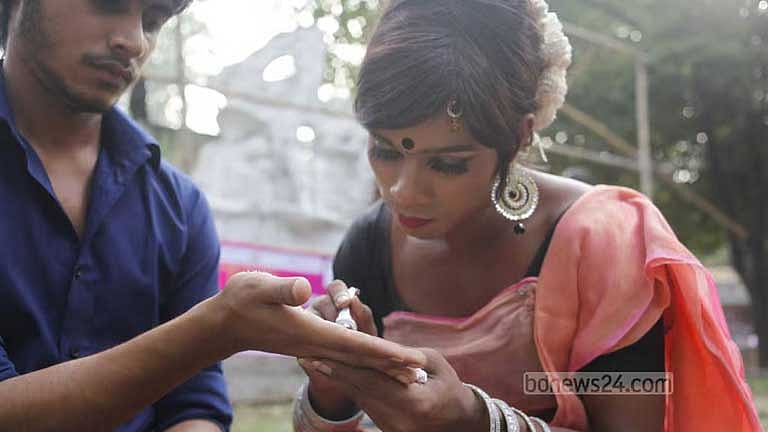
"To live fully, everyone needs a partner. We all have biological and emotional needs. However, transgender women often find themselves betrayed in relationships. We're an easy target for deceit due to the lack of legal safeguards. Anyone can cheat us without consequence."
"My community is often reduced to mere sex objects. Many view us as sex workers, a punchline for jokes, or beggars deserving pity. Rarely are we recognised as social beings with inherent human dignity."
STRUGGLE FOR ACCEPTANCE
Despite the government recognising Hijras as a third gender in a 2014 gazette, there was no mention of their rights to marriage and property, leaving a gap in the acceptance and legal protection of transgender relationships in Bangladesh.
Sadiqul Islam, the founding president of Brihannla, an organisation dedicated to supporting the Hijra community, highlighted the absence of social and state recognition for transgender marriages.
"The societal infrastructure to welcome them wholeheartedly hasn't been established yet. Acceptance of their love, marriage, and social participation is still contingent on societal acceptance, which remains elusive. We are caught in a debate over whether to accept them at all," he said.
According to Islam, while many developed countries have progressed in recognising and legitimising queer relationships, Bangladesh lags behind due to the lack of legal framework regarding Hijra marriages. This legal void often results in transgender women being deceived in relationships.
"Many are initially captivated by transgender women out of curiosity, but eventually deceive them. Transgender women, yearning for affection, invest themselves fully, only to be left heartbroken as these relationships lack legal standing," Islam said.
Snigdha Rezwana, an associate professor of anthropology at Jahangirnagar University who completed her PhD on Bangladesh's Hijra community at the Auckland University of Technology, noted the loneliness faced by members of the community due to familial estrangement.
"Being distanced from their families often leaves them feeling isolated, which in turn leads them to seek connections with numerous individuals," she said.
"In relationships, transgender women often financially support their partners. However, when discussions of a more permanent union or marriage arise, it can lead to tragic outcomes, including the partner contemplating suicide."
Highlighting the challenges faced by transgender women, Snigdha said, "I've encountered many Hijras employed across various sectors. Yet, once their identity becomes known, they endure significant harassment at work, with no recourse for complaints, often resulting in them being forced to rejoin the larger Hijra community.”
"It's not uncommon for them to have experienced rape and sexual assault from a young age, leading some to turn to sex work due to the absence of social protections and legal rights."
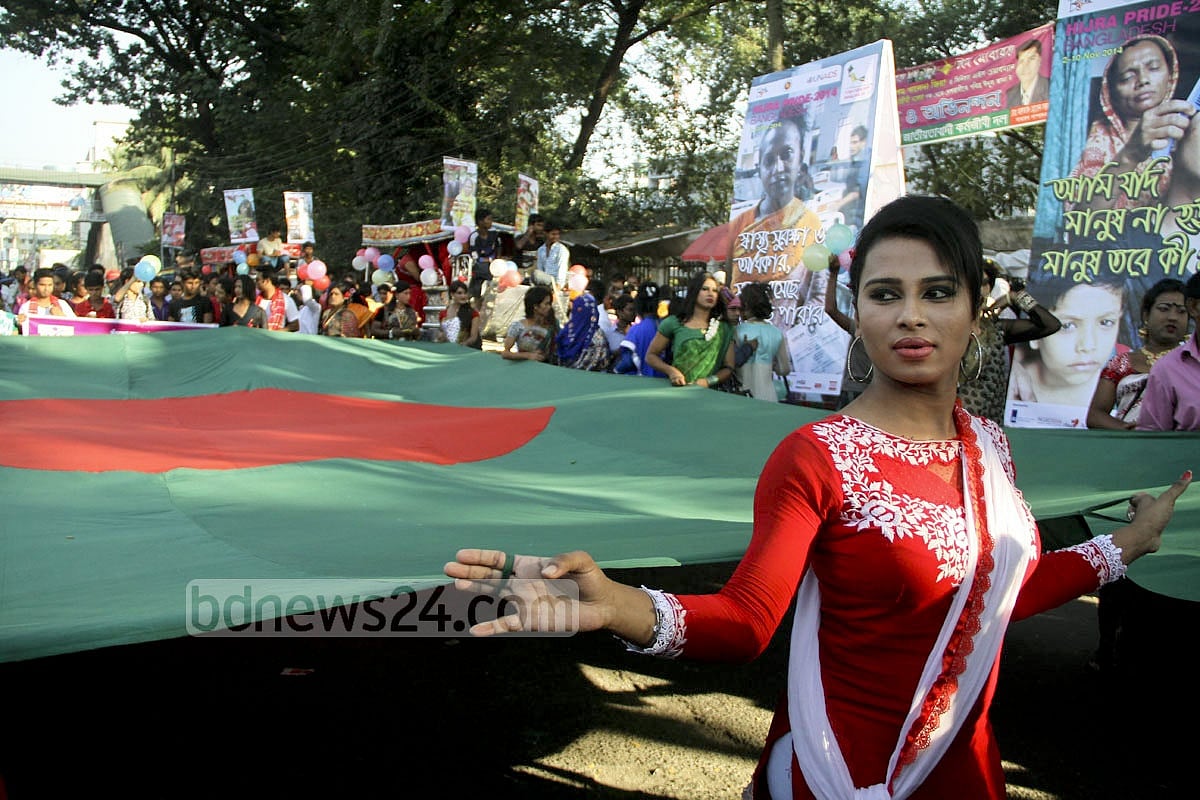
Zobaida Nasreen, a professor of anthropology at Dhaka University, identifies the root issue as the reluctance of society to acknowledge identities beyond the 'gender binary' instead of classifying people as either male or female.
"Everyone deserves the right to love, and recognising diversity beyond the gender binary is crucial. Accepting this diversity is the first step towards embracing all forms of love and relationships."
"The [government's] gazette recognises transgender women as a 'third gender' beyond men, yet it fails to address their rights adequately. Legislation covering all aspects, including transgender individuals' inheritance rights, is essential."