Published : 01 Jul 2025, 09:27 AM
Updated : 28 Aug 2026, 01:22 AM


“Ei shohore pakhider ghum bhange gulir shobde Ei shohore chhatro pore thake mogoj bhorti baruder gondhe”
Or
“In this city, the birds’ sleep breaks at the sound of gunfire
In this city, students lie with brains soaked in the smell of gunpowder.”
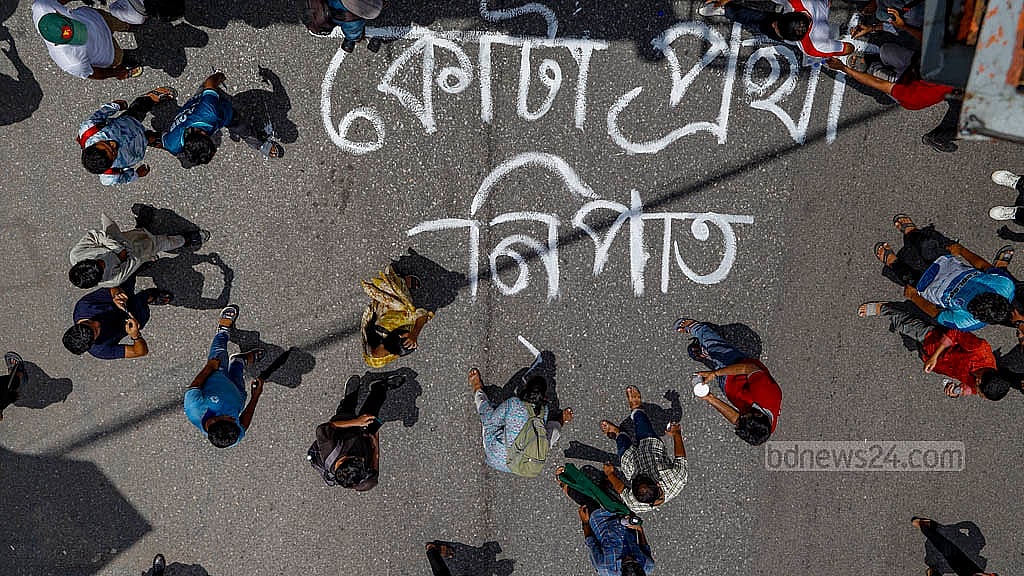
These were the words of Kazi Ashraf Ahmed Riaz -- known by his pen name “Rishi Kabbo” -- in a poem he posted on Facebook on Jul 29, as bodies filled morgues and casualties overwhelmed hospitals in a terrified Dhaka under curfew.
Two days later, his body was discovered at his flat in Mohammadpur’s Bosila.
The mystery surrounding his death remains unsolved.
It was in July 2024 that a protest, smouldering for over a decade, finally erupted into a national wildfire.
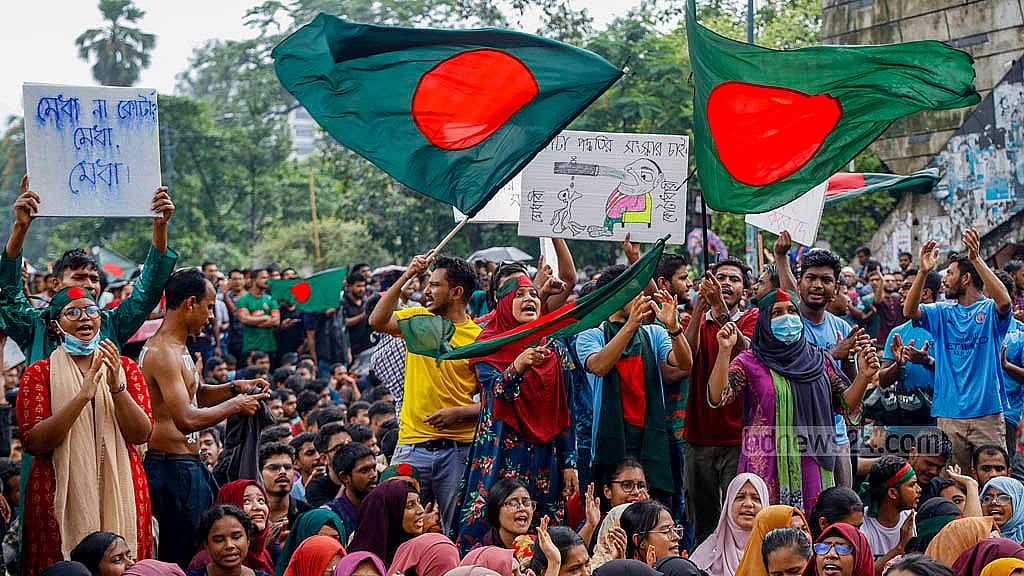
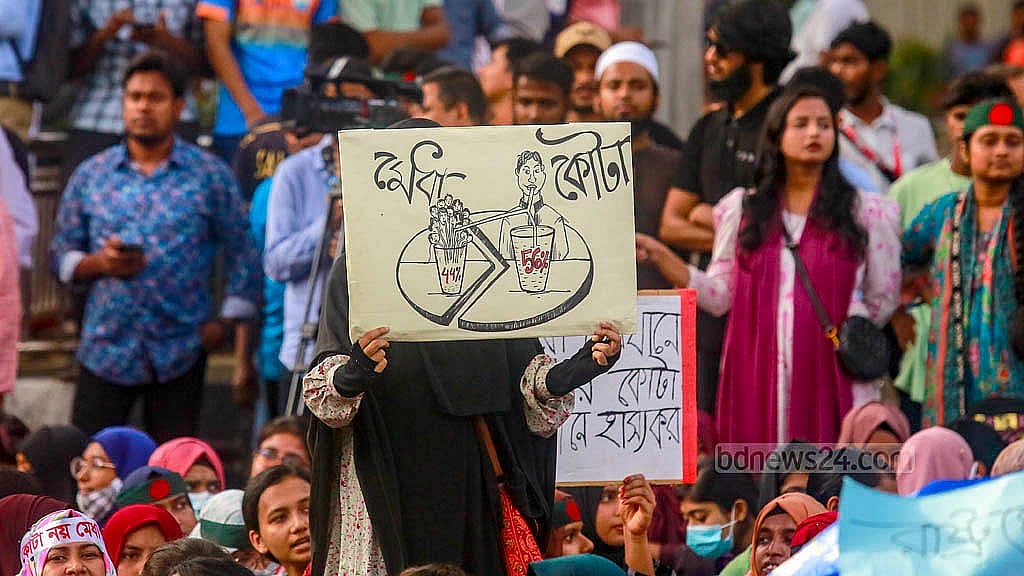
The quota reform movement, first ignited at Dhaka University, had long demanded equity in public recruitment.
But it was in 2018 that the issue first roared into national consciousness.
Six years later, it returned -- sharper, angrier, and broader.
A High Court ruling in June 2024 once again lit the fuse. Students rallied. Dhaka University stirred.
Then, the unrest spread -- first to other public campuses, and by early July, to private universities across the country.
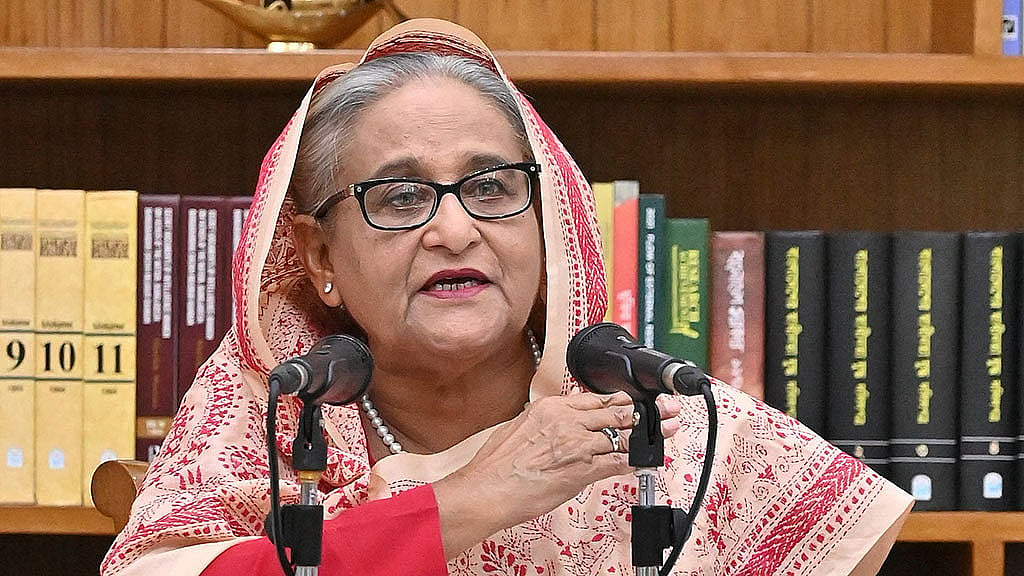
The tipping point came in mid-July, when former prime minister Sheikh Hasina, at a press conference, made remarks that were seen by many as dismissive.
The streets responded. Enraged and unyielding, students marched. Campuses became strongholds.
Then came the bullets.
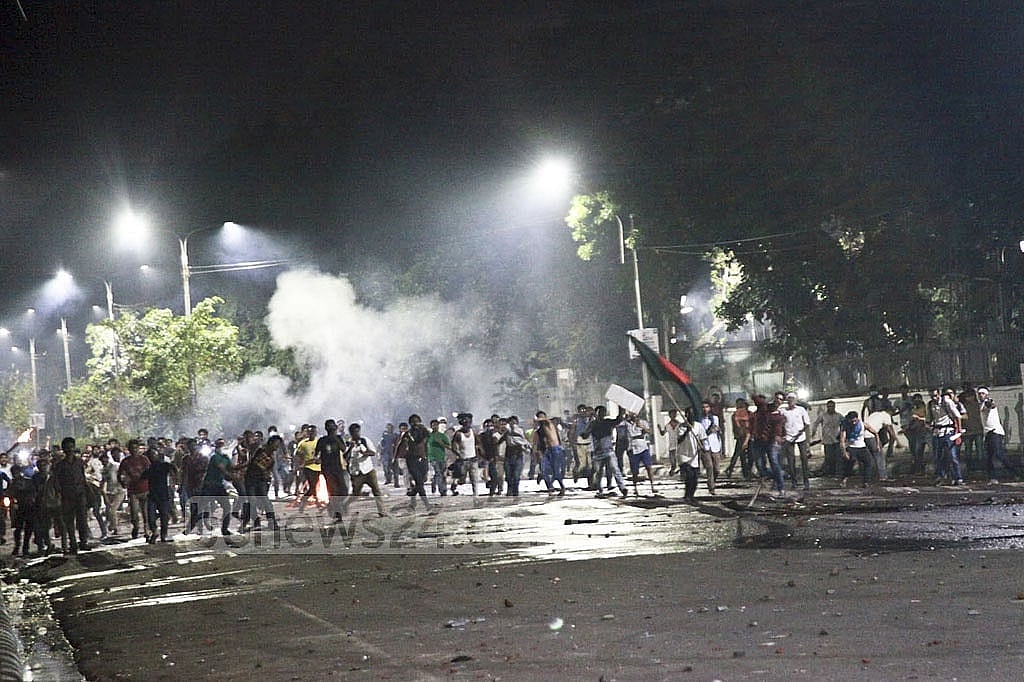
When security forces opened fire, the protest morphed into something larger, something unstoppable. It crossed party lines, class lines, religious lines.
Political activists, madrasa students and teachers, industrial workers, even government employees joined in.
The demand unified: Hasina must resign.
As July wore on, so did the violence. Dhaka turned into a battlefield.
Hospitals overflowed, bodies disappeared, and social media blackouts tried -- and failed -- to contain the fury.
Yet even when the calendar turned, the protesters refused to follow.
For them, July could not end without justice.
They counted beyond the end -- Jul 31, Jul 32, Jul 33…
And on Aug 5, they renamed the day: “July 36”.
By then, nearly a thousand had died. Thousands more were wounded, sent to jail, or simply gone.
But the count did not stop. Nor did the resistance.
On Aug 5, after 15 and a half years in power, Awami League chief Hasina fled the country.
That was the day the movement declared July complete.
In the wreckage of tear gas, shattered dreams, and scorched posters, something new began.
A Bangladesh without Hasina.
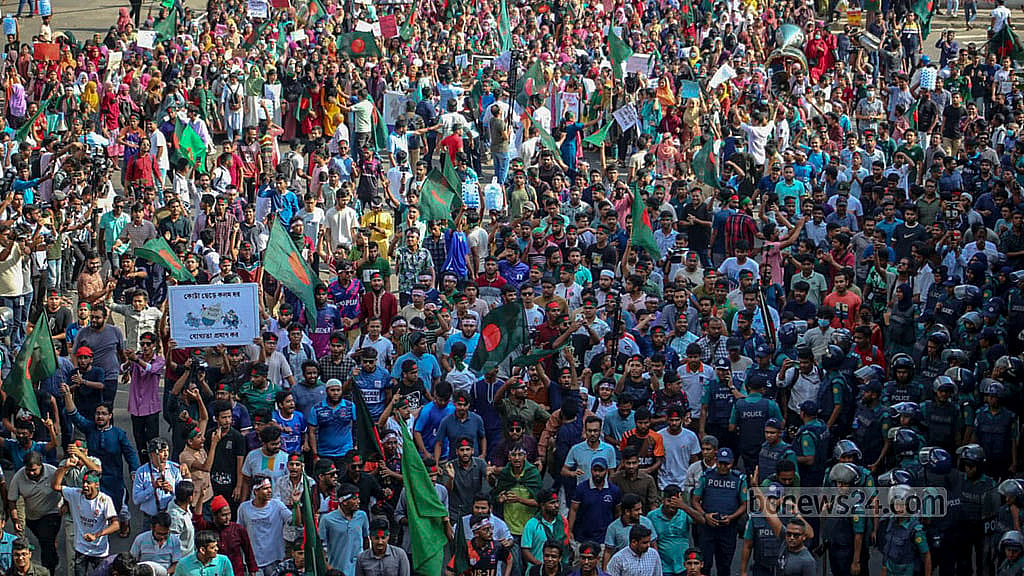
QUOTA OR MERIT?
Under Hasina’s tenure, students have launched at least three major protests demanding reform of the government job quota system.
These movements have often met with fierce resistance.
Protesters faced brutal beatings at the hands of police and Bangladesh Chhatra League activists.
Numerous cases were filed against many demonstrators.
The path that led to the historic upheaval in 2024 was paved years earlier.
On Jul 11, 2013, during a march demanding the abolition of the quota system, students were attacked for the first time on Dhaka University campus.
That day, the agitation was sparked by the announcement of the results of the 34th Bangladesh Civil Service (BCS) preliminary exam.
Students also blockaded Shahbagh as part of the protest.
Alongside police, activists from the Chhatra League launched attacks on the demonstrators.
Protesters in turn vandalised the vice-chancellor’s residence, the proctor’s office, and other university properties and vehicles.
In the years that followed, students continued filing lawsuits and organising smaller protests, but the major confrontation came on Apr 8, 2018.
It was during this clash that the “Bangladesh Sadharon Chhatra Adhikar Songrokkhon Parishad”, or Bangladesh General Student Rights Protection Council, led by Nurul Haque Nur emerged prominently.
On that day, clashes raged throughout the night at Dhaka University between students protesting quota reform and police alongside Chhatra League activists.
A faction of protesters broke into the vice-chancellor’s residence, causing widespread damage.
Over 150 students were hospitalised at Dhaka Medical College Hospital (DMCH) due to injuries sustained.
There were also allegations that Chhtra League activists fired shots targeting the protesters.
Following April 2018, quota reform remained a regular headline issue.
Nur went on to be elected vice president of Dhaka University Central Students’ Union (DUCSU), while another leader Akhtar Hossain became DUCSU’s social services secretary.
Many leaders and activists of the quota reform movement became targets of attacks and legal actions during this period.
On Jul 2, 2018, Tarikul Islam, the then joint convenor of the Rajshahi University unit of the Student Rights Protection Council, was brutally attacked by Chhatra League activists while protesting for quota abolition.
His right leg was broken, and he required nine stitches on his head.
Tarikul still struggles to walk properly and remains unemployed in government service, the very job he fought for.
Now working in the private sector, he bears chronic pain and disability.
Speaking to bdnews24.com on Friday, he said: “Life has not been easy since that incident. I walk slowly and cannot put pressure on my leg.
“The pain hasn’t gone away. My body aches. I have to rely on medication.”
Rashed Khan, now general secretary of Gono Odhikar Parishad, co-led the 2018 movement alongside Nur.
He recalls that political parties largely avoided supporting them at the time.
Hasina government branded them as BNP-Jamaat affiliates and unleashed suppression.
Despite attacks and lawsuits, they continued their fight.
To fund treatment for injured peers like Tariqul, the group turned to public donations through Facebook events.
Despite their intent, many goals remained unfulfilled back then.
Many who took part in the quota reform protests of 2018 later became leaders of the 2024 movement.
The quota reform agitation that began in June 2024 evolved from July under the banner of the Anti-discrimination Student Movement.
Nahid Islam and Asif Mahmud Shojib Bhuyain, among others, were previously affiliated with the Student Rights Protection Council and became coordinators of the Anti-discrimination Movement.
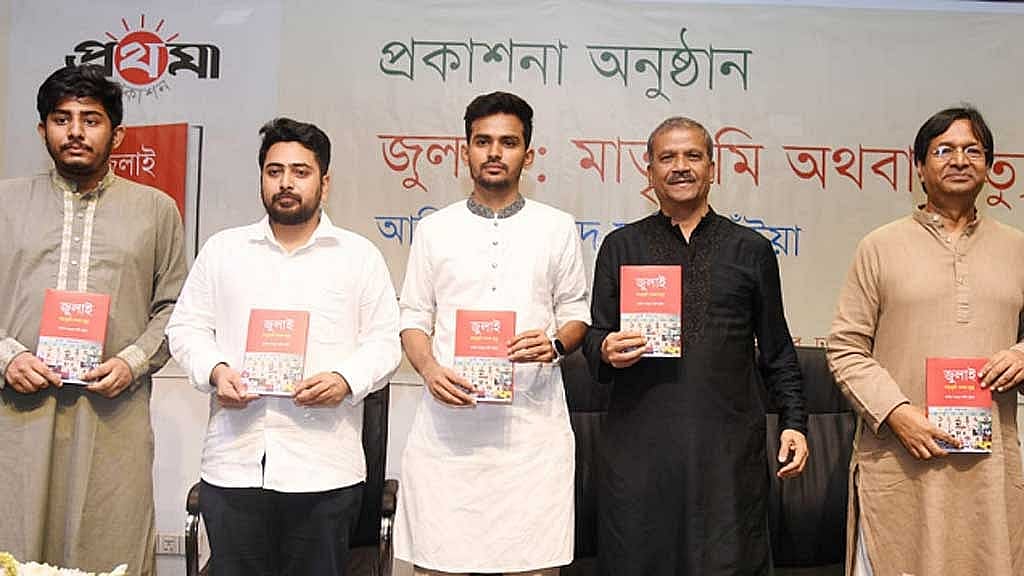
Asif Mahmud began his book “July: Maatribhoomi othoba Mrityu”, or July: Motherland or Death, by recalling the 2018 protests.
“My journey in student politics began in my first year at university, through the 2018 quota reform movement,” he wrote.
His book, however, omits any mention of his former leaders, Nur or Rashed, in the context of the 2024 movement.
Rashed, however, says they played the role of coordinators between student protesters and mainstream political parties.
“Those who led from the front during the Uprising were with us in 2018. They later contested DUCSU elections and stayed politically active with us until 2023. That helped us build strong coordination,” he said.
“Also, we were working jointly with 44 political parties, including the BNP. That made it easier for us to act as a bridge between student leadership and political alliances.”
According to Rashed, political involvement in the July Uprising became inevitable after the killings began.
“When so many mothers lost their children, politics became inseparable from the protest. That’s when the demand for Hasina’s resignation began.
“As senior figures of the 2018 movement, we could connect the right people at the right time,” he added.
FROM VERDICT TO VIOLENCE
Until 2018, 56 percent of government job posts were reserved under quotas -- 30 percent for descendants of freedom fighters, 10 percent for women, 10 percent district-wise, 5 percent for ethnic minorities, and 1 percent for people with disabilities.
Before that year’s general election, facing mass protests, the then Awami League government scrapped quotas in first and second-class jobs through a notification.
Challenging the legality of this notification, seven individuals, including freedom fighter's son Ohidul Islam, filed a writ petition with the High Court in 2021.
On Jun 5, 2024, the High Court ruled the abolition of the quota system invalid after the final hearing on the petition.
Reflecting on the verdict in his book, Asif wrote: “It was a deeply painful moment for us, because all that we had achieved through long struggles was vanishing… Abolishing quotas in first and second-class jobs was a major achievement for students.”
He also claimed in the book that the verdict was part of a “broader plan” by the then Awami League government: “It felt like, after coming to power through the sham Jan 7, 2014, election, the Awami League had returned even stronger and had already restored much of what it had lost.”
Rashed Khan also considered the government’s post-election steps on the quota issue to be entirely “premeditated”.
He said, “Hasina had a stubborn intent to bring quotas back. She was forced to scrap them in 2018. But once she realised her so-called ‘pro-liberation forces’ couldn’t enter civil service without quotas, she deliberately brought in the Jun 5 verdict.
“But they never imagined they’d be trapped in their own rotten plan.”
Rejecting the verdict, Nahid and Asif launched protests at Dhaka University, which soon spread to Jahangirnagar University, Rajshahi University, and other campuses nationwide.
Between Jun 9 and 30, due to Eid and Ramadan, the movement did not gain momentum and remained largely campus-based.
A review of those weeks shows that in the first 40 days after the Jun 5 verdict, protests took place in different parts of the country.
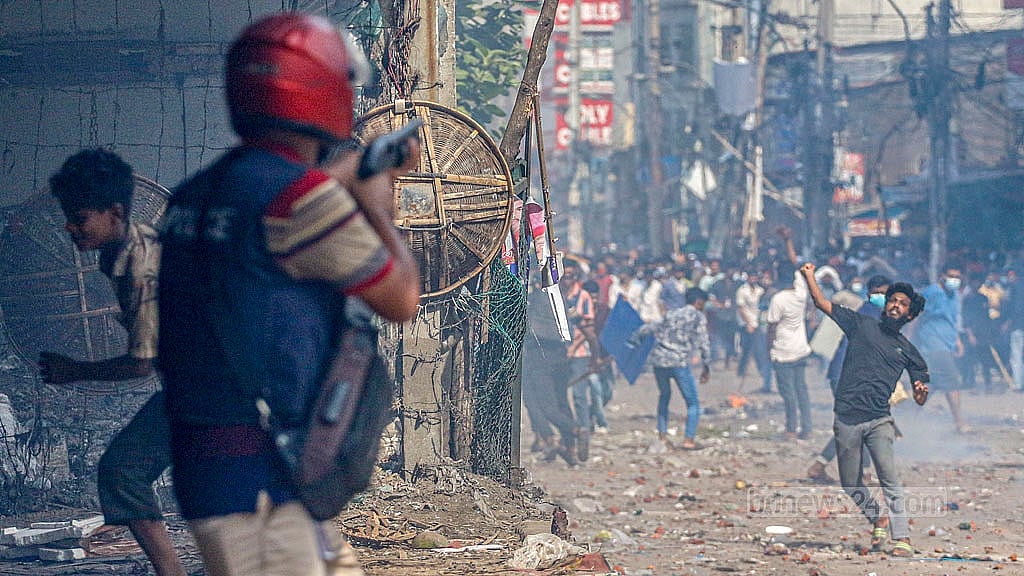
But by mid-July, attacks by Chhatra League on student marches and police firing turned the movement violent -- sparking widespread arson and destruction.
JULY HIGHLIGHTS
Jul 1: Under the banner of the Anti-discrimination Student Movement, students launched widespread protests in Dhaka, Jahangirnagar, Jagannath, Chattogram, and Rajshahi universities. A three-day programme was announced, demanding the abolition of quotas in government jobs.
Jul 7: The “Bangla Blockade” was observed across the country, with mass protests and blockades bringing Dhaka to a standstill. Protesters declared the programme would continue the next day.
Jul 9: The Anti-discrimination Student Movement announced a dawn-to-dusk blockade at key points of the country’s roads and railways. Two students joined the appeal against the High Court’s verdict through a lawyer.
Jul 10: The Supreme Court’s Appellate Division issued a four-week status quo on the High Court’s order reinstating quotas, setting the next hearing for Aug 7.
THAT PRESS BRIEFING AND WHAT FOLLOWED
Jul 14: The High Court issued its full judgment, reinstating the quota system.
On the same day, a press conference at the prime minister’s official residence stirred further outrage.
When asked about the issue, Hasina made a controversial comment: “If the grandchildren of freedom fighters won’t get jobs, will the grandchildren of the Rajakars (collaborators) get them?” She clearly said the court would resolve the matter, and if there was unrest, the law would take its course.
Later that night, students march from Dhaka University halls, shouting: “Tumi ke, ami ke -- Rajakar, Rajakar” (who are you, who am I—collaborator, collaborator) began, heightening tension.
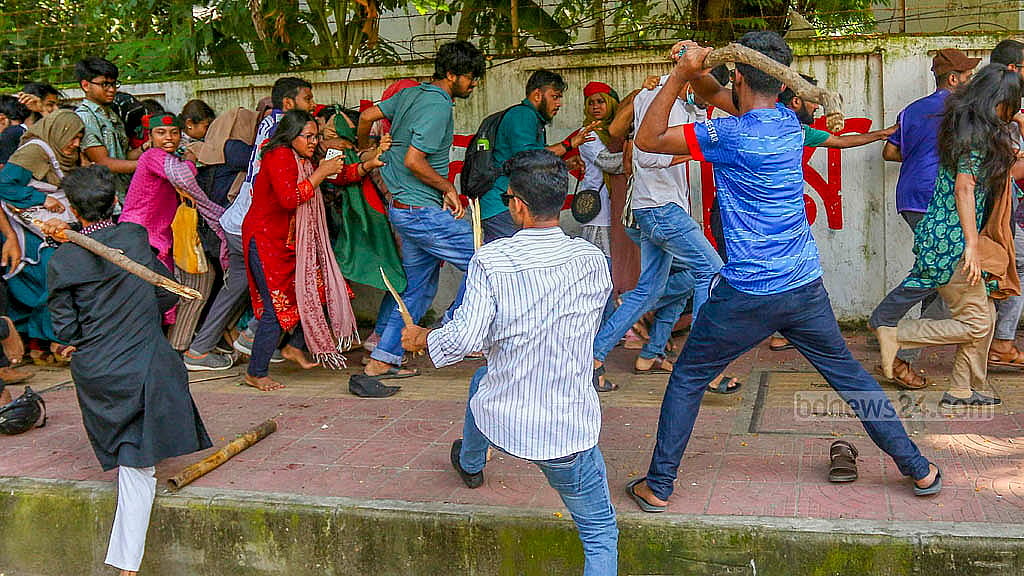
Jul 15: Attacks by the Chhatra League and pro-government supporters targeted protesters on the Dhaka University campus.
Videos of innocent female students being beaten with sticks spread on social media, causing public outrage.
Graffiti with anti-autocracy slogans began appearing on walls across the city.
Jul 16: A leave-to-appeal was filed in the Appellate Division. Protests, violence and road blockades occurred nationwide, leading to the deaths of six people.
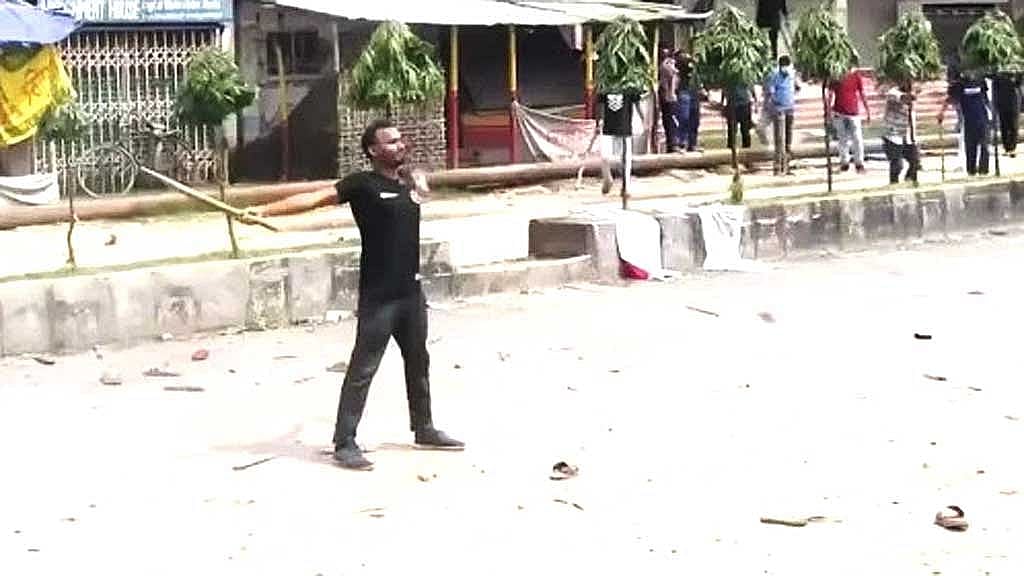
Among the victims was Abu Sayed, a student of Begum Rokeya University's English department, who was shot by police while trying to protect himself with his arms outstretched.
The video of the shooting ignited further anger.
In response, all educational institutions across the country were closed, and university halls were vacated, with Chhatra League leaders forcibly removed.
Jul 17: A “Gayebana Janaza” or symbolic funeral prayer was held at Dhaka University, leading to clashes with police. The focus of the protests shifted to private universities.
Later that evening, the then prime minister addressed the nation, urging students to remain patient until the verdict from the higher court.
Violence continued, and clashes broke out in the Jatrabari area, where police indiscriminately fired shots, resulting in several casualties, including a journalist.
The toll plaza on the Mayor Hanif Flyover in Jatrabari was set on fire, and Facebook was blocked that night.
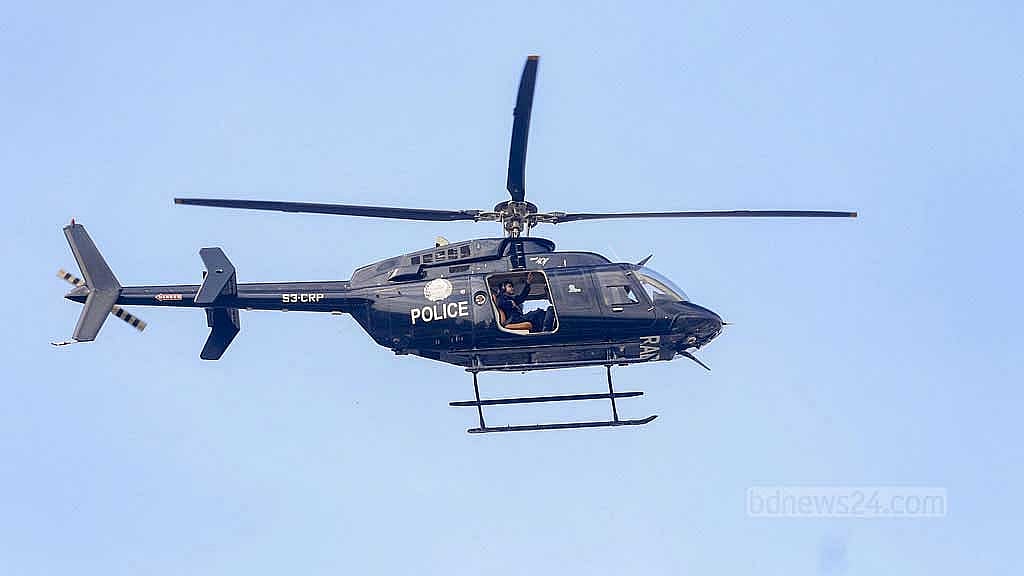
Jul 18: The violence showed no signs of abating. In Merul Badda, police were trapped and had to be rescued by helicopter.
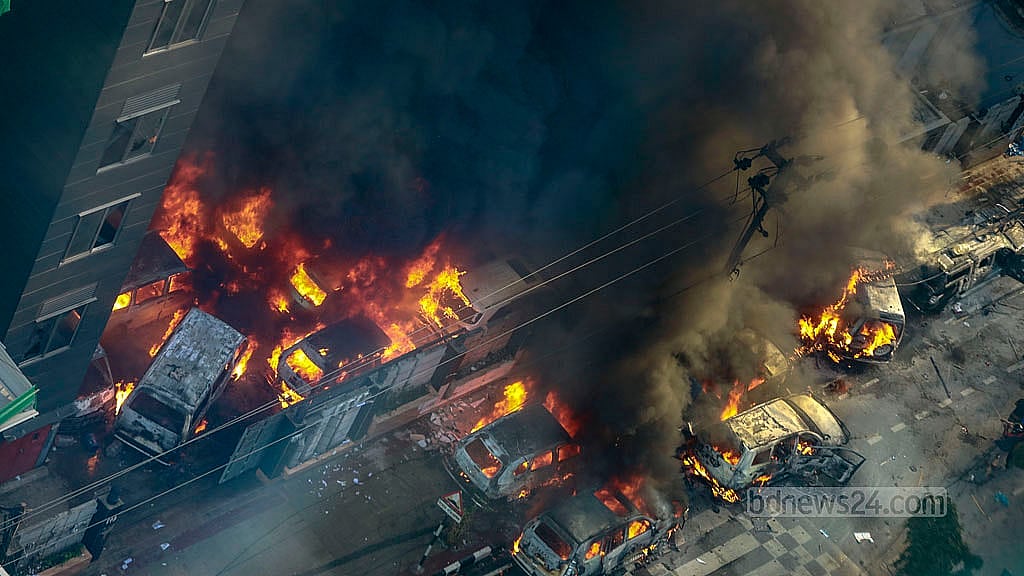
Arson attacks were launched on the BTV building, and several government buildings, including Banani's Setu Bhaban and the Disaster Management Building in the capital’s Mohakhali, were targeted.
Clashes with police continued, leaving students and other protesters injured or killed. The Awami League proposed reducing the quota to 20 percent, instead of the previous 56 percent.
The government signalled its readiness for dialogue, with then law minister Anisul Haq announcing their willingness to meet with protesters.
The platform for the student movement, however, rejected the proposal for talks. Internet services were shut down from 9pm onwards.
Jul 19: Violence once again engulfed Dhaka and several other regions, casting a pall of tension across the country. Protesters carried out widespread vandalism, arson, and attacks, targeting key government structures including the metro rail station, elevated expressway toll plaza, and Mirpur Indoor Stadium.
Senior BNP leader Ruhul Kabir Rizvi was arrested. The ongoing internet blackout deepened the paralysis, while a nationwide curfew was imposed at midnight.
At least 56 people were killed in the violence.
The Anti-Discrimination Movement vowed to continue the shutdown, demanding public apologies from Hasina and the resignations of two ministers, along with nine additional demands.
In a meeting at the Padma Guest House, three leaders of the movement presented eight demands to government officials.
The then law minister Anisul, education minister Mohibul Hassan Chowdhoury Nowfel, and state minister for information and broadcasting Mohammad Ali Arafat attended the meeting.
Jul 20: Despite the curfew, clashes between law-enforcing agencies and protesters continued in Dhaka, Savar, Gazipur, and Mymensingh. Many protesters were injured or killed.
In a meeting with the three main coordinators of the movement, the ministers discussed the students' eight demands. Differences emerged among the coordinators about the discussions.
Violence in Dhaka and Narayanganj claimed at least 26 lives.
Jul 21: The Appellate Division heard the quota case and cancelled the High Court's ruling for the restoration of quotas. It ordered a new allocation: 93 percent merit, 5 percent for freedom fighters, 1 percent for indigenous communities, and 1 percent for the disabled and third-gender quotas, with an option for government changes.
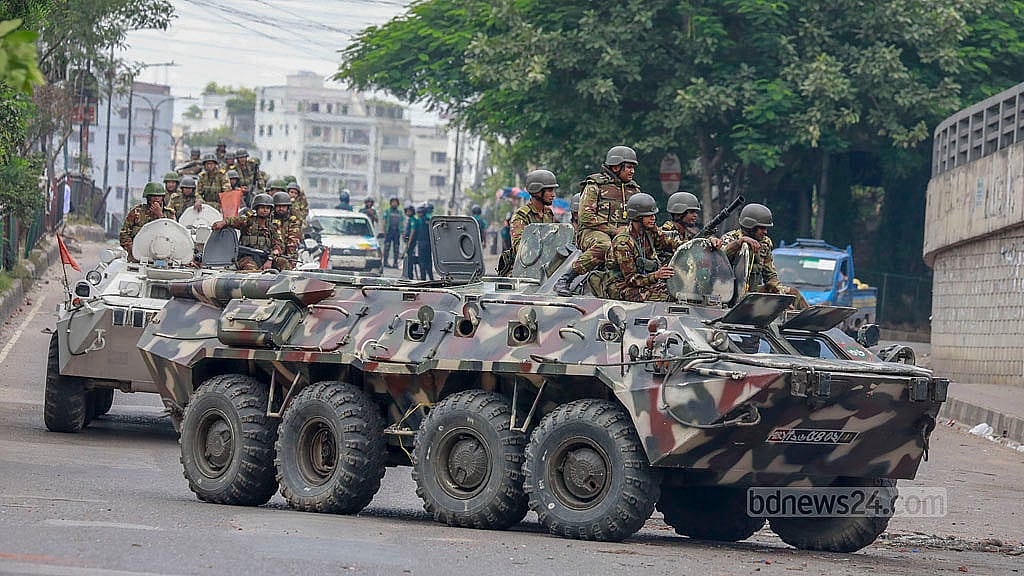
Curfews continued, and a nationwide shutdown of public and private institutions, including banks and factories, was enforced.
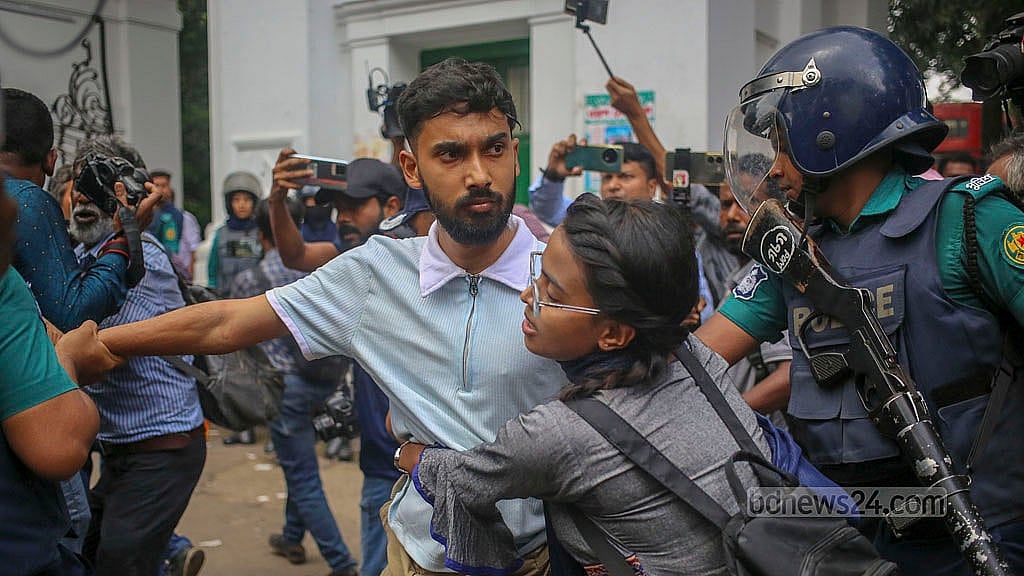
Jul 22: Movement's Coordinator Nahid announces a 48-hour suspension of the shutdown, giving the government an ultimatum to meet four demands.
Media reports say at least 131 people have been killed in four days of violence, with over 500 arrests.
Jul 23: Broadband internet services were gradually restored with priority, followed by full restoration the next day.
Jul 24: Offices reopened after three days of general holidays, with limited working hours from 11am to 3pm due to the continued curfew.
Jul 26: Hasina visited the Bangladesh Television building and the metro rail station to observe the destruction caused by the protests. Her emotional reaction, however, was met with public scepticism, with many labelling it a “drama”.
Memes mocking her emotional response go viral.
Three movement leaders -- Nahid, Asif Mahmud, and Abu Baker Majumder -- are taken into DB custody from Gonoshasthaya Nagar Hospital (GNH).
The then home minister Asaduzzaman Khan said at that time they were taken in for their own safety, not arrested.
Jul 27: Amid criticism for not visiting the injured, Hasina visited the Pangu Hospital to meet the wounded. She blamed BNP, Jamaat-e-Islami, and its student wing Islami Chhatra Shibir for the violence, calling it an attempt to cripple the economy.
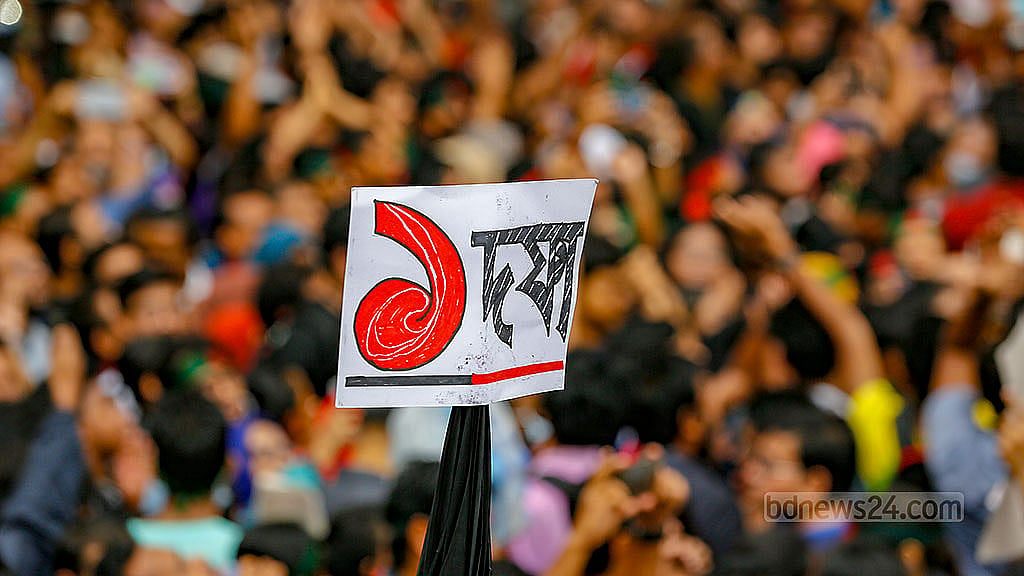
Jul 28: Hasina met families of the dead, including Abu Sayed, a student killed during the protests. Media reports, however, suggested that they were pressured into attending the meeting.
Former minister Asaduzzaman confirmed 147 deaths, while other reports indicated over 200.
Mobile internet services were restored after a 10-day hiatus.
Jul 29: The ruling 14-party coalition agreed to ban Jamaat-Shibir's politics, with Hasina presiding over the meeting. Clashes broke out across the country in response to the quota movement's ongoing protests.
Jul 30: A nationwide mourning day was observed for those killed in the quota protests. In protest, the movement urged people to change their Facebook profiles to red and post pictures wearing black cloth over their eyes.
Jul 31: “A March for Justice” was organised, calling for accountability for the deaths during the protests. Clashes occurred between protesters and law-enforcers across several locations, including the Supreme Court and Dhaka University.
Hasina expressed interest in international help for a fair investigation, and the United Nations showed willingness to send an inquiry team.
Aug 1: Six coordinators of the Anti-discrimination Student Movement were released from the DB office.
A programme called “Remembering Our Heroes” was held to commemorate the dead.
Conflicts broke out in Cumilla, Narayanganj, and Barishal.
The Awami League government issued a notification banning Jamaat-Shibir and its affiliated organisations for “terrorist activities” in the quota movement.
Aug 2: Reports surfaced of an attack on a mass procession, leading to clashes that resulted in two deaths, including one police personnel.
Aug 3: Hasina proposed discussions with protesting students, offering an open invitation to her residence. The protesters rejected the offer.
A large gathering at the Central Shaheed Minar called for the government’s resignation.
While Dhaka remained relatively calm, at least 11 districts witnessed attacks, vandalism, and clashes, leading to one fatality.
Asaduzzaman then said he would resign if the prime minister wished. He added that if attacked, a “response” would be given in self-defence, adding that the student movement was no longer “apolitical”.
Aug 4: On the first day of the non-cooperation movement, the then ruling Awami League announced its participation in protests.
The day saw extensive clashes, resulting in over a hundred deaths, including at least 14 police officers and 19 leaders and activists from the Awami League and its affiliates.
A “March to Dhaka” was announced by the Anti-discrimination Student Movement amid a large gathering in Shahbagh.
In a statement from the Prime Minister's Office, it was requested that students and guardians return home safely due to ongoing “militant attacks”. Strict measures were promised against the attackers.
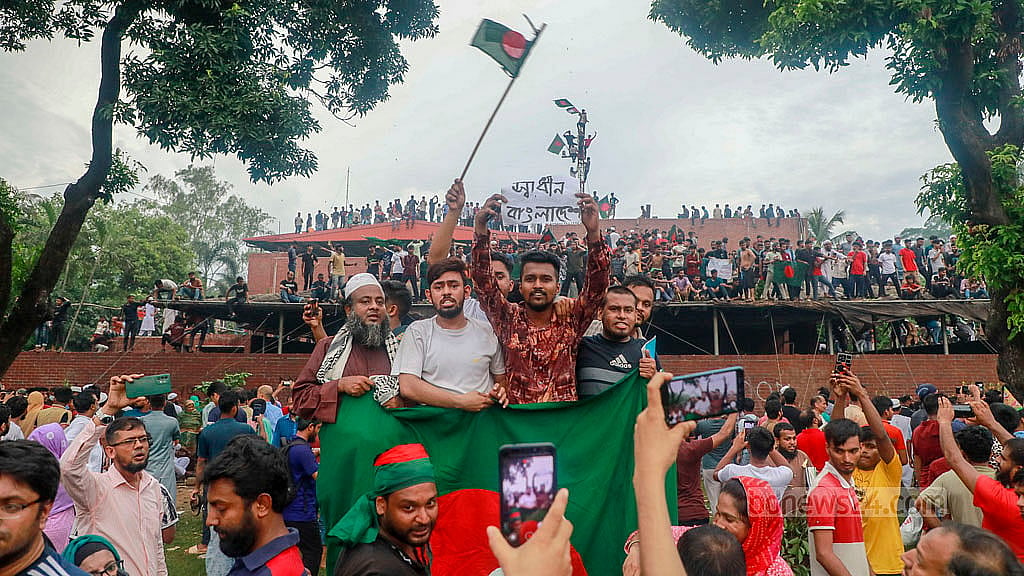
’36 JULY’
Even on the eve of Hasina’s fall, Awami League activists continued their show of force, unaware that their grip on power was hours from collapse.
Even, on the Aug 5 morning, they took to the streets, joining police in opening fire and attacking protesters across several locations.
Thousands of students and citizens, responding to the “March to Dhaka” call, began heading toward the capital.
By midday, news spread that Hasina had resigned and fled to India aboard a military aircraft.
Army chief Gen Waker-uz-Zaman confirmed that an interim government would be formed to manage the country.
Celebration parades erupted across Dhaka, as the public took control of Ganabhaban, the prime minister's residence, confiscating items.
Police stations, the Bangabandhu Bhaban, the Awami League office, and the homes of many Awami League leaders were attacked.
That evening, President Mohammed Shahabuddin met with representatives of BNP, Jamaat, and other political parties at Bangabhaban.
In an address to the nation later that night, he said an interim government would be formed as quickly as possible.
The students had promised to oust Hasina by the end of July, and after the events of Jul 31, they recalculated their timeline, marking Aug 5 as “July 36” -- the day they claimed victory.
[Writing in English by Sheikh Fariha Bristy]