Published : 11 Aug 2026, 05:55 AM
Updated : 08 Sep 2026, 09:31 AM


For the first time in more than three decades, Bangladesh is set for a contested presidential election, with the Opposition Jamaat-e-Islami already naming a candidate while the ruling BNP is yet to finalise its choice.
With multiple candidates, MPs will elect the president on the parliament floor through an open vote.
That has raised a key question: can lawmakers vote against their party’s candidate without losing their seats under Article 70 of the Constitution?
Experts are divided.
Constitutional lawyers Qazi Zahed Iqbal and Sharif Bhuiyan say Article 70 would apply, meaning an MP voting against their party could lose their seat.
Parliamentary affairs researcher Prof Nizam Uddin Ahmed, however, says the provision does not apply to presidential elections, citing the experience of 1991.
Article 70 says an MP’s seat becomes vacant if they resign from their party or vote against it in parliament.
What Happened in 1991?
The Constitution originally provided for a secret presidential ballot. The Presidential Election Act, 1991 introduced open voting.
In the only contested presidential election since the parliamentary system was restored, BNP’s Abdur Rahman Biswas won 172 votes against Awami League candidate and former chief justice Badrul Haider Chowdhury’s 92.
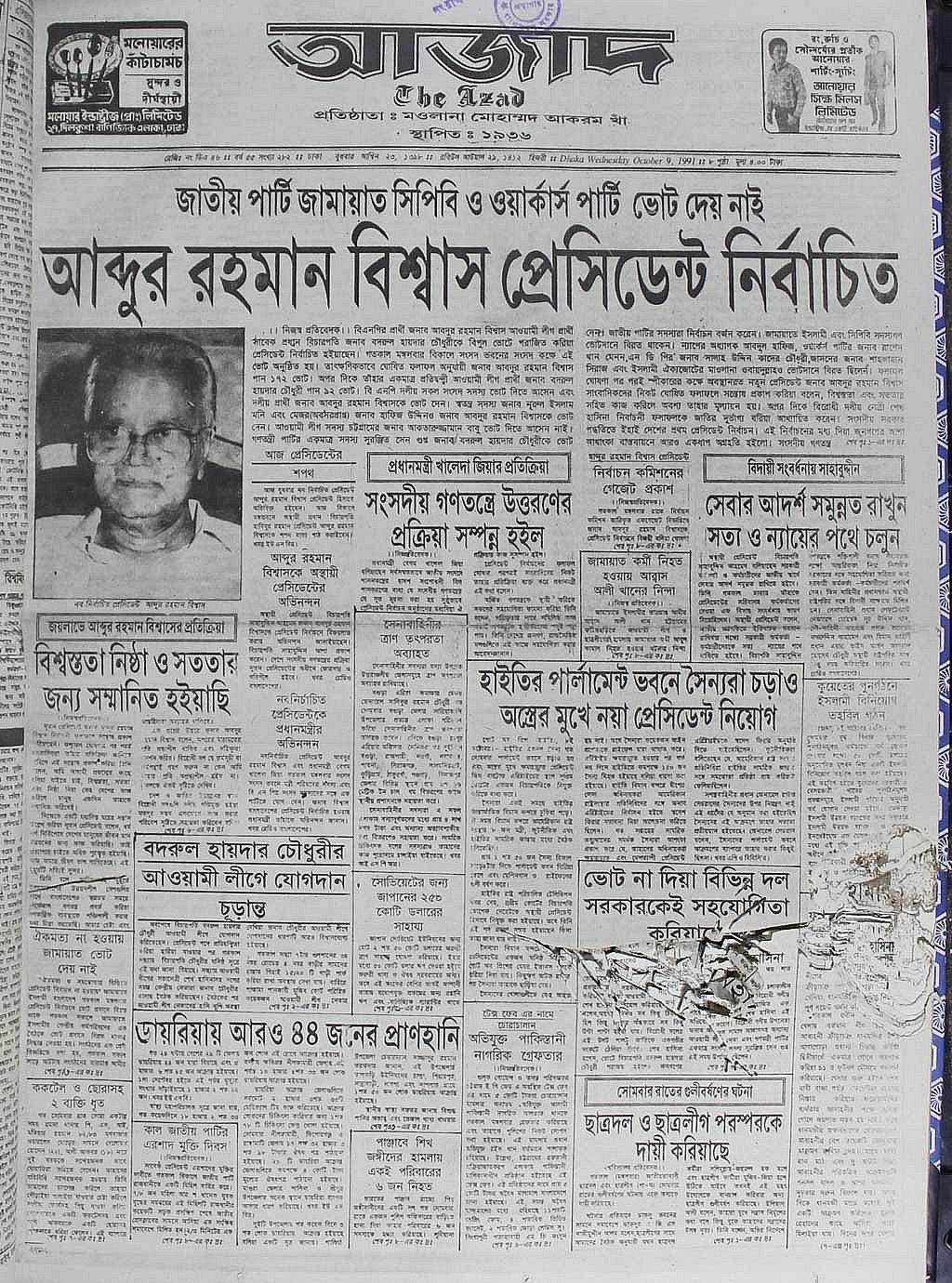
Nizam says an ordinance initially extended Article 70 to presidential voting, triggering strong opposition. A second ordinance repealed that provision, effectively leaving Article 70 inapplicable to the presidential vote.
Former Election Commission official Jesmin Tuli shares that view.
But Zahed disagrees, arguing that the Constitution remains supreme and Article 70 clearly applies whenever an MP votes against their party in parliament.
349 MPs to Vote
The 13th Parliament has 349 voting members: 247 from the BNP, 77 from Jamaat, eight each from the NCP and independents, and others from smaller parties.
Nominations close on Aug 13, scrutiny is on Aug 16, withdrawals on Aug 18 and voting on Aug 20.
Under Section 10 of the Presidential Election Act, MPs vote publicly, with each having one ballot. Voters sign their names opposite their chosen candidate before depositing the ballot in a sealed box.