Published : 01 Jul 2021, 02:59 AM
Updated : 14 Oct 2022, 06:54 PM


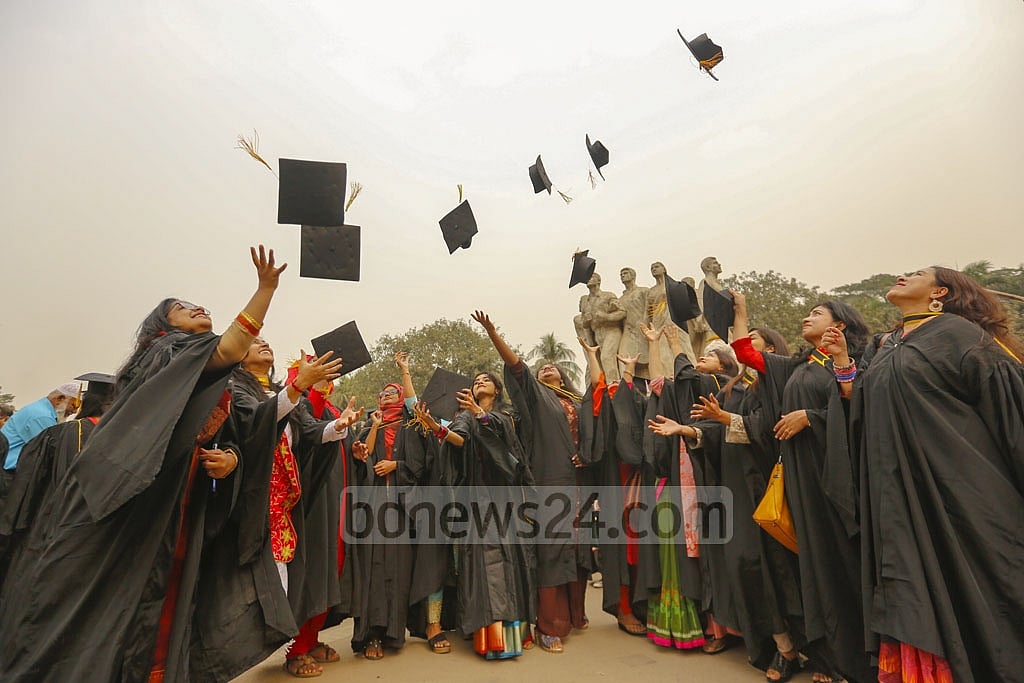
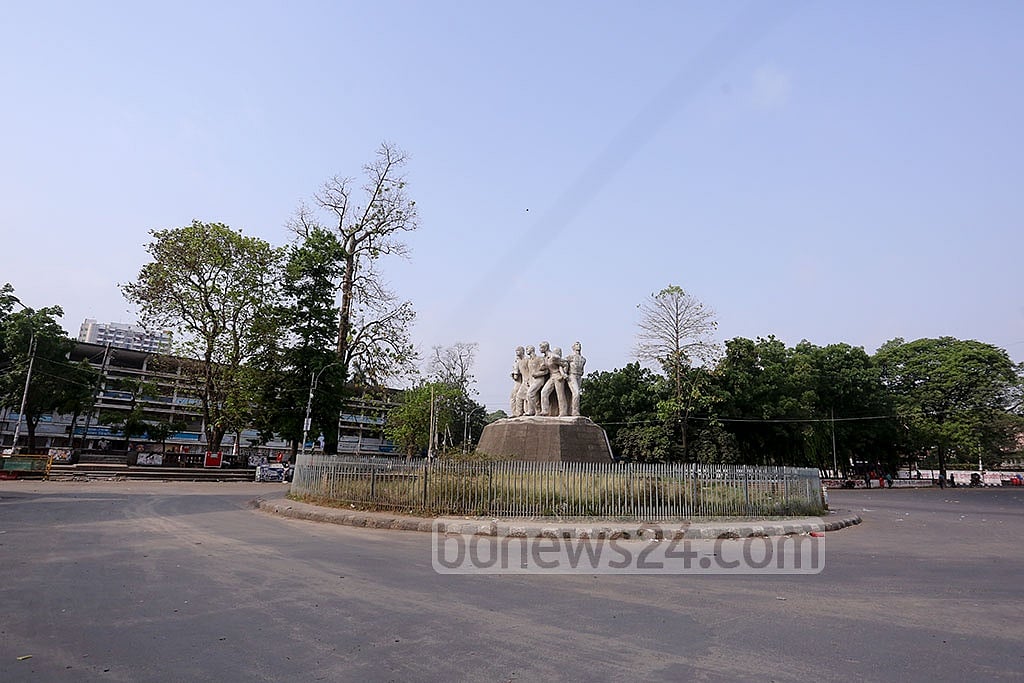
As the university marks its 100th anniversary, it is firmly entrenched in all the democratic movements of the Bengali nation.
But it has made little strides in the field of higher studies and research.
Prof Emeritus Serajul Islam Choudhury believes this is down to the lack assistance from the powers that be—both before and after Bangladesh's independence.
Since its inception, Dhaka University has had to wage a battle on two fronts -- education and society, he said. It had to ensure its survival by fighting against ruling powers.
“After independence of the country, Dhaka University did get the right to autonomy but not the support of the state. The university is supposed to flourish with quality education and research, but the state failed to generate that opportunity.”
Syed Anwar Husain, a professor of history, thinks the political interference of the post-liberation rulers tarnished the much-vaunted traditions of the university.
The standards of education provided by the university were ‘pretty good’ before the era of independence, he said. But later, after 1975 in particular, there was a decline.
“Bangabandhu marked a good start to Dhaka University’s journey after independence by giving it autonomy. He wanted the university to have complete liberty in practicing knowledge. But the misdeeds done in the university during the Bangladesh era did not happen in either the Pakistan period or the colonial rule."
During the British rule, as well as the Pakistani regime, the vice-chancellors of Dhaka University were academics who were ahead of the curve. Now, the appointment of vice-chancellor is made “completely based on political consideration”.
“Not only Dhaka University, but the public universities in the country are each thought to be a division of the government like they were during the Pakistan era and the appointment of vice-chancellors is done taking that into account.”
“The past glory of the university is veiled, which means the knowledge is too. It has to be reclaimed. We have to pledge in the Mujib Year to retrieve the glory of Dhaka University.”
“To do that, the appointment of the vice-chancellor has to be depoliticised. It has to be done through a search committee. This committee will not be based on political ends.”
National Professor Rafiqul Islam, however, believes the university's role in the practice of knowledge and its proliferation is overblown.
“Dhaka University has given more than what the nation wanted. This university presented us with an independent country.”
Political scientist Rounaq Jahan said, “Politics was always present in the university. But it once served a bigger purpose, the country and the nation. But now the students and the teachers are involved in politics that serves smaller purposes.
“This is Dhaka University’s departure from its glorious traditions.”
Highlighting the university’s contributions before and after the country's independence, former vice-chancellor AK Azad Chowdhury said, “The role Dhaka University played in the formation of the nation, bringing changes in society, establishing perspectives has somewhat diminished after the independence.”
Prof Akhtaruzzaman, the vice-chancellor of the university, revealed plans to expand research fields and ensure quality and inclusive education with the second century in sight.
He said, “Our primary target is to make the university a world-class one in its second century. We’ve taken up different plans including - the attainment of the Sustainable Development Goals, construction of a university suitable for the fourth industrial revolution and generating a skilled human resource.”
“We will move forward by taking up this strategic plan and hope for everyone’s assistance in making that a reality.”
HUNDRED YEAR JOURNEY
The University of Dhaka was established on Jul 1, 1921 as a royal compensation for the annulment of the partition of Bengal during the British colonial rule, which Lord Lytton called 'splendid imperial compensation'.
The university was built on a 600-acre land in Ramna, the poshest area in Dhaka at the time, in a picturesque environment comprising the abandoned buildings of the East Bengal and Assam provincial government.
The university officially began its journey with three residential halls and three faculties -- science, arts and law, with 12 departments, 60 faculty members and 847 students.
Some of the renowned academics to grace the university as teachers in the early years are Hara Prasad Shastri, FC Turner, Muhammad Shahidullah, GH Langley, Haridas Bhattacharya, WA Jenkins, Ramesh Chandra Majumder, AF Rahman, Satyendra Nath Bose, Nares Chandra Sen-Gupta, Gyan Chandra Ghosh among others.
After the Partition of India in 1947, the Ayub Khan government issued an ordinance in 1971 in a bid to keep the university teachers and students on a leash. That ordinance changed the administrative structure of the university and allowed the government to exert more control over its affairs.
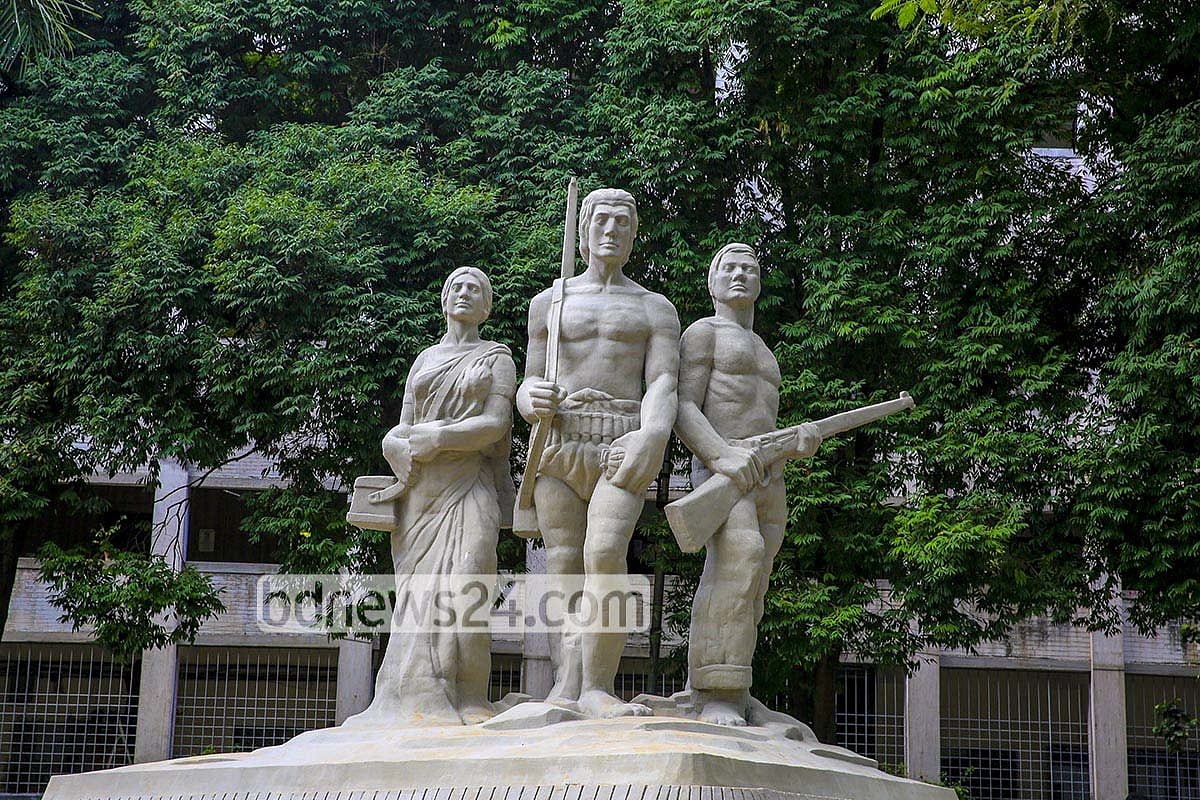
At one stage, the university became the cradle of Bengali nationalism, centred on the demand to preserve the sanctity of the mother tongue. The university is intrinsically linked to every democratic movement of Bengalis, including the Language Movement of 1952, the education movement of 1962, the anti-Ayub movement, the mass uprising of 1969 and the freedom struggle of 1971.
As a result, the university was attacked by the Pakistani aggressors during the war of independence. Many people, including teachers, officers, employees and students of were martyred in the process.
More than a year after Bangladesh's independence, the Dhaka University Ordinance, 1973 was issued to change the administrative system of the university. The university gained the status of an autonomous institution and established a democratic system of management and administration.
Dhaka University now has 13 faculties, 84 departments, 13 institutes, 1,986 teachers, about 47,000 students, 19 residential halls and 4 hostels. It also more than 150 affiliated or component educational institutions.
Although Dhaka University is very large in size and scope, the university does not rank among the world's best in terms of quality of education and research, innovation, classroom and student accommodation facilities, number of foreign teachers and students.
According to the latest UK-based Quacquarelli Symonds (QS) rankings, Dhaka University languishes between 801 and 1,000 in the list of 1,003 universities in the world.
On the occasion of the centenary of its establishment, the Dhaka University authorities have formulated a 'master plan' to bring the university up to modern standards, with a focus on developing technical and physical infrastructure to allow students to excel.
PANDEMIC FOILS CENTENARY CELEBRATIONS
As Dhaka University looked to commemorate the historic milestone in grand style, an invisible virus has poured the damper on the colourful and lavish arrangements.
The main event to mark the university's centenary had to be postponed due to a worsening coronavirus pandemic in the country. The celebrations have been postponed to Nov 1.
President Abdul Hamid, who is also the chancellor of the University of Dhaka, will attend the celebrations as the chief guest.
On Jul 1, a handful of events will be held virtually to mark the occasion. Vice-Chancellor Prof M Akhtaruzzaman will chair a virtual discussion as part of the subdued celebrations.
Linguist and columnist Abdul Gaffar Chowdhury will deliver the keynote address titled 'Centenary of Dhaka University: Looking Back'.
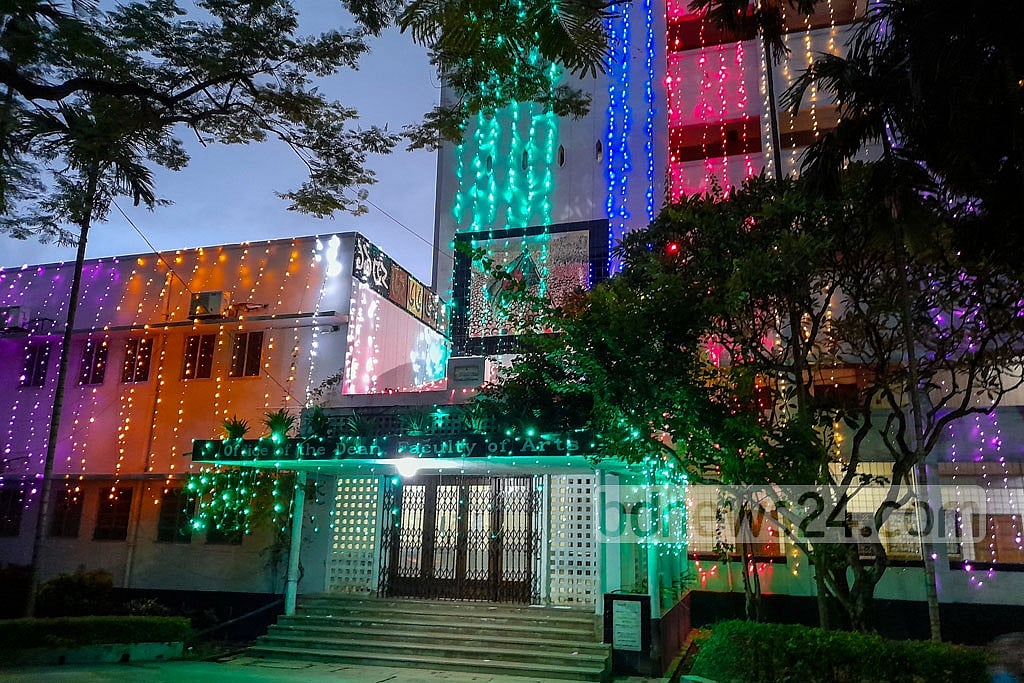
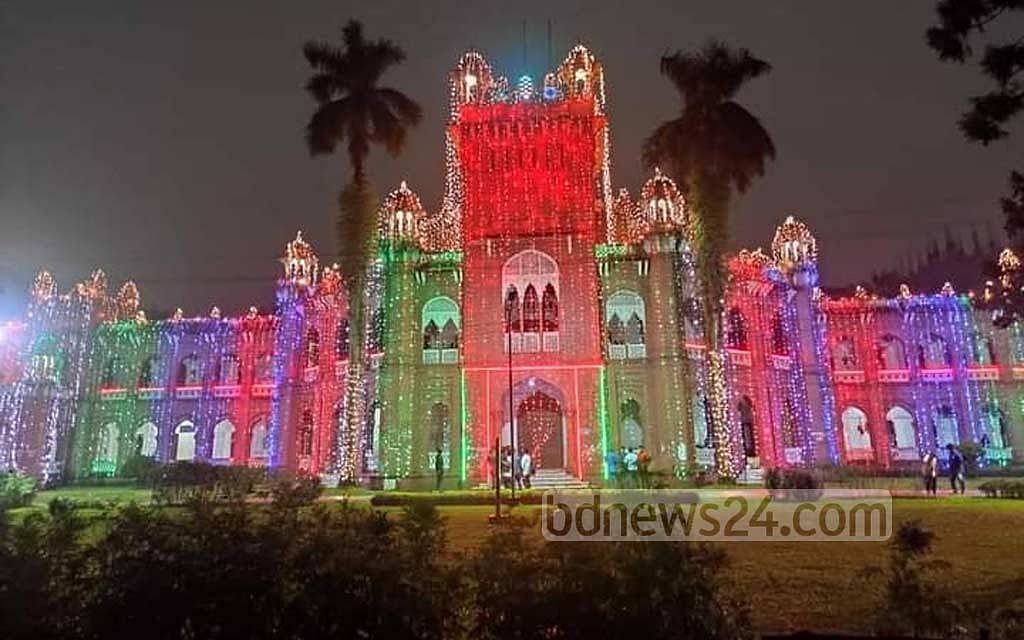
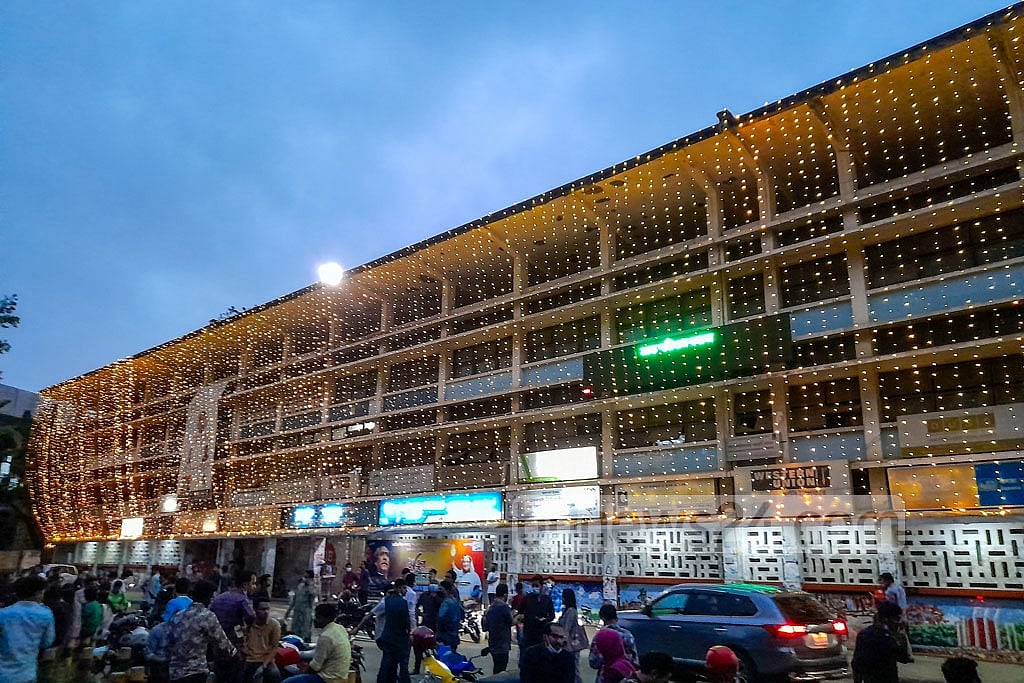
Although there are no students in the university due to the pandemic-induced lockdown, many landmark sites on the campus, including the Teacher-Student Centre and Curzon Hall have been decorated with lights.
The Dhaka University Alumni Association has also drawn up various plans to mark the centenary. But due to a nationwide lockdown, a limited number of symbolic programmes were held on the alumni floor of the university on Wednesday.
In a congratulatory message, Prof Akhtaruzzaman said, "We are deeply grateful to our beloved motherland and the people of Dhaka University for the centenary year."
Dhaka University has always played a leading role in all the struggles of the masses, including the great Language Movement and the glorious Liberation War. It has made a unique contribution to the establishment and service of the nation."
"We are committed to improving the quality of education and research in the country further in the wake of the birth centenary of Father of the Nation Bangabandhu Sheikh Mujibur Rahman, the great alumnus of this great school, the golden jubilee of Bangladesh's independence and the centenary of Dhaka University."