Published : 09 Oct 2026, 11:03 AM
Updated : 09 Oct 2026, 11:06 AM


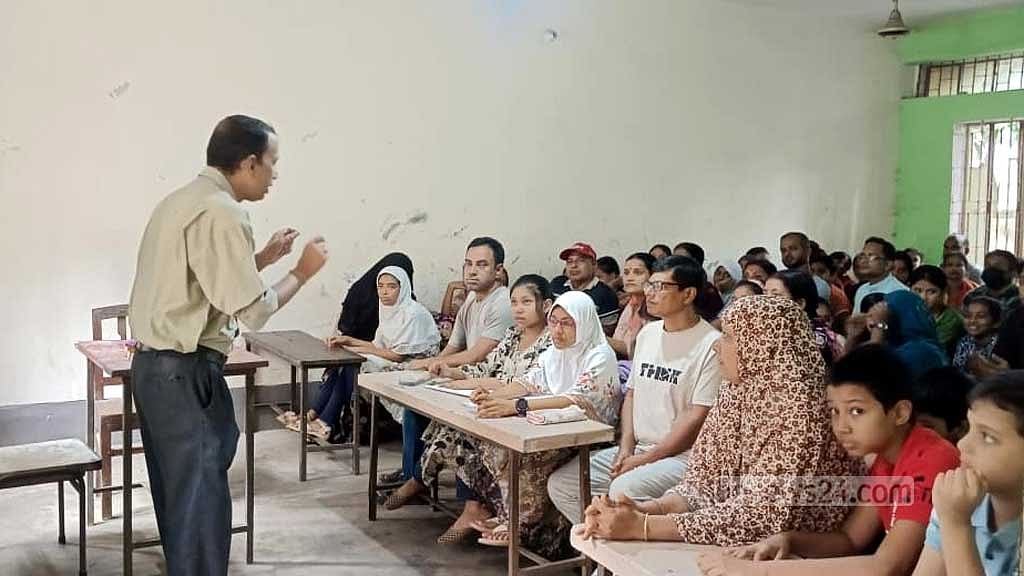
Weekends do not always mean a break from lessons. And on some days, it is not just the children who find themselves sitting in the classroom -- their parents join them, too.
Special classes begin at 9am and continue until noon, followed by regular lessons that run until 4pm. Even Fridays and Saturdays are set aside for additional teaching.
But the parents are not there simply to watch over their children. They come to see how teachers explain lessons, picking up methods they can use to help their sons and daughters study at home.
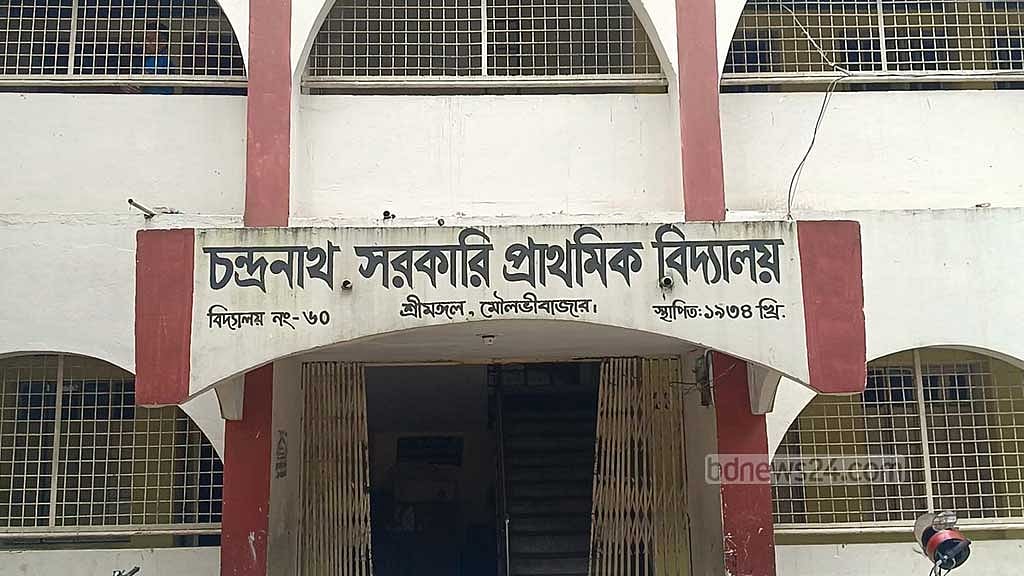
It is one of several unconventional approaches that have helped Sreemangal Chandranath Government Primary School carve out a reputation of its own.
Located in Sreemangal town, the school has 722 pupils, the highest enrolment among the Upazila's 138 government primary schools, according to the local education office.
Its reputation extends beyond examination results. The school has also made its mark in cultural activities and Cub Scouting, with achievements that have become a source of pride for its teachers and pupils.
Parents in the Classroom
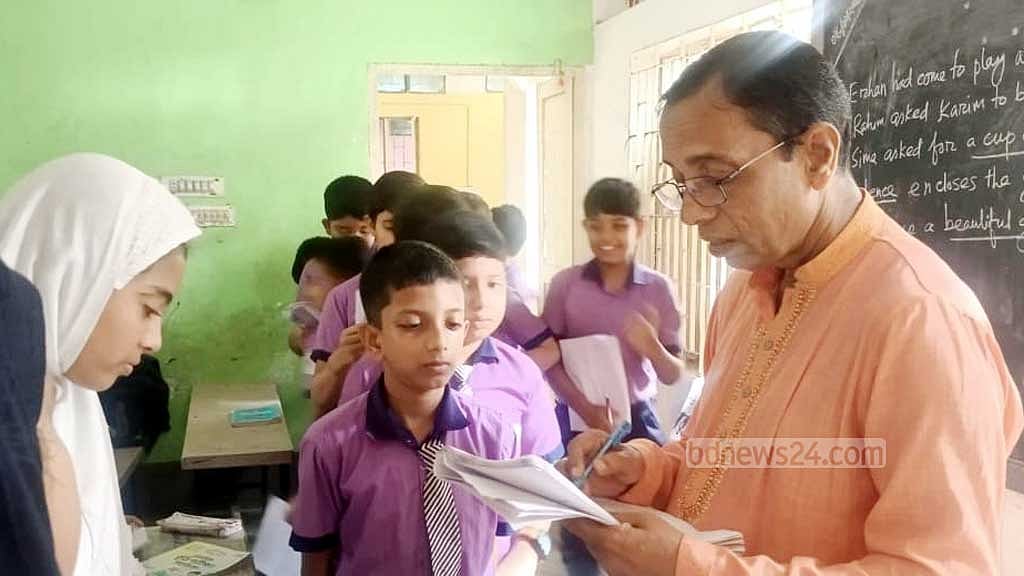
When Headteacher Jahar Tarafdar took charge, he set about making a few changes. Keeping children in school regularly was one priority. Giving fifth-grade pupils additional lessons was another. But he also wanted parents to become more involved in what their children were learning.
That meant opening the classroom doors to them.
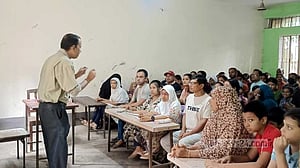
Parents are occasionally invited to sit alongside their children and observe how teachers explain a subject. The idea is that they can then use the same approach when helping with lessons at home.
For fifth-grade pupils, the extra attention also means classes on Fridays and Saturdays. Some of the sessions, held from 9am to noon, are conducted by Jahar himself.
Debadruti Pal Chowdhury, whose son Debargha Deb is in fifth grade, has experienced the arrangement firsthand.
"After the special classes from 9am to noon, regular classes run from noon until 4pm. Sometimes we also have to sit in class with our children," she said.
"We watch how the teachers explain the lessons and then help our children at home."
Another welcome aspect for parents is that the additional classes come at no extra cost.
Lokman Hossain, an assistant teacher at Sreemangal Government Girls' High School, has also been impressed by the school's approach. His daughter, Adiba Hossain, is a fifth-grade pupil.
"This is not like other government primary schools. The standard of education here is good. My daughter's foundation has improved considerably," he said.
"If pupils can properly adapt to the school's rules and teaching methods, there is little chance of them falling behind."
Beyond Textbooks
At Chandranath, the teachers want children to leave school with more than good marks.
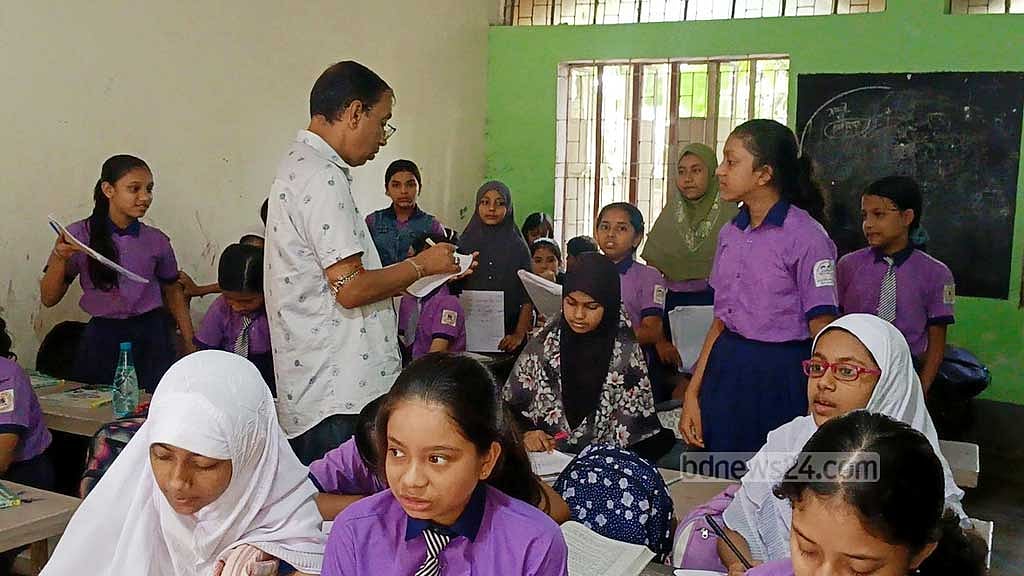
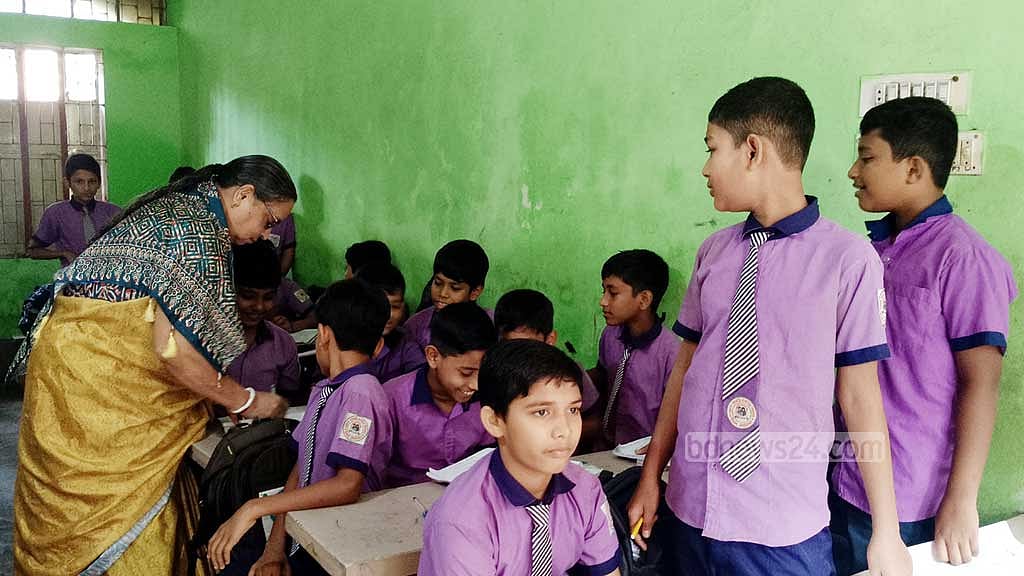
Alongside their academic lessons, pupils are encouraged to develop an appreciation for music, dance, recitation and acting. Moral education, discipline, respect for elders and leadership are also given particular importance.
Rather than treating these activities as occasional diversions, the school has organised separate groups around pupils' interests, with teachers assigned to guide them.
"We do not focus only on academic studies," said assistant teacher Pranabesh Chowdhury Antu.
"Pupils are placed in different groups according to their interests. We have separate sections for recitation, dance and music, with teachers assigned to oversee them."
The school's commitment to activities beyond textbooks is also reflected in its Cub Scouting record.
Over the past decade, its pupils have earned more than 100 Shapla Cub Awards, the highest honour in the Cub Scout section of Bangladesh Scouts for children aged six to 11.
In 2021, seven of the school's 12 candidates received the award. That success has continued, with seven to nine pupils earning the honour in different years, including seven in 2025.
Pranabesh said the pupils had also achieved success in cultural competitions at the national level.
722 Pupils on Just 13 Decimals of Land
For all its achievements, Chandranath faces a problem that enthusiasm and hard work alone cannot solve: there is simply not enough room.
The school accommodates 722 pupils on a site measuring just 13 decimals of land.
Its popularity means parents travel from different areas hoping to secure places for their children, but limited space prevents the school from admitting everyone.
"Our school stands on just 13 decimals of land, yet we have 722 pupils. Parents come from different areas to enrol their children," said assistant teacher Mahamaya Sharma Bannya.
"Because of the shortage of space, we cannot admit many pupils. If we had more land and could resume classes in two shifts as we did before, we would be able to admit more children."
Despite the constraints, teachers believe the close relationship between the school and its pupils' families has played an important part in its success.
Raising Responsible Citizens
For Headteacher Jahar, the school's achievements are the product of patience and years of sustained effort.
"The results of hard work do not come immediately. It takes time and patience," he said.
The school's performance in Cub Scouting and scholarship examinations, he said, makes the additional effort put in by teachers feel worthwhile.
But awards and examination results are not the only measures of success he has in mind.
"Our efforts are aimed at raising pupils to become responsible citizens of the 21st century," he said.
"We want them not only to achieve good academic results but also to develop morality, cultural awareness, discipline and leadership qualities."
His commitment to that goal has not gone unnoticed by colleagues.
Assistant teacher Lovely Dutta said Jahar had been conducting separate classes for fifth-grade pupils for as long as she had worked at the school.
"He also gives his time on Fridays and Saturdays. We see the benefits of this," she said.
"Pupils who complete their primary education here are gaining admission to good secondary schools."
'We Cite This School as an Example'
Chandranath's approach has also attracted the attention of the local education authorities, who see it as an example for other schools to follow.
Sreemangal Upazila Education Officer Rafiqul Islam described the school as somewhat different from other government primary schools.
"The school has limited space but a large number of pupils. The teachers, particularly the headteacher, put in extra effort for the children," he said.
"We cite this school as an example at various meetings and discussions. This is encouraging teachers at other schools as well."
Rafiqul believes the school's performance reflects a combination of factors: the dedication of its teachers, the involvement of parents, and the advantages of its location and transport links.
Its scholarship results offer another indication of how well its pupils have performed.
In September 2026, a reception was held in Sreemangal to honour 129 primary scholarship recipients from 45 government and private primary schools.
Of those children, 34 were from Chandranath Government Primary School.
The occasion also gave the school an opportunity to showcase another side of its pupils' talents. Teachers and children took part in cultural performances that drew appreciation from the audience.
Praise from MP
The school's growing reputation has reached beyond the education community.
Moulvibazar-4 MP Md Mujibur Rahman Chowdhury said he had heard about Chandranath Government Primary School's achievements and had seen its cultural activities.
"I will visit the school," he said.
"But I would also tell teachers at other schools to do good work in their own institutions and earn recognition."