Published : 09 Oct 2026, 11:02 AM
Updated : 09 Oct 2026, 11:02 AM


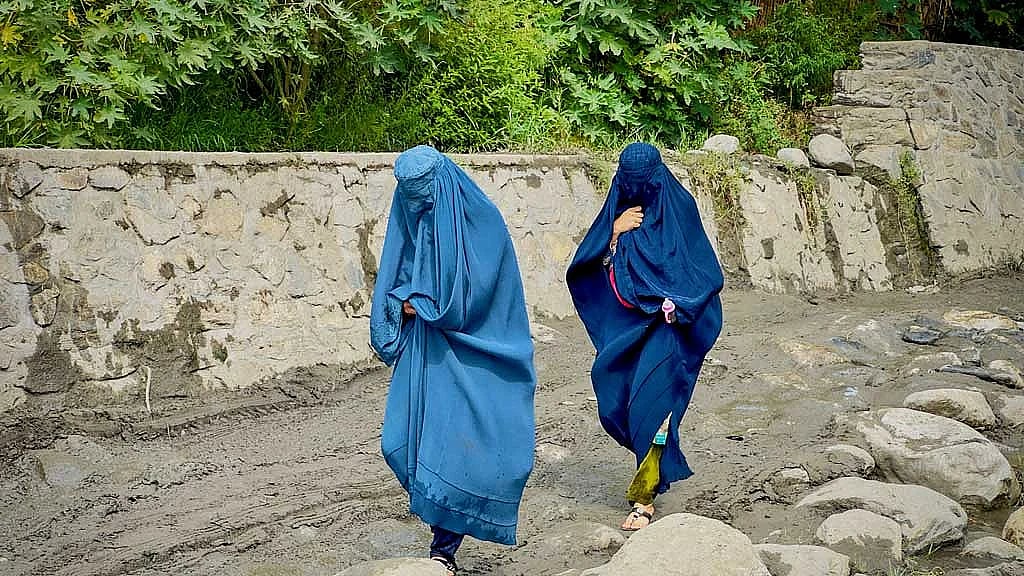
Dozens of Afghan women have reportedly been detained for a stray strand of hair, a bright scarf or walking out without a male guardian.
The UN Assistance Mission in Afghanistan (UNAMA) has verified that at least 52 women and one girl were arrested or detained in Herat and Kabul between July and September.
Other women were threatened with arrest, UNAMA said in a statement, reported by UN News, the world body’s news service.
The true number could be far higher because fear and stigma stop many cases from being reported, it added.
The Taliban have severely restricted women’s and girls’ rights since seizing power in 2021, keeping them out of secondary education, jobs and public life.
The recent arrests were linked to alleged breaches of the de facto authorities’ dress code, according to UNAMA.
Many women were held for not wearing a chador, showing hair, wearing colourful scarves or makeup, or appearing in public without a Mahram (male guardian). “The women were released after spending several hours in detention,” the mission said.
Alarmed by verbal abuse, beatings and threats against women, including female shopkeepers, UNAMA said such acts violate their rights to freedom of movement, expression and autonomy.
Arrests and detentions also expose women and girls to severe stigma and further marginalisation, it said.
The mission urged the authorities to end discriminatory enforcement, respect the rights and dignity of all Afghans and uphold the country’s obligations under international human rights law.
Separately, the International Organization for Migration (IOM) has released new findings on the needs and reintegration barriers of nearly 6.5 million Afghans who have returned from Iran and Pakistan since 2023.
“Afghanistan is receiving returnees at a scale and pace that requires sustained support beyond the point of arrival,” said Mihyung Park, IOM’s chief of mission in the country.
“The findings show that many returnees intend to stay and rebuild their lives, but their ability to do so depends on access to livelihoods, safe shelter, documentation and essential services alongside support for the communities receiving them.”
The Returnee Resilience Overview covers undocumented returnee households and individuals who had spent at least eight months in Afghanistan since arrival. Its key findings:
• Among those aged 14 and above, 53 percent had no completed education, half had no specialised experience and 69 percent had not worked in the 30 days before the interview.
• Households made up 82 percent of returns, averaging 6.1 members.
• Children under 18 made up 58 percent of returnees.
• Transitional shelters housed 77 percent, while 51 percent lacked enough living space.
• Only 21 percent of household respondents said all members had documentation, while 43 percent lacked the papers needed to access services.
The findings show support must go beyond arrival, the IOM said, calling for sustained investment in durable solutions.
The UN migration agency also urged area-based reintegration approaches that strengthen livelihoods, shelter, documentation support and basic services for returnees and host communities, to build “long-term stability, resilience and social cohesion”.