Published : 19 Feb 2026, 07:53 AM
Updated : 21 Aug 2026, 03:22 PM


Six months can define a government’s direction -- or expose its limits. For Prime Minister Tarique Rahman’s newly installed BNP administration, the first 180 days are being framed as a decisive window: a period to restore public confidence, reassert state authority, and stabilise an economy and administration unsettled by prolonged uncertainty.
Behind closed doors and in public pronouncements alike, the government has begun outlining a priority-based action plan that it says will be implemented swiftly.
From controlling prices before Ramadan to restoring law and order, ensuring uninterrupted electricity and fuel supplies, tightening the grip on corruption, calming campuses, and normalising the pace of administration -- the agenda is ambitious, and deliberately front-loaded.
Four Broad Priorities
Multiple ministers told bdnews24.com that ministry-wise priority lists are being finalised, with a comprehensive government plan expected within days.
The forthcoming FY2026–27 budget is also being prepared within this 180-day framework.
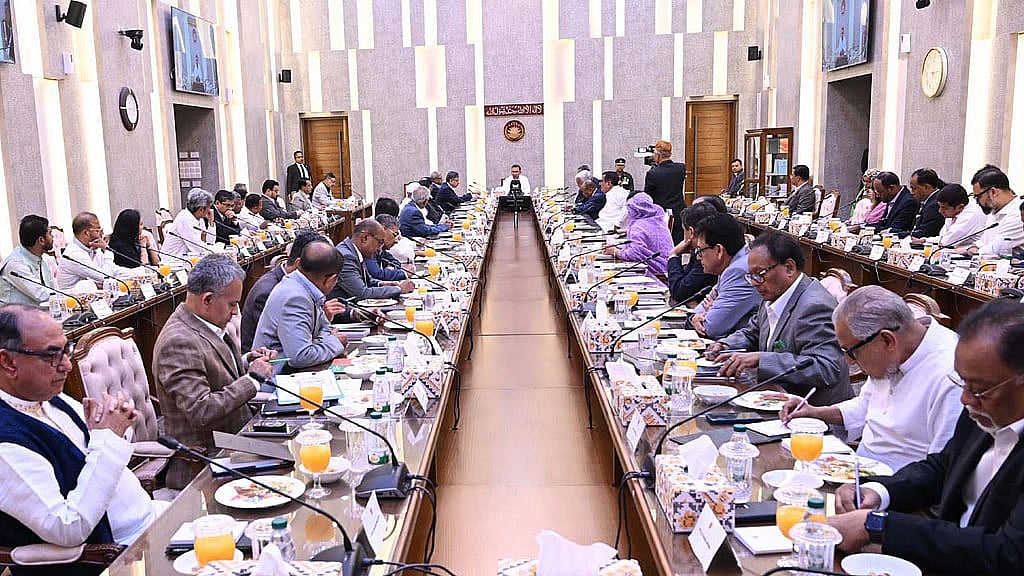
At the first cabinet meeting held at the Secretariat on Wednesday, the day the government was formed, three immediate priorities were identified.
Information and Broadcasting Minister Zahir Uddin Swapon said the focus would be on controlling commodity prices, improving the law and order situation, and keeping electricity and energy supplies stable.
Relevant ministers, he said, would submit detailed action plans to the prime minister within a day or two.
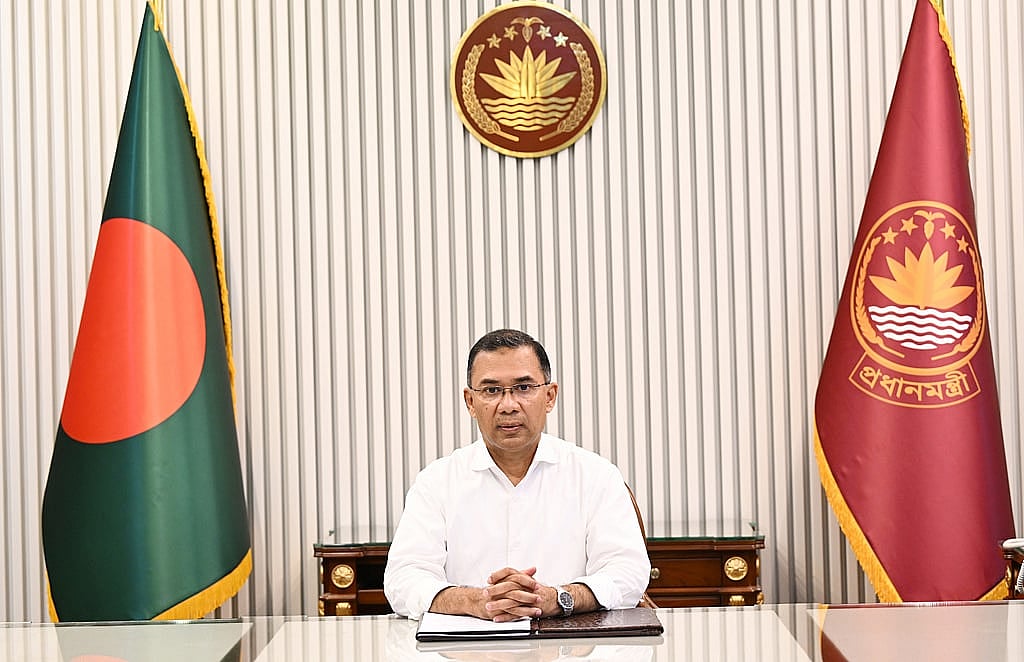
In his address to the nation on Wednesday, Tarique made the emphasis unmistakably clear.
“Improving the law and order situation and bringing people peace and security through strict control of corruption is the government’s foremost priority,” he said.
Home Minister Salahuddin Ahmed later confirmed that the government had fixed a 180-day priority roadmap, with details to be disclosed gradually.
Senior officials at the Prime Minister’s Office (PMO) and BNP Standing Committee leaders said, at a broad level, four issues dominate the first six months.
These themes have also echoed through public remarks by cabinet members and the prime minister’s inaugural national address.
Restoring Law and Order
The foremost task, officials say, is restoring law and order.
Tarique has already issued directives to the home minister: reforming the police’s organisational structure, bringing every police station under strict accountability, identifying high-risk areas, and taking immediate action.
According to one government insider, “Within 180 days, Tarique Rahman wants to bring the law and order back to a normal footing.”
In his national address, the prime minister said he had already identified drug traffickers.
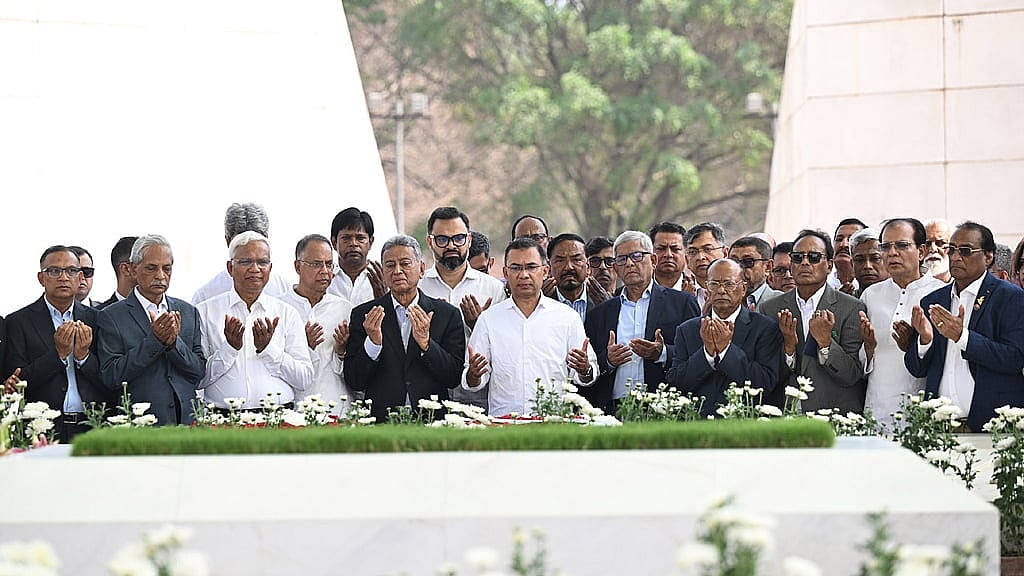
Salahuddin, speaking after meeting ministry officials at the Secretariat, delivered an unequivocal message: “No form of ‘mob violence’ will be tolerated anymore. ‘Mob culture’ is over in Bangladesh. It will not be encouraged in any way.”
Prices, Corruption, and Ramadan
Reducing corruption features prominently in the priority list, with the government aiming to restore normal working relationships among oversight agencies.
The new administration has assumed office on the eve of Ramadan, sharpening its focus on price stability.
Tarique has made it clear that keeping commodity prices under control is central to his 180-day agenda.
On his first working day, State Minister for Liberation War Affairs Ishraque Hossain announced a hard line against hoarders and market syndicates ahead of Ramadan.
In a post on his verified Facebook page on Wednesday, he warned of strict action against artificial shortages and price manipulation in food, edible oil, and essential goods.
He named major importers and suppliers -- including Bashundhara Group, Fresh, City Group, TK Group, Nabil Group, and ACI Limited -- warning hoarders and wholesale traders against market manipulation.
Multiple officials said the instructions were clear: prices must not spike suddenly, essentials must remain affordable, and markets must be stabilised within 180 days.
The prime minister himself has warned of breaking syndicates.
The government has also been directed to bring transparency to import and export data, making information available to the public as a matter of priority.
Jobs, Power, and Energy Security
An official at the PMO said initiatives to generate employment are also part of the 180-day framework.
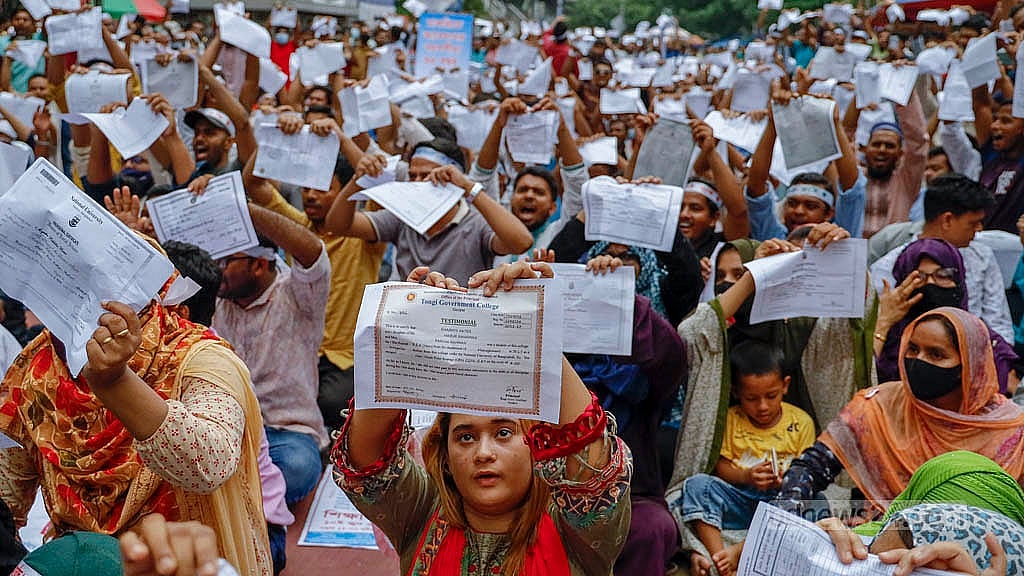
In his speech, Tarique reiterated his commitment to students and young people: “To the millions of students and young people of the country, I want to say -- this government is prepared to provide every possible support so that you can make yourselves worthy through knowledge, science, and skills.
“We have begun our journey with a clear commitment to ensuring employment and a proper working environment.”
Senior ministers have also begun issuing sector-specific directives.
One minister has ordered that all cities under local government authorities be kept clean.
To ensure uninterrupted electricity during Ramadan, Power Minister Iqbal Hasan Mahmud Tuku instructed officials to guarantee continuous supply to mosques during Iftar, Sehri, and Taraweeh.
The prime minister reiterated this directive at the first cabinet meeting.
Beyond Ramadan, ministry sources said the government is paying added attention to making uninterrupted power supply sustainable over the next six months.
Energy Roadmap and Budget Priorities
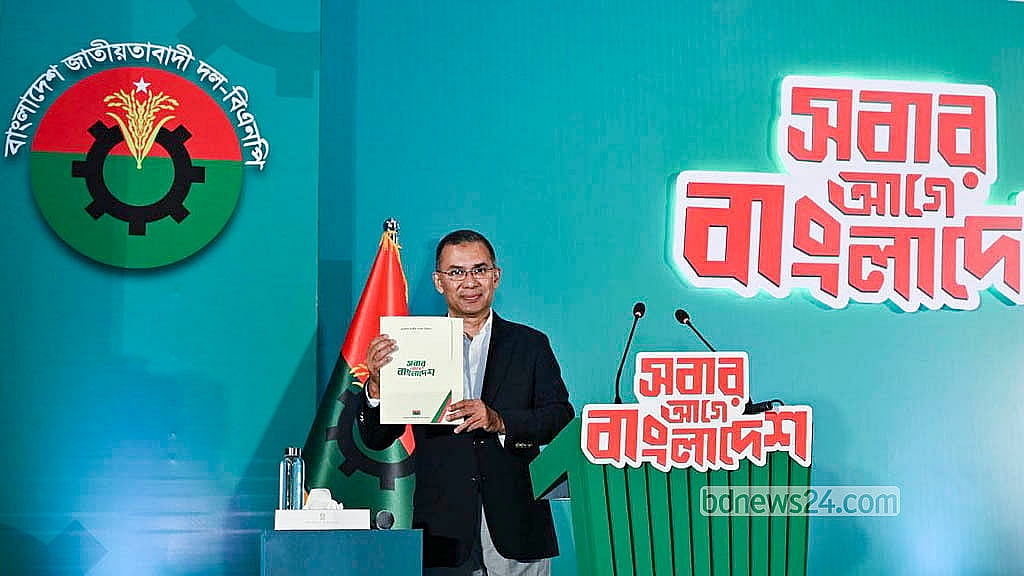
On Wednesday, the power, energy and mineral resources ministry published a book outlining a 100-day action plan and a five-year roadmap, aligned with the government’s election manifesto.
The plan prioritises energy security, domestic resource exploration, transparency, and digital transformation.
It includes drilling 150 new gas wells under an integrated roadmap, drafting the “Bangladesh Onshore Model PSC 2026” and “Bangladesh Offshore Model PSC 2026” to boost exploration, and preparing the Energy and Power Sector Master Plan (EPSMP) 2026 for 2026–2030.
Gas marketing regulations and an integrated LPG policy are also planned.
Speaking to bdnews24.com on Wednesday night, Minister Iqbal said: “This 100-day and five-year plan has been published in line with our party manifesto. We will sit again tomorrow, and then the government will announce the detailed plan.”
A PMO official said budget preparation is a key component of the first 180 days.
Manifesto pledges such as Family Cards, Farmer Cards, and reducing reliance on debt-driven growth are also being prioritised.
Local Government Minister Mirza Fakhrul Islam Alamgir said increasing investment while moving away from a debt-dependent economy would be a major challenge.
Education sector reforms, addressing campus unrest, and fulfilling commitments linked to the July National Charter are also under discussion.
Several ministers said meetings would continue as the government refines its six-month roadmap.
After taking oath on Tuesday, BNP Standing Committee member Salahuddin reaffirmed the government’s commitment to implementing the July Charter “word for word”.
Khalidur Rahman, a statistics professor at Shahjalal University of Science and Technology, told bdnews24.com that the government’s 180-day priority plan under Tarique is, in principle, a timely and positive initiative amid recent political changes.
“Price control, improved law and order, energy security and a firm stance against corruption are vital for economic and social stability,” the columnist said. “The pledge to create jobs is particularly encouraging for young people.”
The political analyst, however, warned that success will hinge on transparency, institutional accountability and consistent practical implementation.
“Effective execution and evidence-based evaluation, rather than announcements, will determine public confidence in the government,” he added.