Published : 11 Mar 2022, 01:42 PM
Updated : 18 Jul 2022, 02:33 PM


But philanthropist Becky Gochman, 58, skipped right tothe second step.
She has been on an art-buying spree, but not forherself or her homes in Manhattan and Palm Beach, Florida.
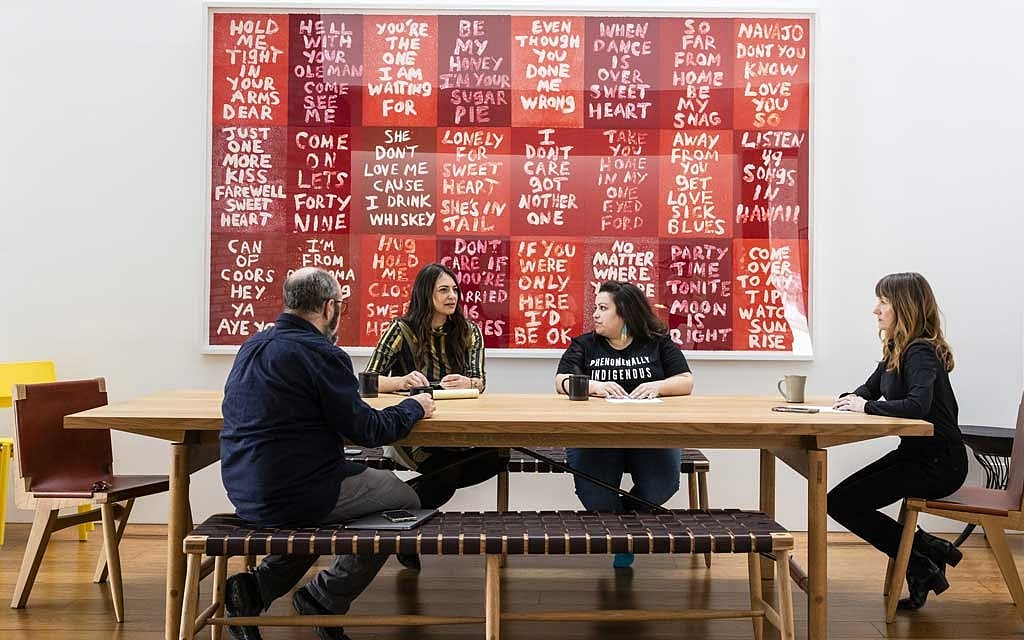
Her purchases are for an initiative she founded in2021, the Forge Project, which supports Indigenous art and artists by buyingworks and then lending and donating them to institutions and making themavailable for scholarly study.
Forge also sponsors a fellowship and residency programme,with grants of $25,000 each to six artists a year.
By getting such work into circulation and capturingthe attention of museums, dealers, other collectors and the public, the ForgeProject intends to elevate the artists and Indigenous issues. Loan recipientsinclude the Venice Biennale, the Blaffer Art Museum in Houston and the TucsonMuseum of Art.
It has collected more than 230 works by 42 artists,all from the United States and Canada.
“It’s kind of funny to go from zero to a major artcollector within a year,” Gochman said. “But when it’s done for these reasons,it makes my heart sing.”
Gochman says she doesn’t collect much for herself,though she owns works by Polly Apfelbaum, Lily Stockman and Kenny Scharf. (Sheis also passionate about the equestrian life; she owns horses and competes,spending much of the year travelling to shows.)
The Forge Project’s headquarters here on a hilltop inthe Hudson Valley — two sleekly modern homes, the only residential structuresartist Ai Weiwei designed in the United States — hold some of its collection,including works by Wendy Red Star, Matthew Kirk, Edgar Heap of Birds and JudyChartrand.
Gochman, a former art teacher, is married to DavidGochman, whose family made a fortune selling a majority stake in Academy Sports+ Outdoors. She has enlisted expert help to make the Forge Project viable.
Her co-founder, Zach Feuer, is a former New York Cityart dealer who is now based in the Hudson Valley, and they hired CandiceHopkins, a longtime curator, as executive director.
Hopkins is of Tlingit descent and is a citizen ofCarcross/Tagish First Nation. She was a curator of the 2017 edition of theprestigious exhibition Documenta, in Kassel, Germany, and serves as thecuratorial director of the Toronto Biennial of Art.
Feuer does double duty, also running the GochmanFamily Collection, a separate but affiliated entity with a broader collectingmandate — it holds works by Ai, for instance, as well as Stanley Whitney —leaving the Forge Project to focus on living Indigenous artists.
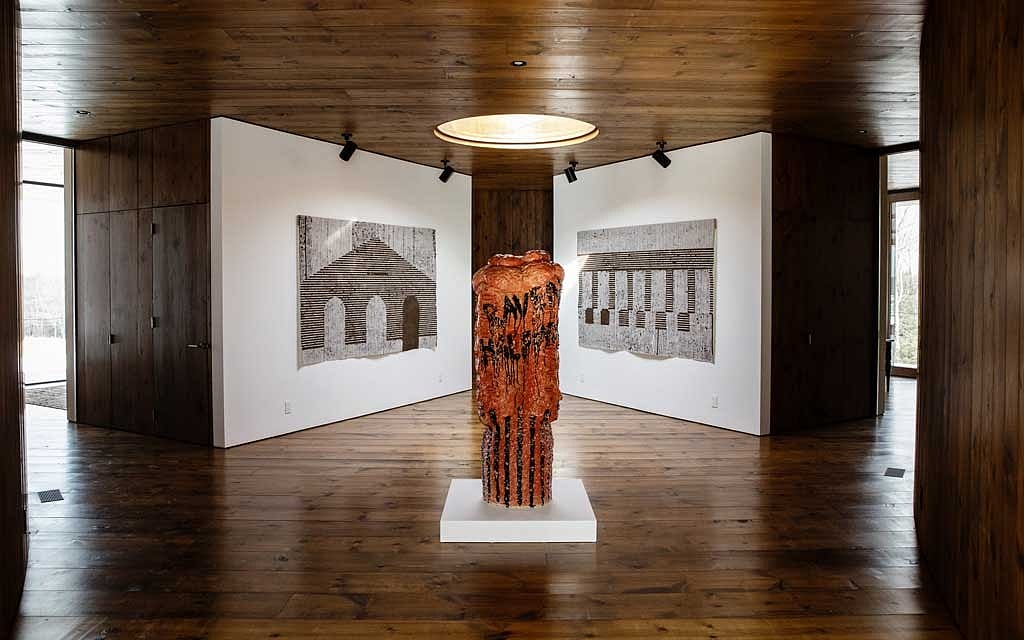
Items included in the Forge Project collection are Raven Halfmoon’s “Caddo Dancing in Binger Oklahoma” (2020), centre, and Christine Howard Sandoval’s “Pillars — An Act of Decompression & Arch — A Passage Formed By A Curve” (2020), at the non-profit’s home in Ancram, NY, Feb 16, 2022. The Forge Project, based in the Hudson Valley, is Becky Gochman’s initiative to raise the profile of the artists and find homes for their work in collections and museums. (Lauren Lancaster/The New York Times
She recalled that she started out with a broadermandate: “Our family wanted to do a social justice project, and we thought itwould involve art.”
When she found the 38-acre property where the ForgeProject is headquartered, she learned that it was on the lands of theMuh-he-con-ne-ok tribe. After she met Feuer and discussed directions for herphilanthropy, Gochman said, “It became obvious that we would do an Indigenousproject.”
As the team looked into philanthropic endeavours forIndigenous artists, Hopkins said: “What we found was there wasn’t reallyanything like this,” adding “That’s part of what led to its founding.”
The Forge Project is not set up as a nonprofit becauseGochman did not want to take advantage of the tax benefits that such astructure would confer; it is set up as an LLC instead.
Her philanthropy has other outlets, too. This monthGochman is announcing that the Gochman Family Foundation is giving $25 millionto Bard College in Annandale-on-Hudson, New York, a donation being matched bythe Open Society Foundations, established by George Soros. The money will go toa centre for Indigenous studies as well as faculty appointments and studentscholarships.
Given the headline-making amounts, Hopkins said thatshe appreciated Gochman’s lack of interest in a personal spotlight.
“For Becky, this isn’t about making a platform forherself as an individual at all,” Hopkins said. “It’s thinking about how artcan be part of the service of public good.”
The Forge Project’s website has an unusual featurethat demonstrates how seriously it takes Indigenous issues: It makes the userclick a land acknowledgment button before proceeding.
It reads, “We acknowledge that we are situated on theunceded and ancestral homelands of the Muh-he-con-ne-ok, the Peoples of theWaters That Are Never Still. We recognise that there is a history to this landthat is older than we are and pay honour and respect to this history and to theElders, past, present, and future.”
Land acknowledgments, though still rare, have becomemore common at art museums and other cultural institutions.
“It’s a way of combating historical amnesia,” Hopkinssaid.
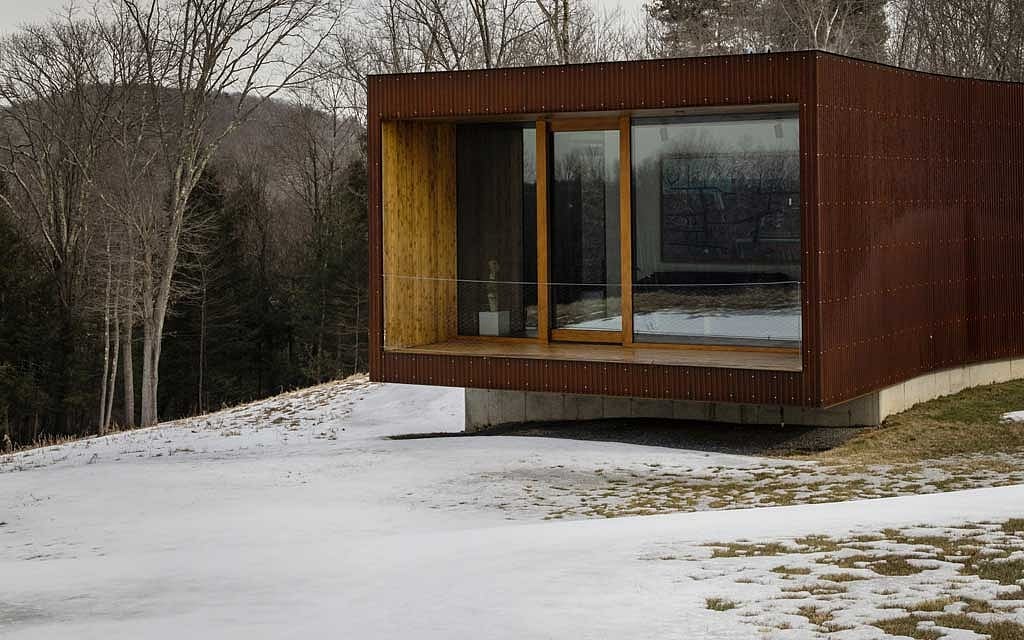
The Ai Weiwei-designed home of the non-profit Forge Project, in Ancram, NY, Feb 16, 2022. The Forge Project, based in the Hudson Valley, is Becky Gochman’s initiative to raise the profile of the artists and find homes for their work in collections and museums. Lauren Lancaster/The New York Times
Hopinka is one of several Forge Project artists basedin the Hudson Valley.
“We didn’t set a geographically specific parameter,”Feuer said. “There are just a lot of great artists around here.”
Although Forge is not open to the public on a regularschedule, visitors can sign up online to see, at no charge, the 30 to 40 workstypically on view, displayed as they would be in a collector’s home.
The art rotates in and out as needed. “We really seeit as a working collection,” Hopkins said. “We wanted it to be publicly accessible,we wanted to facilitate loans, we wanted to invite people here to see it and toinvite artists here.”
For the artists whose work is bought, “It’s amazingand really needed,” said Hopinka. “There just aren’t a lot of resources forIndigenous artists.”
Market forces have made it easier for the Forge teamto collect the work, largely from galleries and directly from artists, which inturn can make a difference for the creators.
“From a dealer’s perspective, work by Indigenousartists is immensely undervalued and underrepresented,” Feuer said. “It’s aflaw in the market, and an upsetting one.”
Museums, at least, are increasingly displayingIndigenous work. “Jeffrey Gibson: When Fire Is Applied to a Stone It Cracks,”featuring an artist in the Forge Project collection, was on view at theBrooklyn Museum until January 2021, and current exhibitions include “Mesh” atOregon’s Portland Art Museum and “Each/Other: Marie Watt and Cannupa HanskaLuger” at the Peabody Essex Museum in Salem, Massachusetts.
Hopkins said she saw some progress in terms of demandfor Indigenous art. “It’s only just starting to change, in the past threeyears,” she said. “So I do feel like there’s still a need for a correctiveforce.”
Though Forge is just getting started, Gochman did notdismiss the idea of someday establishing a permanent, museum-like exhibitionspace.
For now, she said, “We’re thinking all the time abouthow to increase the visibility of this work.”
© 2022 The New York Times Company