


Published : 09 Mar 2019, 12:13 AM
Updated : 17 Oct 2022, 11:36 AM


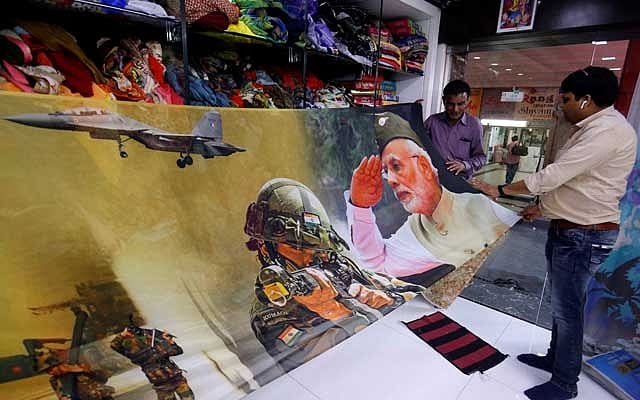
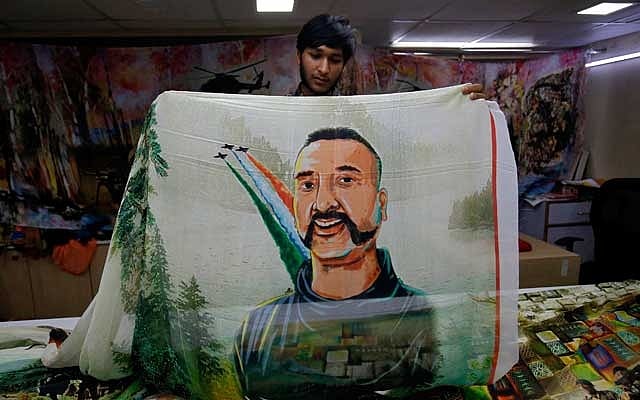
Inside a smoky factory in the western city of Surat, machines run 24 hours a day to churn out fabrics showing jets and the face of an air force pilot shot down in a dog fight with the neighbouring rival.
Both nations said they downed jets, with Pakistan capturing a pilot, in a long-running conflict over the Kashmir region.
At Annapurna Industries, workers toil in three shifts to meet demand for saris, which retail at around 850 rupees ($12).
A salesman displays a sari, a traditional clothing worn by women, with a printed image of Indian Air Force pilot Abhinandan Varthaman, who was captured and later released by Pakistan, inside a sari manufacturing factory in Surat, India, March 8, 2019. Reuters
He returned to India on March 1 to a hero's welcome and the flare up has eased for now.
"I had only expected orders for some 500 saris," said Manish Agrawal, a director at Annapurna Industries. "But it's already crossed 4,000 and still more orders are pouring in."
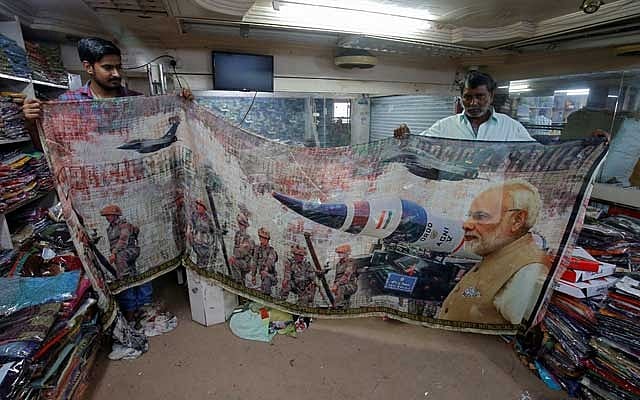
Salesmen pack a sari, a traditional clothing worn by women, with printed images of India's Prime Minister and Indian Army inside a shop in Surat, India, March 8, 2019. Reuters
"I prepared one design in only four hours after our surgical strike into Pakistan. It usually takes seven days to make such a design," said Vinod Surana, the owner of Jamkudi Sarees.
"It's been a hit."
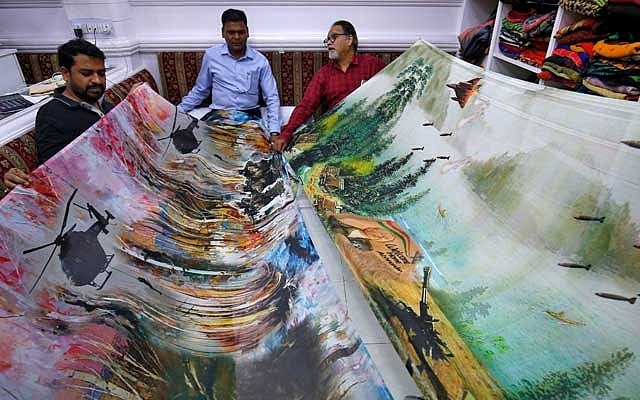
Traders display a sari, a traditional clothing worn by women, with printed images of what they called a depiction of India's air strikes over Pakistan, inside their shop in Surat, India, March 8, 2019. Reuters













