


Published : 31 Oct 2018, 09:26 PM
Updated : 19 Oct 2022, 02:22 PM


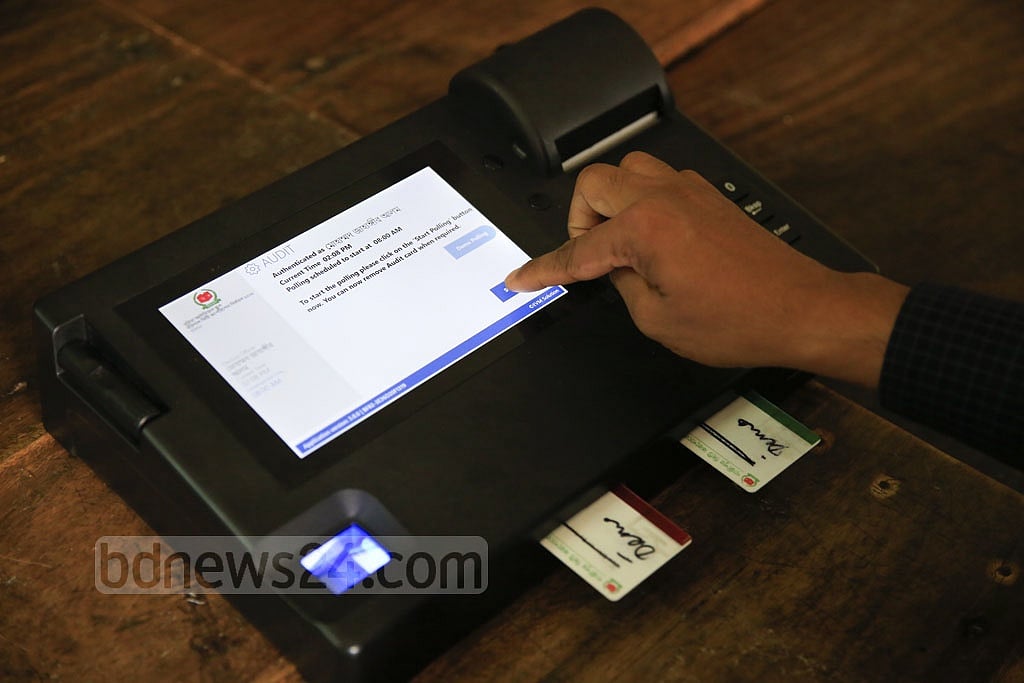
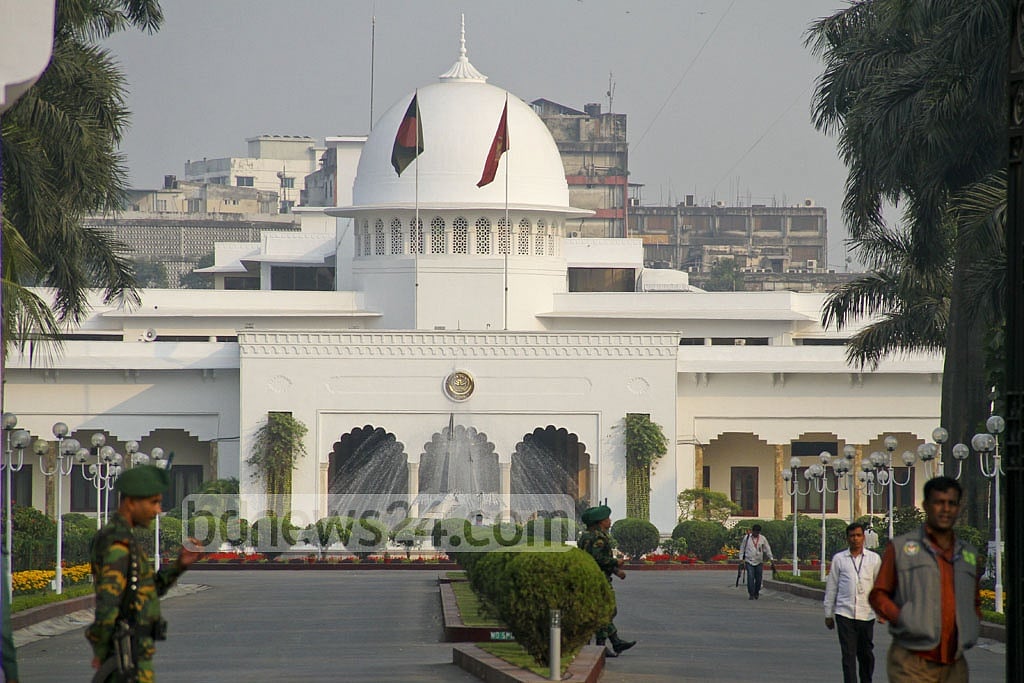
President Md Abdul Hamid signed an ordinance on Wednesday, bringing changes to the Representation of the People Order or RPO for the use of the EVMs in general elections.
The cabinet on Monday approved the amendment. Now it has taken effect with the signing by the president and it will be passed in the next parliament session.
The president’s Press Secretary Md Joynal Abedin told bdndews24.com that the law ministry will issue a gazette notification on the ordinance.
Hamid’s move came a day before his meeting with the election commissioners to formally discuss issues related to the parliamentary elections, including the schedule.
On Thursday, the EVM issue is also highly likely to be on the agenda of talks between Prime Minister Sheikh Hasina and Dr Kamal Hossain-led Jatiya Oikya Front alliance.
The seven-point charter of demand of the alliance, of which BNP is a part, includes exclusion of EVMs from all elections.
Besides the use of EVMs, the amended RPO includes a provision that allows candidates for the upcoming parliamentary elections to repay defaulted loans until a day before the submission of the nominations, according to EC Secretary Helal Uddin Ahmed.
The provision for online submission of the nomination forms has also been added to the RPO, he told bdnews24.com.
After Monday’s cabinet meeting, Secretary Md Shafiul Alam said the amendment will be issued in the form of an ordinance as there was not enough time to push it through parliament ahead of the elections.
The amendment also includes a minimum penalty of three years in prison and a maximum of seven years for the misuse of EVMs, Cabinet Secretary Alam had said.
Different provisions have been included in the RPO to confirm the commission’s powers to ensure safety measures that “will remove the people’s fear of vote rigging through the machines”, according to Alam.
He had also said the use of EVMs was not made mandatory in the amendment and it will be up to the EC to decide at how many places the machines will be used.
DOUBTS AND PROMISES
The BNP and different other political groups have been opposing EVMs since the ATM Shamsul Huda-led EC introduced the machines in Bangladesh in the 2010 local government elections.
The commission had said at the time that it would expand the use of EVMs as the machines would reduce cost and time of voting and counting.
But the subsequent commission headed by Kazi Rakibuddin Ahmad did not make much ground on the issue of EVMs. It also had a dispute with the BUET over the machines and their use stopped after 2013 as those has gone out of order.
After the commissioners led by KM Nurul Huda took over, the EC resumed the use of EVMs and ‘digitised EVMs’ were made with the help of Bangladesh Machine Tools Factory or BMTF.
The commission had used EVMs in local government polls on a limited scale but said it had no plan to use the machines in the parliamentary polls unless all the political parties agreed.
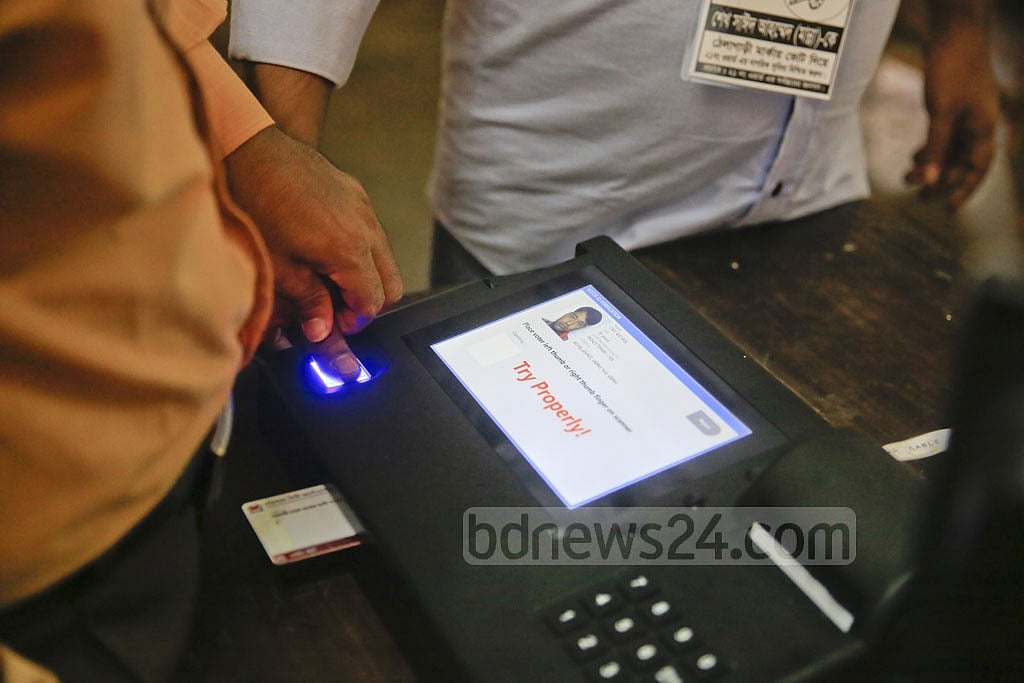
A voter uses an electronic voting machine at the Government Hatem Ali College polling centre in Barishal, one of the three cities that went to the polls on Monday. Photo: Mostafigur Rahman
The Awami League welcomed the EC’s action and questioned the BNP’s motive, claiming it reservations were bred by the fears of an electoral debacle.
Hasina, however, recently said she favoured a limited trial of the machines in the parliamentary elections.
She suggested "a gradual rise in the use of EVMs to let the officials and the people learn and teach the new system first for getting used to", Planning Minister AHM Mustafa Kamal had said after the government cleared the EVM project
A total of 150,000 EVMs will be bought under the project to make the voting process transparent, reliable and free from errors, according to the minister.
The estimated cost of the project is over Tk 38.25 billion and the time of completion is June, 2023, in three phases.
The EVMs used by the current EC in recent polls are better than the ones used beforehand, according to Prof Md Haider Ali, a member of the commission’s technical committee.
“This machine leaves no room for rigging. The ballot will be issued only after automatic verification is done to ensure the identity of the voter,” Prof Ali, who teaches computer science and engineering at Dhaka University, had told bdnews24.com.
“The voter can vote only after identification through fingerprints or NID,” he had said.













