


Published : 02 Oct 2013, 04:55 AM
Updated : 20 Oct 2022, 03:39 PM


The quick dismissal offered no sign that President Barack Obama and Republicans can soon end a standoff over health care that has sidelined everything from trade negotiations to medical research and raised new concerns about Congress's ability to perform its most basic duties.
An even bigger battle looms in coming weeks, when Congress must raise the debt limit or risk a US default that could roil global markets.
As Republicans in the House of Representatives huddled to consider their next move, Obama accused them of taking the government hostage in order to sabotage his signature health care law, the most ambitious US social program in five decades.
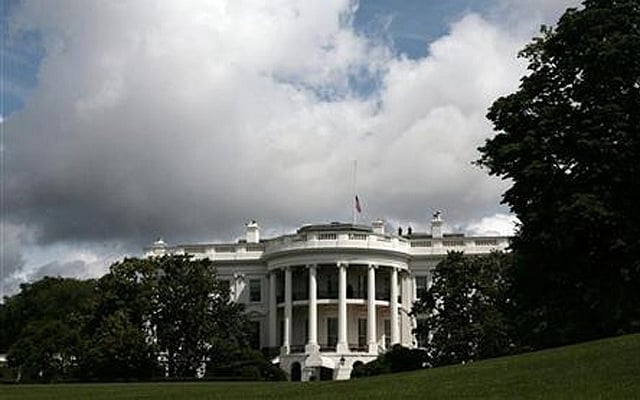
"They've shut down the government over an ideological crusade to deny affordable health insurance to millions of Americans," Obama said in the White House Rose Garden.
Republicans in the House of Representatives view the Affordable Care Act as a dangerous extension of government power and have coupled their efforts to undermine it with continued government funding. The Democratic-controlled Senate has repeatedly rejected those efforts.
Spending authority for much of the government expired at midnight on Monday (10am BdST), but that did not prevent the Obama administration from unveiling the health-insurance exchanges that form the centrepiece of the law.
The latest Republican plan, floated by party leaders on Tuesday, would restore funding for federal parks, veterans programs and the District of Columbia.
That, Republicans said, also would encourage talks to fully end the shutdown and craft a broader deal that would also raise the debt limit.
"We are asking Democrats to come to the table," Republican Representative Thomas Massie of Kentucky said.
The White House did not take long to reject the offer.
The proposal "shows the utter lack of seriousness that we're seeing from Republicans," White House spokesman Jay Carney said.
The plan appeared to temporarily head off a split between Tea Party conservatives who pushed for the government funding confrontation and more moderate Republicans who appear to be losing stomach for the fight.
Before the huddle, Republican Representative Peter King, a New York moderate, estimated that more than 100 of the chamber's 232 Republicans would back Obama's demand to restore all government funding without conditions. That would be enough to easily pass the House with the support of the chamber's 200 Democrats.
Asked why the moderates don't demand a vote, King said: "I guess that they are waiting for the right time."
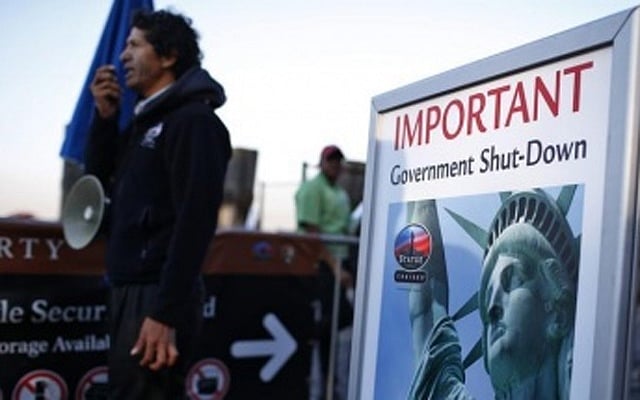
In Washington, museums were closed to tourists and police erected barriers around landmarks like the Lincoln Memorial. The National Zoo shut off a popular "panda cam" that allowed visitors to view its newborn panda cub online.
Whether the shutdown represents another bump in the road for a Congress increasingly plagued by dysfunction or is a sign of a more alarming breakdown in the political process could be determined by the reaction among voters and on Wall Street.
The market appeared to be taking the news in stride with investors confident a deal could be reached quickly. US stocks were higher in afternoon trading with the S&P 500 up 0.5 percent and the Nasdaq Composite gaining 0.8 percent.
But the US Treasury was forced to pay the highest interest rate in about 10 months on its short-term debt as many investors avoided bonds that would be due later this month, when the government is due to exhaust its borrowing capacity.
If Congress can agree to a new funding bill soon, the shutdown would have little impact on the world's largest economy.
A week-long shutdown would slow US economic growth by about 0.3 percentage points, according to Goldman Sachs, but a longer disruption could weigh on the economy more heavily as furloughed workers scale back personal spending.










