November 23, 2026

Venezuela's Hugo Chavez dies from cancer

Venezuelan President Hugo Chavez has died after a two-year battle with cancer, ending the socialist leader's 14-year rule of the South American country.

Reuters

.

Reuters

Published : 06 Mar 2013, 03:16 AM

Updated : 20 Oct 2022, 03:34 PM

Image
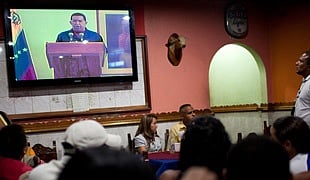
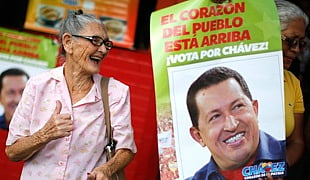
People at a bar in Caracas watch Venezuelan President Hugo Chavez's televised speech June 30, 2011. REUTERS/Carlos Garcia Rawlins
Image
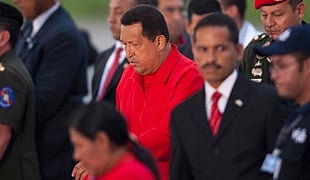
Chavez arrives at Simon Bolivar International Airport in Caracas July 16, 2011. REUTERS/Carlos Garcia Rawlins.
Image
Chavez talks to the media after he arrives at Barinas from Cuba April 4, 2012. REUTERS/Miraflores Palace
Image
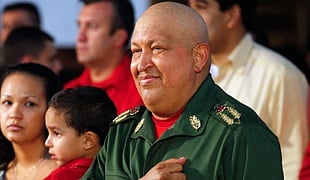
Chavez smiles during the Council of Ministers at Miraflores Palace in Caracas February 23, 2012. REUTERS/Miraflores Palace/Handout
Image
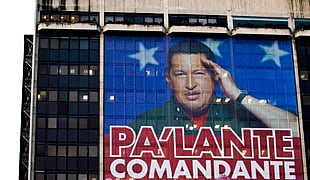
An image of Chavez is seen in the windows of state oil company PDVSA headquarters building in Caracas February 28, 2012. REUTERS/Jorge Silva
Image
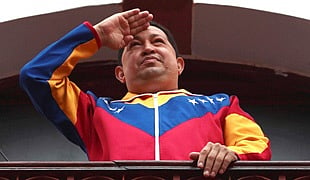
Chavez salutes to supporters from a balcony at Miraflores Palace in Caracas March 17, 2012. REUTERS/Miraflores Palace
Image
Chavez talks to the media after he arrives at Barinas from Cuba April 4, 2012. REUTERS/Miraflores Palace
Image
Chavez and his daughter Rosa Virginia are welcomed by Cuban First Vice-President of the Council of State Jose Machado Ventura, at Havana's airport April 15, 2012. REUTERS/Miraflores Palace
Image
Chavez celebrates from people's balcony at Miraflores Palace in Caracas October 7, 2012. REUTERS/Jorge Silva
Image
Chavez smiles as he speaks during a Council of Ministers at Miraflores Palace in Caracas November 15, 2012 REUTERS/Handout/Miraflores
Image
Chavez talks to cabinet members upon his arrival from Cuba, at Simon Bolivar airport in Caracas December 7, 2012 REUTERS/Miraflores Palace/Handout
Image
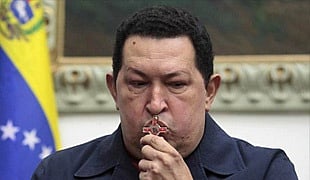
Chavez kisses a crucifix as he speaks during a national broadcast at Miraflores Palace in Caracas December 8, 2012 REUTERS/Miraflores Palace/Handout
Image
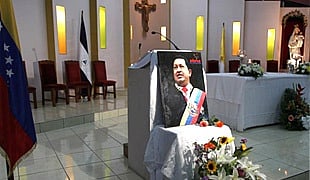
A picture of Venezuela's President Hugo Chavez is displayed during a mass to pray for his health in Managua, Nicaragua December 12, 2012. REUTERS/Oswaldo Rivas
Image
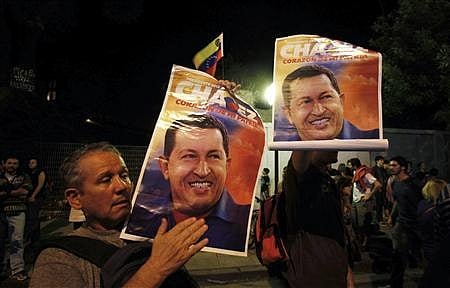
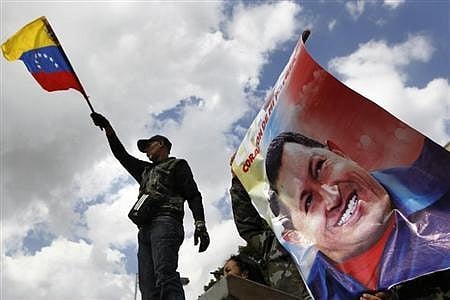
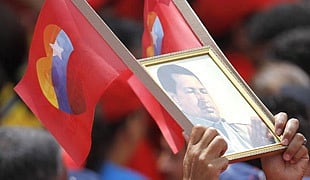
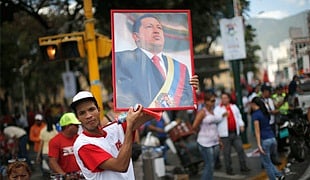
A supporter of President Hugo Chavez holds up a portrait of him during a rally held on the day he was to be sworn in outside Miraflores Palace in Caracas January 10, 2013 REUTERS/Carlos Garcia Rawlins
Image
Chavez smiles in between his daughters, Rosa Virginia (R) and Maria while recovering from cancer surgery in Havana in this photograph released by the Ministry of Information on February 15, 2013 REUTERS/Handout
Image
A supporter of Venezuela's President Hugo Chavez cheers outside the military hospital after his surprise return to Caracas February 18, 2013 REUTERS/Jorge Silva
Image
A supporter of Venezuela's President Hugo Chavez cheers outside the military hospital after his surprise return to Caracas February 18, 2013 REUTERS/Jorge Silva
Image
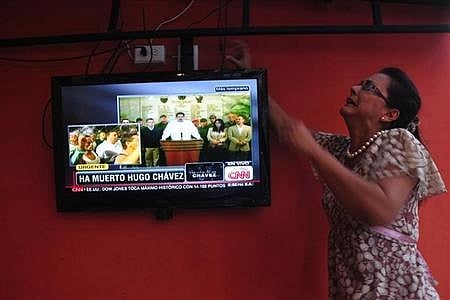
Venezuela's Vice President Nicolas Maduro announces the death of President Hugo Chavez, in Caracas, March 5, 2013 REUTERS/VTV/REUTERS TV/Handout

Also Read:

Quotes from Hugo Chavez

Venezuelan President Hugo Chavez has died after a two-year battle with cancer, ending the socialist leader's 14-year rule of the South American country.

His Vice President Nicolas Maduro made the announcement in a televised speech on Tuesday.

The flamboyant 58-year-old leader had undergone four operations in Cuba for a cancer that was first detected in his pelvic region in mid-2011. His last surgery was on Dec 11 and he had not been seen in public since.

"It's a moment of deep pain," Maduro, accompanied by senior ministers, said, his voice choking.

Chavez easily won a new six-year term at an election in October and his death will devastate millions of supporters who adored his charismatic style, anti-US rhetoric and oil-financed policies that brought subsidised food and free health clinics to long-neglected slums.

Detractors, however, saw his one-man style, gleeful nationalisations and often harsh treatment of opponents as traits of an egotistical dictator whose misplaced statist economics wasted a historic bonanza of oil revenues.

Chavez's death opens the way for a new election that will test whether his socialist "revolution" can live on without his dominant personality at the helm.

MADURO FAVORITE

The vote should be held within 30 days and will likely pit Maduro against Henrique Capriles, the centrist opposition leader and state governor who lost to Chavez in the October election.

One recent opinion poll gave Maduro a strong lead.

Maduro is Chavez's preferred successor, enjoys support among many of the working class and could benefit from an inevitable surge of emotion in the coming days.

But the president's death could also trigger in-fighting in a leftist coalition that ranges from hard-left intellectuals to army officers and businessmen.

Venezuela has the world's largest oil reserves and some of the most heavily traded bonds, so investors will be highly sensitive to any signs of political instability.

A defeat for Maduro would bring major changes to Venezuela and could also upend its alliances with Latin American countries that have relied on Chavez's oil-funded largesse - most notably with communist-led Cuba, which recovered from financial ruin in the 1990s thanks largely to Chavez's aid.

Chavez was a garrulous figurehead for a global "anti-imperialist" alliance stretching as far as Belarus and Iran, and he will be sorely missed by anti-US agitators.

Related Stories