


Published : 25 Oct 2017, 12:14 PM
Updated : 11 Apr 2022, 09:23 PM


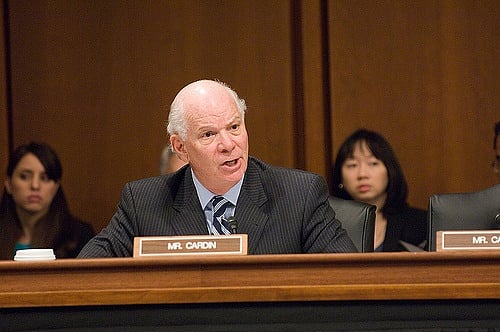
Senator Bob Corker, chairman of the committee, presided over the hearing Tuesday. The members of the committee including Senator Cardin took part in the hearings on “Assessing US Policy Towards Burma: Geopolitical, Economic and Humanitarian Considerations.”
Patrick Murphy, Deputy Assistant Secretary; Bureau of East Asian and Pacific Affairs and Mark C. Storella, Deputy Assistant Secretary; Bureau of Population, Refugees, and Migration of the State Department and V Kate Somvongsiri, Acting Deputy Assistant Administrator; Bureau for Democracy, Conflict, and Humanitarian Assistance of USAID testified before the committee.
Senator Cardin is working with a bipartisan group of colleagues to draft legislation to clarify US policy towards Burma, place limits on military engagement given the situation in Rakhine, explore whether economic or other sanctions are needed, among others.
“Yes, I think it’s genocide. I know there will be some discussion about whether it’s genocide or not. ‘Deliberately inflicting on a group conditions of life calculated to bring about its physical destruction in whole or in part’. That’s what happening," Cardin said.
"They’re trying to destroy the population. People are arguing intent. What else are they doing this for? Other than the purity of their country and their lack of tolerance for a minority population. For decades the Burmese government has systematically repressed the Rohingya people. That is the fact. And they have deliberately failed to integrate the population into the general population."
“In my opinion, we are witnessing a military-sponsored ethnic cleansing campaign on the Rohingya. And it will take significant engagement from the international community, at the highest levels, in partnership with the Burmese civilian government, to address and to hold the perpetrators accountable for these horrific acts," the Senator said.
“Unfortunately, the Rohingya crisis is not the only vexing challenge Burma faces. The Burmese military continues to hold significant influence in politics and in the economy. The peace process, which sought to end the long-standing civil war in the country, has stalled. There are significant reports of human rights issues such as human trafficking, free speech infringement, and political repression."
He said this is unacceptable that the military control Burma today.
"That’s unacceptable, that’s why we imposed sanctions, because of military control. Sanction relief was given for what? So people can be ethnically cleansed?"
He complimented the Bangladesh government for keeping the borders open. "That’s been the one bright spot. But there’s the humanitarian crisis of the refugees in Bangladesh that we all have to respond to."










