


Published : 13 Nov 2019, 03:36 AM
Updated : 08 Apr 2022, 02:29 PM


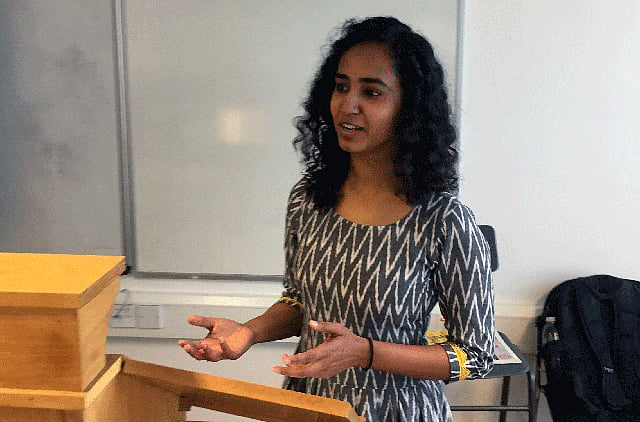
The scholar, Asiya Islam, a junior research fellow in the University of Cambridge’s sociology department who has lived legally in Britain for a decade, is facing the prospect of being ejected from the country by the end of January.
More than 1,000 professors, lecturers and doctorate candidates have signed an open letter to the Home Office — the government department that handles immigration, security and law enforcement — urging that the decision be reconsidered.
Islam says the time she spent abroad was essential to her academic research. Britain’s immigration rules require that people applying for the type of permanent residency she sought — also called indefinite leave to remain — spend no more than 180 days at a time or 540 days in total outside the country over the course of a decade.
Islam spent nearly a year in New Delhi between 2016 and 2017 doing research for her doctoral thesis, and despite supplying letters from Cambridge affirming that her fieldwork was necessary for her studies, the Home Office ruled that she had “failed to provide any exceptional reasons” to support a time-abroad exemption.
Instead, she was told in a letter that the 647 days she had spent outside Britain over the last 10 years — of which 330 were for her doctorate research — meant she had surpassed the limit, and her application was duly rejected.
“The letter from the Home Office seemed like it was a copy and paste of some standard language, filled in with my details,” Islam said in an interview Monday. “I am highly skilled and bringing my expertise to UK academia and value to the UK economy, and that does not seem to have been considered at all in the decision-making process.”
Professor Sarah Franklin, head of the sociology department at Cambridge, called the Home Office’s decision an “outrageous breach of common sense.” She said that the government’s immigration policy was damaging the very institutions it was trying to safeguard.
“The government, with its explicit policy of creating a hostile environment, is not having the intended effect of protecting the UK, but it is having the opposite effect of undermining core institutions such as universities,” Franklin said, citing a strategy put in place in 2012 by Theresa May, who was the home secretary at the time, that was meant to create “a hostile environment for illegal migration” in Britain.
Islam, 31, is originally from Aligarh, in northern India, and has lived in Britain since 2009. She has a string of academic successes to her name, including an award from the London School of Economics for her master’s degree and a Gates scholarship for her doctorate at Cambridge on gender and class in urban India.
Islam, whose student visa expires at the end of January, said she had been shocked and upset by the rejection and would appeal the decision.
“For me, there are personal, professional, emotional and financial consequences that I am still in the process of taking account of,” Islam said. “Living with this kind of uncertainty is not nice at all.”
The Home Office did not comment directly on her case but said that each application was considered on an individual basis. The agency said that applications for permanent residency would be refused if an individual exceeded the 540-day limit.
Islam found out about the rejection last week and decided to speak out about her case by posting on Twitter.
Outrage about the decision spread quickly among the academic community, and by Monday, the open letter had garnered more than 1,000 signatures. Islam said the outpouring of support was “heartening.”
In the open letter, Islam’s research was called “an asset to the UK and its academic community, yet her very success in academic fieldwork is now being held against her.”
Elise Burton, a close friend of Islam and a fellow researcher at Cambridge who drafted the open letter Friday, said in an interview that she was not surprised at how quickly many in the academic world had taken the opportunity to voice their disapproval.
“I know many others who have struggled with similar issues,” she said. “We are hoping to see broader change in the immigration system.”
The letter said that the reputation and competitiveness of British academic institutions could suffer because of decisions made by the Home Office in Islam’s case and in others like hers.
Harriet Truscott, a spokeswoman for Newnham College, Cambridge, where Islam studies, issued a similar warning. “Without talented academics like Dr. Islam, the University of Cambridge would not be a global leader in research,” she said.
© 2019 The New York Times Company










