November 21, 2026

Trump declares coronavirus a national emergency, freeing $50bn in funds

US President Donald Trump on Friday declared a national emergency over the fast-spreading coronavirus, opening the door to providing what he said was about $50 billion in federal aid to fight the disease.

Reuters

>>

Reuters

Published : 14 Mar 2020, 01:47 AM

Updated : 17 Oct 2022, 11:04 AM

Image
US President Donald Trump declares the coronavirus pandemic a national emergency as Vice President Mike Pence and Health and Human Services Secretary Alex Azar listen during a news conference in the Rose Garden of the White House in Washington, US, March 13, 2020. Reuters
Image
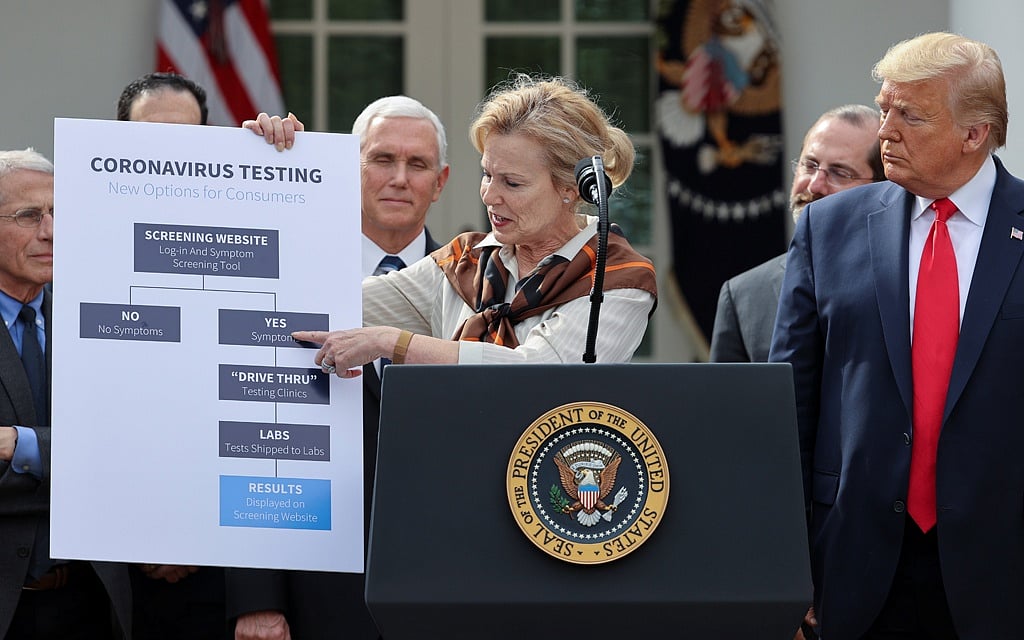
Ambassador Debbie Birx, the White House Coronavirus Response Coordinator, displays the new testing protocols being deployed for coronavirus after US President Donald Trump declared the coronavirus pandemic a national emergency during a news conference in the Rose Garden of the White House in Washington, US, March 13, 2020. Reuters
Image
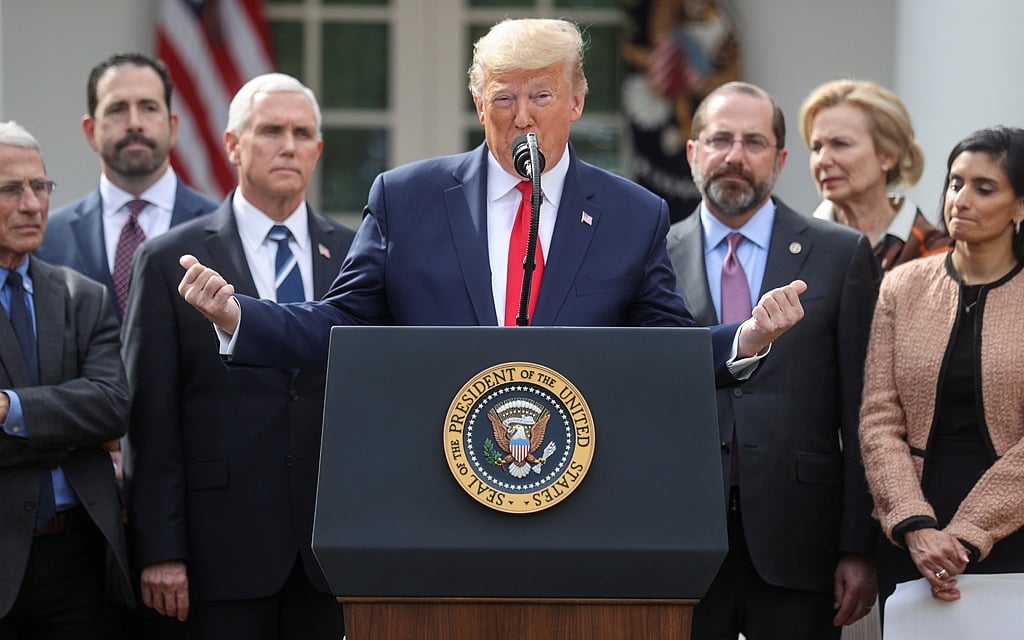
US President Donald Trump stands with members of his coronavirus task force as he declares the coronavirus pandemic a national emergency during a news conference in the Rose Garden of the White House in Washington, US, March 13, 2020. Reuters

Trump made the announcement at a Rose Garden news conference as he battled to show Americans that he is aggressively addressing the virus after appearing to play down the threat for weeks.

Trump said he was declaring the national emergency in order to "unleash the full power of the federal government." He urged every state to set up emergency centres to help fight the virus.

Image
US President Donald Trump stands with members of his coronavirus task force as he declares the coronavirus pandemic a national emergency during a news conference in the Rose Garden of the White House in Washington, US, March 13, 2020. Reuters

US President Donald Trump stands with members of his coronavirus task force as he declares the coronavirus pandemic a national emergency during a news conference in the Rose Garden of the White House in Washington, US, March 13, 2020. Reuters

Pressure has been mounting for Trump to declare an infectious disease emergency under the 1988 law that would allow the Federal Emergency Management Agency (FEMA) to provide disaster funds to state and local governments and to deploy support teams. The power is rarely used. Former President Bill Clinton in 2000 declared such an emergency for West Nile virus.

"To unleash the full power of the federal government in this effort today, I am officially declaring a national emergency. Two very big words. The action I am taking will open up access to up to $50 billion - a very important and a large amount for states and territories or localities in our shared fight against this disease," he said.

Trump said the federal government was partnering with the private sector to accelerate production of test kits to make them more widely available to Americans.

Image
Ambassador Debbie Birx, the White House Coronavirus Response Coordinator, displays the new testing protocols being deployed for coronavirus after US President Donald Trump declared the coronavirus pandemic a national emergency during a news conference in the Rose Garden of the White House in Washington, US, March 13, 2020. Reuters

Ambassador Debbie Birx, the White House Coronavirus Response Coordinator, displays the new testing protocols being deployed for coronavirus after US President Donald Trump declared the coronavirus pandemic a national emergency during a news conference in the Rose Garden of the White House in Washington, US, March 13, 2020. Reuters

He said there will be about 5 million coronavirus tests available but doubted that many will be needed. He urged Americans to only seek out the test if they feel they need it.

"We don't want people to take a test if we feel that they shouldn't be doing it and we don't want everyone running out and taking - only if you have certain symptoms," he said.

Alongside Trump was Anthony Fauci, the National Institutes of Health expert who is on Trump's coronavirus task force.

"We still have a long way to go. There will be many more cases. But we'll take care of that," said Fauci, the nation's top infectious disease expert. "What's going on here today is going to help it end sooner than it would have."


Related Stories