


Published : 13 Feb 2014, 07:29 PM
Updated : 08 Aug 2022, 06:29 PM


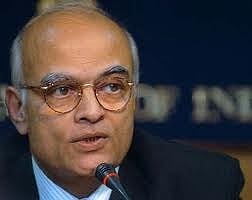
It should instead aspire to make the world “more equitable, democratic and conducive” for development, Shiv Shankar Menon, who is the most powerful officer in the United Progressive Alliance government on issues of foreign affairs and national security, said.
He finds the discussion about making India a superpower as “loose talk”.
“In the last few years there have been considerable loose talks on whether India will be a superpower,” he said speaking at a lecture-series in New Delhi.
“I am not sure what is meant by that and whether that is really a desirable goal.
“We have never sought to replace or imitate existing power-holders, and I hope we will never do that.
Menon was speaking on “India in the 21st century world” at a lecture-series of the Indian Association of Foreign Affairs Correspondents on Wednesday, India’s news portal rediff.com reported.
He said former Prime Minister Indira Gandhi as “a realist” used to speak of India as a different kind of power.
“I think that she recognised the overwhelming priority of the domestic tasks of development that history has left to us. She, and others, warned against the over-militarisation of security and diplomacy, and recognised the importance of soft power”.
Menon, for long, has supported the idea that diplomacy is essentially the vehicle to protect and push domestic growth agenda to help people prosper.
He said, “Even when we were still to acquire some of the basic requirements of hard power, they (political leaders in the past) had no doubt of the fact that India was, is and will be, a major power.
“(But it will be) a power whose influence was used to the best effect with other actors in the international system, multilaterally or even individually, for causes like disarmament, decolonisation and economic development.”
Recently BJP leader CP Thakur while speaking to supporters of the party’s PM candidate has said that India will emerge as a superpower under Narendra Modi’s leadership.
Menon presented the pragmatic and workable roadmap for the new government after the 2014 elections.
What he meant was that India should insist on a multi-polar world and a system that counts India as a major power and respects its presence in the region.
When a member of the audience asked him to enlarge on his comment on India’s superpower aspirations, Menon said, “I am not saying India cannot become a superpower. We should not want to.
“Look at two previous superpowers (America and Russia) and their behaviour. Is that what you want to be?
“Ask yourself a simple question. Do you want to be like those societies and nations? My answer is ‘no’. Your answer can be ‘yes’. Good luck to you.”
Interestingly, Menon doesn’t think that any new prime minister who takes over in May 2014 will change the rules of the great game in the region.
He rules out drastic changes in broad parameters of Indian foreign policy after the general election. He says the style may change but not the fundamentals.
“Today, as we have changed and begun to acquire some attributes of power, our domestic priorities and imperatives remain.
“It also remains our best course to work with others in the international community who share our interests and values to remake the international order peacefully, so that India can be secure and prosperous,” he commented.
According to the rediff.com report, Menon thinks that after the end of the Cold War came two decades of globalisation. But things changed after the 2008 economic meltdown.
He believes that now a fundamental reordering of the international economy appears to be underway.
“Strangely this time the impulse for change is not coming from the re-emerging or rising powers, like India, China and others, who were the greatest beneficiaries of the decades of globalisation and an open international economic order.
“Unusually, the impulse to change the rules of the game is coming from established power-holders who feel that the system and institutions that they built and ran after World War II no longer serve their interests”.
Talking about fundamental changes that the world is undergoing, Menon said, “In terms of political economy this is a world where, as Gandhiji once said, there is enough for everyone’s needs but not for their greed. Today science and technology offer us solutions to humanity’s food, energy, and health needs.
“Advances in renewable energy (nuclear, solar and wind, in particular), and the shale oil and natural gas revolution have made irrelevant the Club of Rome-type predictions of supply running out. The geopolitics of energy has changed fundamentally.
“Equally, molecular biology, genetics and biochemistry have brought a revolution to medical science in terms of cures and interventions. But there is no sign yet that the international trading system or existing IPR regime will make these advances widely available to mankind in practice,” he said.
Besides changes in the Asia Pacific and in India’s neighbourhood, Menon talked about a range of changes “taking place around us”.
“Information and communications technology (ICT) has made non-state actors and groups as powerful as states in some respects, empowering both good and evil. There are new domains of contention like cyber space.
“And fundamental changes are underway in the rules of the game in several spheres -- military technologies, the globalisation of terrorism.
“And what we assumed were global commons, in the oceans, outer space, cyber space, and, in some respects, even air space, are now contested.
“Cyber space and outer space now see military contention, and are used for espionage and both conventional and sub-conventional warfare.
“Technology is the driver of accelerated change in these and other domains, affecting every nation’s security calculus,” he said in his lecture.













