


Published : 28 Sep 2019, 11:01 PM
Updated : 17 Oct 2022, 11:46 AM


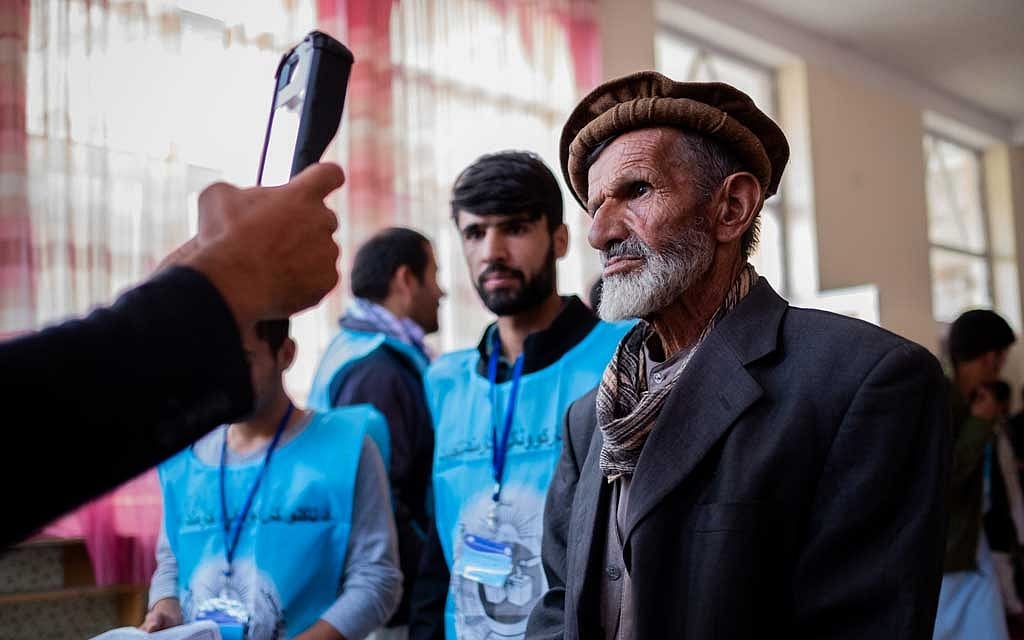
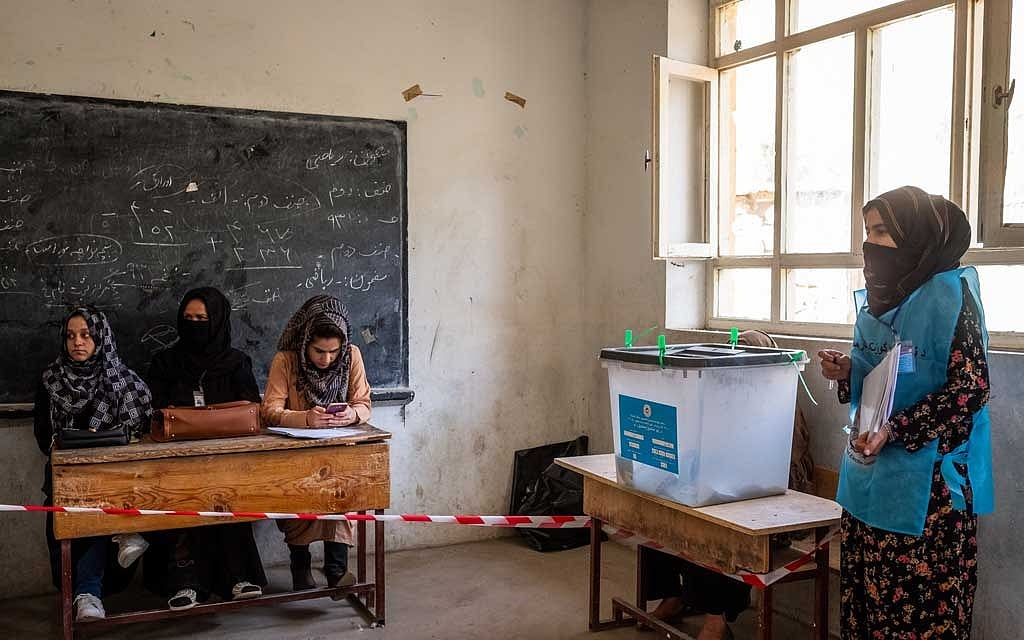
And the Taliban aren’t the only threat voters face: There are fears the election could paralyse the government and lead to a prolonged political crisis, complicating efforts to reach a peace deal to end the country’s long-running war, now entering its 18th year.
The vote has turned into a battle between two bitter rivals, the incumbent president, Ashraf Ghani, and his government’s chief executive, Abdullah Abdullah. A dispute between the two men during the 2014 elections nearly split the country, resulting in an American-brokered unity government.
Voting is taking place at just under 5,000 polling sites, about 2,500 fewer than during the 2014 election, as violence has spread more widely since then. Experts fear that the number of closed sites could increase on Saturday as the Taliban threatens voters directly, blocks highways or blows up communication towers.
“We are deeply concerned about the security situation on election day, and even concerned that people might not come out to vote in the city of Mazar-e-Sharif or that our staff might be targeted,” said Mohammed Ayoub Bayani, the election chief in Balkh province, where Mazar-e-Sharif is the provincial capital.
Security concerns were affecting turnout across the country. Small explosions were reported in the cities of Kabul, Kandahar and Jalalabad. More than a dozen rockets landed in Kunduz city in the north, killing at least one person and injuring 27 others.
“The process was smooth,” said Najib Jabarkhel, a voter at a heavily guarded polling centre in Kabul, the capital. “But the turnout is low because of threats — the Taliban have threatened that if you go to vote, bring your shroud with you.”
In parts of the country, including Kabul, complaints were trickling in about technical problems. One frequent complaint was that voters could not find their names at the polling stations where they had registered to vote. Such registrations were introduced to curb mass fraud.
Poll workers wait for ballots to count in Bazarak, in the Panjshir valley of Afghanistan, Saturday Aug. 28, 2019. Afghans voted on Saturday as the country suffers through one of the most violent periods in its recent history, with many provinces facing attacks on any given day and Taliban militants threatening all-out war on the democratic process. (Jim Huylebroek/The New York Times)
Protecting the balloting has added to the load of security forces already stretched thin by the threat of violence by the Taliban, who have vowed to attack anything connected with the election. Last week, a suicide bomber killed 26 people who were waiting to be let into a campaign rally for Ghani, who was not injured in the blast.
The voting also comes amid eroded trust in the country’s election bodies, with consecutive elections marked by confusion and fraud and election officials often implicated. All 12 commissioners who oversaw last fall’s parliamentary election, which resulted in a prolonged crisis, were fired, and nine were sent to prison.
Both Ghani and Abdullah have signalled that they see themselves as winning the contest, and that any other outcome would indicate a fraudulent election.
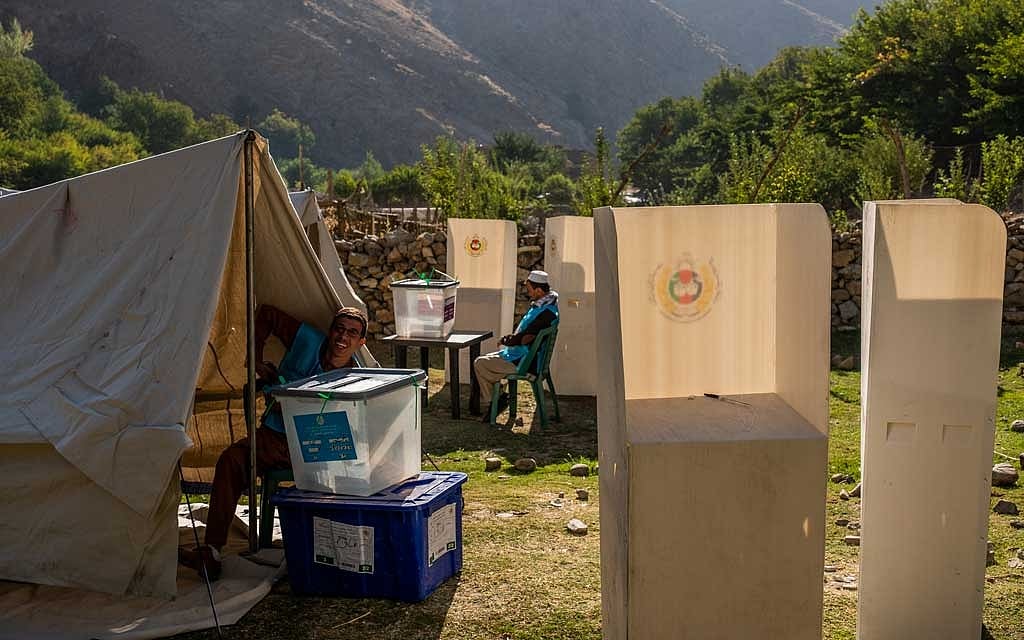
A polling station being set up in a tent in Dara, in the Panjshir valley of Afghanistan, Saturday Aug. 28, 2019. Afghans voted on Saturday as the country suffers through one of the most violent periods in its recent history, with many provinces facing attacks on any given day and Taliban militants threatening all-out war on the democratic process. (Jim Huylebroek/The New York Times)
Abdullah, 59, is an ophthalmologist who rose through the ranks of the anti-Soviet fighters and then became foreign minister after the Taliban were toppled in 2001. This is his third time running for the presidency.
He is presenting himself as the moderate leader who can work with a broad coalition, in contrast to Ghani, who has alienated many political leaders — including his own vice president, who now backs Abdullah.
A third candidate, Gulbuddin Hekmatyar, only made peace with the government in 2017, leaving behind a small but stubborn insurgency. Hekmatyar was one of the main faction leaders during civil wars in the 1990s that left Kabul in ruins.
Only fraud could deprive him of a clear victory, Hekmatyar recently declared, adding a veiled threat.
“Don’t make us regret our return, don’t make us regret our participation in elections, don’t force us to chose another option — we can do that, and we have the experience of it also,” he said.
c.2019 The New York Times Company













