Published : 16 Mar 2017, 10:42 PM
Updated : 11 Apr 2022, 08:58 PM


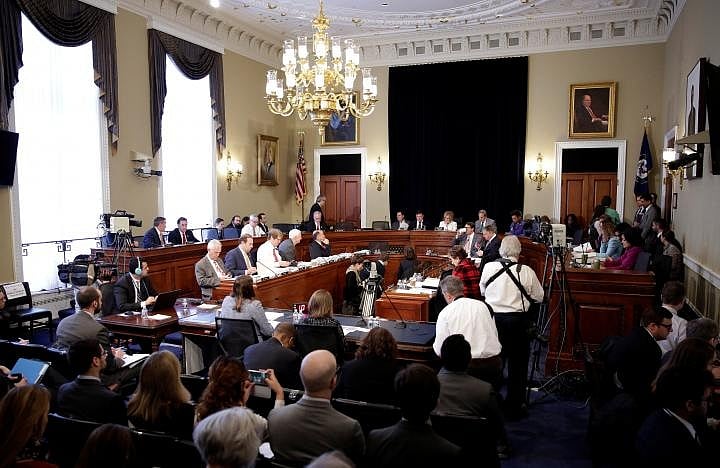
The Budget Committee vote was 19 to 17, with three conservative Republicans - Representatives David Brat, Gary Palmer and Mark Sanford - joining the panel's Democrats in voting against it. The committee brought together provisions approved last week by two other panels into a single bill, helping pave the way for a later vote on the House floor.
Before the vote, Republican Representative Diane Black, who heads the committee, called the legislation "the conservative healthcare vision that we have been talking about for years." To Republicans who are wavering, she said, "don't cut off the discussion" by voting no. "Stay in this effort," she said.
Many Republican conservatives have staked out opposition to the measure, in part because they say some provisions are too similar to the law it is intended to replace, the 2010 Affordable Care Act, dubbed Obamacare.
Republicans, who control Congress and the White House, could not afford to lose more than three from their ranks on the Budget Committee for it to pass.
Conservatives have demanded a quicker end to the Obamacare expansion of the Medicaid health insurance program for the poor, which the bill has set for 2020, and want to add work requirements for some Medicaid recipients.
The White House said it was discussing changes with House Republican leaders, including Speaker Paul Ryan.
"There's no perfect piece of legislation. There's gonna be this framework that's gonna be added to or subtracted to during the process, and eventually it's going to pass the House and it's going to pass the Senate," White House budget director Mick Mulvaney told Fox News on Thursday.
Mulvaney acknowledged the measure faced hurdles in the Senate, where Republicans hold a slimmer majority than in the House and several in the party have already voiced doubts.
The bill faces unified Democratic opposition as well as criticism from leading healthcare providers including doctors and hospitals.
BUILD MOMENTUM
On Wednesday, Trump held a campaign-like rally in Tennessee as he tried to build momentum for the legislative push to make good on his campaign promise to repeal and replace Obamacare, the signature legislative achievement of Democratic former President Barack Obama.
Trump administration officials and House Republican leaders have not given a timetable for a vote on the legislation, although Ryan has previously said he wants to pass it by the lawmakers' mid-April recess.
Obamacare enabled about 20 million previously uninsured Americans to obtain medical coverage, about half through the law's expansion of eligibility and increased funding for Medicaid, a joint federal-state program. Democrats have called the Republicans' plan a blow to the elderly and the poor while giving tax cuts to the rich.
The Congressional Budget Office, a nonpartisan congressional agency, forecast on Monday that the Republican plan would increase the number of Americans without health insurance by 24 million by 2026, while cutting $337 billion off federal budget deficits over the same period.
Signs of a possible Republican agreement began to emerge after Vice President Mike Pence met with House conservatives on Wednesday, with some lawmakers saying 2019 could be the new target for ending the Medicaid expansion. Pence is scheduled to return to the Capitol to meet with lawmakers again later on Thursday.
Representative Mark Meadows, head of the 40-member Freedom Caucus, told MSNBC on Thursday conservatives were still concerned about other aspects, including the impact on insurance companies and customer premiums.
More moderate Republicans have also raised concerns that the bill's tax credits are insufficient to help people buy health insurance.
Republican Senator Rand Paul, a fierce critic of the House plan, on Thursday told MSNBC that while Republicans were united on the repeal of Obamacare, there was discord over Ryan's replacement bill.
"No conservative is for his plan. I think his plan is dead on arrival," Paul said, adding that he was in talks with Democrats about more bipartisan ideas to fix the healthcare system.