Published : 28 Oct 2013, 09:02 PM
Updated : 20 Oct 2022, 03:40 PM


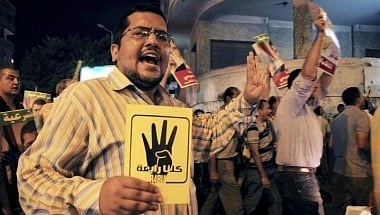
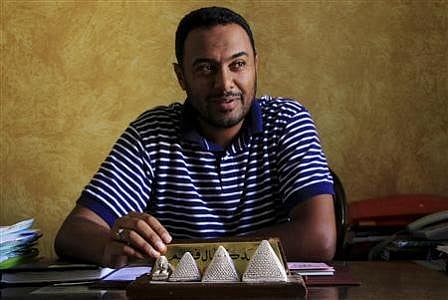
"These days we can be picked up at any time," said Nabil, whose parents are also members of the organisation, Egypt's oldest Islamist movement and a supporter of Morsi.
The Brotherhood's discipline and hierarchy helped it win elections after the 2011 popular uprising that ousted autocrat Hosni Mubarak, eventually propelling Morsi into power. But now the army-led government and its supporters regard the Brotherhood as a terrorist group and enemy of the state. The security forces and police, feared and despised under Mubarak, are lauded for cracking down on the organisation.
The Brotherhood denounces violence and says it is committed to peaceful protest. But as members go into hiding, its key building blocks - local groups of seven members known as usras - are under pressure.
"The most important person for me is the head of my usra," said Nabil. "I get everything from him."
In Nabil's eyes, the usras, which provide everything from Koran studies to marriage counselling, are crumbling. That raises the risk the organisation will fracture, and that some members will abandon peaceful activism to take up arms.
In a sign of how the Brotherhood is retreating, Nabil has bought a new, unregistered mobile phone. He encrypts text messages and is careful about what he writes on Facebook, fearful that the authorities are monitoring communications.
Nabil said he has lost five friends killed in demonstrations and that he narrowly escaped arrest when he took part in a protest. He worries about survival and avoiding jail. The clampdown, he said, could radicalise some members.
This month suspected militants killed six Egyptian soldiers near the Suez Canal, fired rocket propelled grenades at a state satellite station in Cairo and exploded a car bomb near an Egyptian army intelligence building in the city of Ismailia. More than 50 people have been killed and more than 270 wounded in recent clashes between the police and protesters supporting the Muslim Brotherhood.
Even as questions remain over who mounts such attacks, it seems clear the recruitment pool for radicals has grown significantly since Morsi's overthrow.
"Not all people in the opposition can go on resisting peacefully if this unbelievable pressure continues, especially the detentions of leaders who pushed the movement to remain peaceful," said Nabil. Before they were imprisoned, top Brotherhood leaders often told followers that avoiding violence would give the movement the moral high ground against the government.
"All these military actions against us, including killing and torture and arrests, push us to respond with force. One prays that God ends the crisis before we reach the situation in Syria," he said, referring to civil war in that country. "As our grand guide (top leader) said, 'Our peaceful ways are stronger than a bullet.'"
The government makes no distinction between the Brotherhood and al Qaeda-inspired militants based in the Sinai Peninsula who have sharply stepped up attacks against soldiers and police since Morsi was overthrown. The authorities say the Brotherhood's members are terrorists out to spread an Islamic caliphate across several nations, not focus on Egypt's well-being.
A top security official who has monitored the Brotherhood for decades told Reuters: "The usra has been destroyed in a very big way. The Brotherhood member is taught not to think on his own, just to take orders. This is how the group functions. So if there is no one to give them orders it means the group is in trouble."
Cell Decay
The usra was devised by Hassan al-Banna, founder of the Muslim Brotherhood, to indoctrinate and mobilise followers. Usras typically used to meet once a week for at least three hours, usually at the home of a member. The usra leader could be so pivotal that members sought their permission to travel to Cairo.
During past crackdowns, the usra survived by adapting. Its size was reduced to three members when restrictions were tightened. Those small units avoided arrest by speaking while walking down streets or meeting in tea houses, not homes. In prison, the usra became the number of men in each cell.
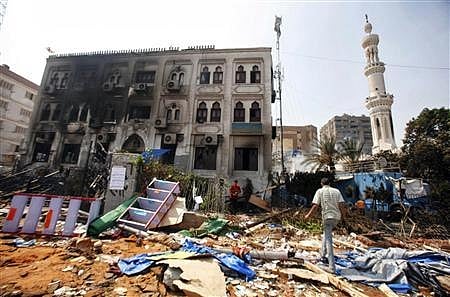
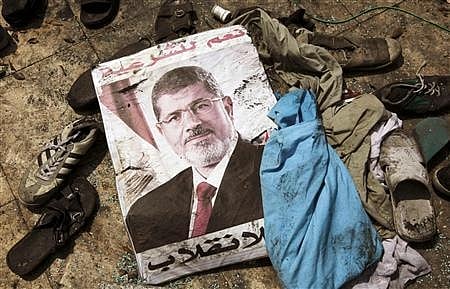
After Morsi fell, the Brotherhood had hoped to mobilise millions of protesters; but the army reacted forcefully, bulldozing a protest camp at Rabaa al-Adawiya in eastern Cairo on August 14, killing hundreds of Morsi's supporters. Security forces have arrested many top Brotherhood leaders, including Morsi, on charges of inciting or perpetrating violence.
Before the leaders were detained, they sent messages to Brotherhood officials urging them to ensure that usras continued, according to the head of an usra and other Brotherhood members. But members are struggling.
In Alexandria, Abu Bakr al-Masri is the head of an usra and worships in a spartan Brotherhood mosque on the bottom floor of an apartment building. For decades, the Brotherhood has used such mosques in rundown neighbourhoods across Egypt to deepen its influence and raise funds.
Masri's usra has not met since Morsi fell. He is proud of his position but worried because he can no longer guide young men.
"I gave people advice on everything. Even if you have trouble with your wife you come to me," he said, sitting in his apartment, a block from the mosque. "The usra is under a lot of pressure now. I speak to people in the usra by phone, but it is always brief and we never have a chance to speak about the important issues."
There are usras for women and Masri's wife, Um Abdullah, heads one. It, too, has not met since July and she is a member of another that has stopped gathering.
"I am sitting here doing nothing," she said, complaining about the Brotherhood's isolation. Um Abdullah, who was veiled, is tasked with spreading the Brotherhood's views of how Muslim families should approach life. There is little scope for that now. "I used to be able to go out in the streets and tell other women about our vision, about the true Muslim family," she said. "Now I can only wander in our building and speak to my neighbours."
The Brotherhood has few options. Many Egyptians turned sharply against the organisation during Morsi's year as President. He was accused of trying to give himself sweeping powers, entrenching the Brotherhood in the institutions of state and mismanaging the economy. The Brotherhood denies those charges.
While limited protests by Morsi supporters continue, General Abdel Fattah al-Sisi, head of the military, has announced a political roadmap promising new elections. The transition includes rewriting the constitution that was drafted by an Islamist-dominated assembly, passed in a referendum and signed into law by Morsi. The most contentious feature of the new constitution may be a clause banning religious political parties.
The Brotherhood wants nothing to do with the transition and its supporters are retreating. In one tight-knit Brotherhood community in Alexandria, four families have already fled for fear of arrest after the security forces and army began conducting overnight searches of apartment buildings, according to local Brotherhood supporters.
Extremist Risk