


Published : 27 Feb 2022, 10:53 AM
Updated : 03 Aug 2022, 11:34 AM


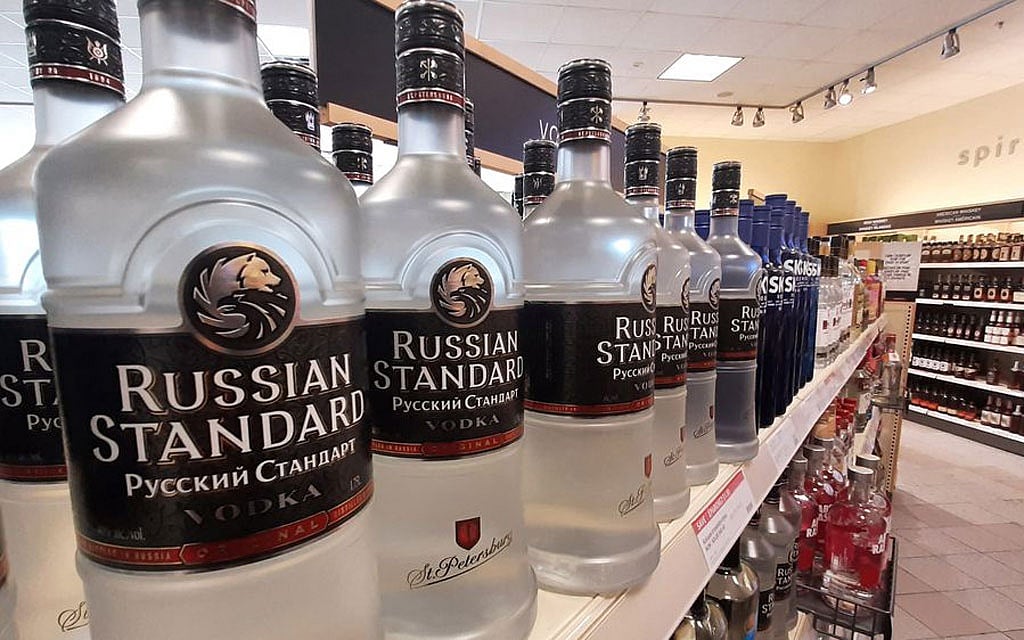
In New Hampshire, where liquor and wine are sold through state-run stores, Gov Chris Sununu, a Republican, announced Saturday the removal of “Russian-made and Russian-branded spirits from our liquor and wine outlets until further notice.” In Ohio, where the state contracts with private businesses to sell liquor, Gov Mike DeWine, also a Republican, announced a halt to state purchases and sales of Russian Standard Vodka.
L Louise Lucas, a top Democrat in the Virginia state Senate, is calling for “the removal of all Russian vodka and any other Russian products” from Virginia’s nearly 400 state-run Alcoholic Beverage Control Authority stores.
And Sen Tom Cotton, R-Ark, wrote on Twitter, “Dump all the Russian vodka and, alongside ammo and missiles, send the empty bottles to Ukraine to use for Molotov cocktails.”
The Liquor Control Board of Ontario, Canada’s most populated province, announced Friday that it would remove “all products produced in Russia” from its more than 600 stores. Similar removals were underway in the provinces of Manitoba and Newfoundland, Reuters reported.
Boycotts of highly visible imports during times of conflict are nothing new.
In 2003, for example, France’s opposition to the US-led military action in Iraq led some American politicians to boycott French wine and try to rename french fries as “freedom fries” (even though the dish probably originated in Belgium).
And just as in earlier efforts, boycotting Russian vodka may be more symbolic than strategic.
Vodka has a long history in Russian culture, with The New York Times once describing it as “an inseparable part of Russian social life.” Colourless and odourless, it can be combined with countless types of mixers to make a wide array of concoctions. That versatility helped it take hold in the United States market, leading to a fierce competition among vodka makers from various countries.
But while 76.9 million 9-litre cases of vodka were sold in the United States in 2020 — generating nearly $7 billion in revenue for distillers, according to the Distilled Spirits Council of the United States, an industry trade group — Russia’s share of the market isn’t as large as popular imagination may suggest.
Russia accounted for a little more than 1% of the dollar amount of vodka imported into the US in 2017, Thrillist reported, citing data from the Distilled Spirits Council of the United States.
France — whose vodkas include Grey Goose, Cîroc, Gallant and MontBlanc — accounted for about 39% of total vodka import value, the most of any country, Thrillist reported. Sweden, with vodkas like Absolut and DQ, accounted for about 18%. The other top importers were the Netherlands (17%), Latvia (10%), Britain (5%) and Poland (5%).
In Pennsylvania, The Philadelphia Inquirer reported Saturday, “true Russian brands are hard to find.”
© 2022 The New York Times Company







