


Published : 26 Jul 2020, 10:05 PM
Updated : 17 Oct 2022, 11:10 AM


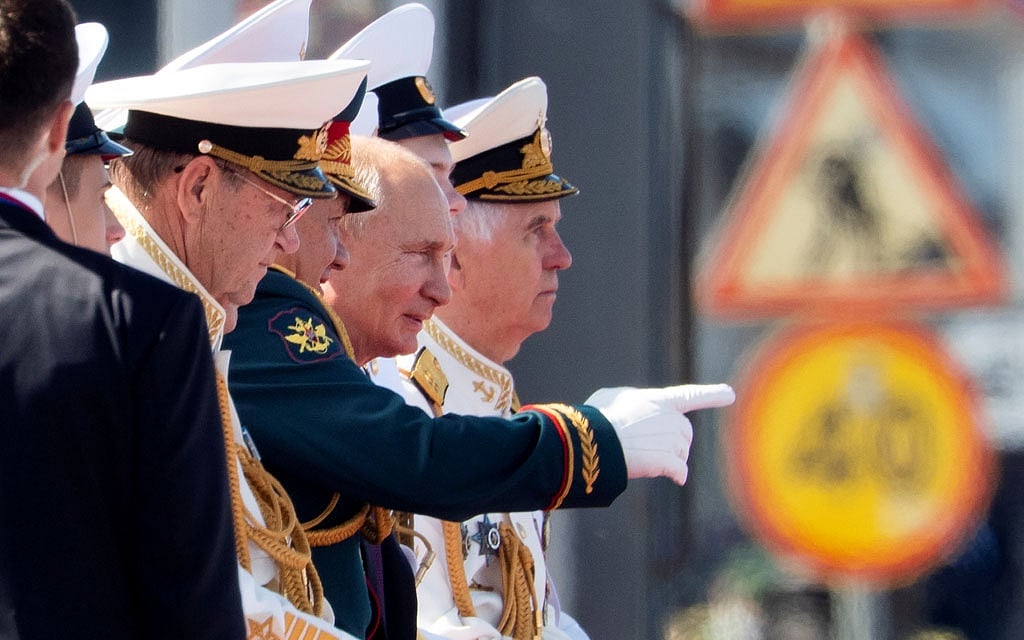


Putin, who says he does not want an arms race, has often spoken of a new generation of Russian nuclear weapons that he says are unequalled and can hit almost anywhere in the world. Some Western experts have questioned how advanced they are.
Russia's President Vladimir Putin and Defence Minister Sergei Shoigu attend the Navy Day parade in Saint Petersburg, Russia July 26, 2020. Dmitri Lovetsky/Pool via REUTERS
The combination of speed, manoeuvrability and altitude of hypersonic missiles, capable of travelling at more than five times the speed of sound, makes them difficult to track and intercept.
Speaking in St Petersburg at an annual naval parade that showcases Russia's best ships, nuclear submarines and naval aviation, Putin said the navy's capabilities were growing and it would get 40 new vessels this year.
The Russian Navy's missile corvette Dmitrovgrad sails along the Neva River during a rehearsal for the Navy Day parade in Saint Petersburg, Russia July 19, 2020. Reuters
"The widespread deployment of advanced digital technologies that have no equals in the world, including hypersonic strike systems and underwater drones, will give the fleet unique advantages and increased combat capabilities," Putin said.
In a separate statement released via Russian news agencies, the defence ministry said testing of the Belgorod, the first submarine capable of carrying the Poseidon drones, was underway and testing of the weapons systems was nearing completion.
Russian warships sail during the Navy Day parade in Kronstadt near Saint Petersburg, Russia July 26, 2020. REUTERS
Putin last year threatened to deploy hypersonic missiles on ships and submarines that could lurk outside US territorial waters if the United States moved to deploy intermediate-range nuclear weapons in Europe.
Washington has not deployed such missiles in Europe, but Moscow is worried it might.







