


Published : 22 Jan 2014, 04:56 PM
Updated : 23 Apr 2022, 02:11 PM


Outside the courtroom, Xu's supporters chanted slogans and raised banners in his support. Police pushed away the crowd and at least three protesters were taken away to a police van.
The government has waged a 10-month drive against Xu's "New Citizens' Movement", which advocates working within the system to press for change, including urging officials to disclose their assets.
The campaign against the movement exposes the ambivalence in Beijing's bid to root out corruption, even as the authorities claim greater transparency.
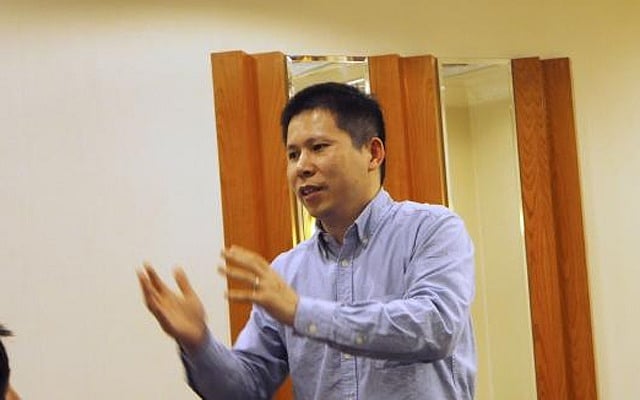
Xu, 40, is charged with "gathering a crowd to disturb public order", punishable by up to five years in prison. His prosecution will almost certainly spark fresh criticism from Western governments over Beijing's crackdown on dissent.
Xu's lawyer, Zhang Qingfang, told Reuters by telephone that Xu told the judge: "This court is not just so I will maintain my silence."
The judge tried to persuade Xu and Xu's lawyers to speak but to no avail, so the judge called for a recess.
Zhang had earlier said both he and Xu will maintain silence during the closed-door proceedings because they do not believe the court will grant a fair trial.
After proceedings are concluded, Xu will "express his viewpoints about the trial and all that has happened to him over the past 10 years", Zhang said, adding that he was frustrated that the court only allowed him to produce two witnesses.
Five witnesses that he had requested testify in court have been put under police guard and been prevented from moving around freely. One of them, he said, has been taken to a motel.
"Our maintaining silence does not mean we will not express our views. But we believe this court is not worth expressing our views. After the trial, we'll tell society about our defense arguments," Zhang said.
Xu's elder sister and his wife will attend the hearing, he said.
China has detained at least 20 activists involved in pressing for asset disclosure, though not all are from the New Citizens' Movement.
Six will stand trial in Beijing and the southern city of Guangzhou on Thursday and Friday. Three stood trial in December and face more than 10 years in prison if convicted.
Xu's is China's highest-profile dissident trial since 2009, when Nobel Peace Prize Laureate Liu Xiaobo went on trial for subversion after he helped organize the "Charter 08" petition urging the overthrow of one-party rule. Liu was jailed for 11 years.
DISSIDENTS WARNED
Despite the increased security presence near the courthouse, close to two dozen Xu supporters turned up at the start of the trial, joining many reporters and photographers. But police pushed them away and closed off the road outside the courthouse, saying the crowd did not have permission to gather.
Three supporters were hauled away.
Hu Jia, a prominent dissident, said state security officers told him and five other activists not to leave their homes.
About 10 to 15 supporters unfurled a banner that read: "Citizens request officials to publicly disclose assets."
"Down with corrupt officials", "Xu Zhiyong is not guilty" and "Free Xu Zhiyong," they chanted.
Diplomats who tried to attend the trial were not allowed to enter the courtroom.
The first secretary for the European Union's delegation to China, Raphael Droszewski, said authorities kept the diplomats in a waiting room for over an hour, but they were eventually turned away.
"They said it's not public," Droszewski said.
Through his online essays and Twitter account, Xu had criticized the government's efforts at fighting corruption and prescribed democracy and the rule of law as the solution. "When more than 90 percent of the officials are corrupt, who will counter who? The social movement of asset disclosure is an effort for gradual change to the system," he wrote.
The Chinese leadership is nervous about Xu's writings, said Chen Min, a writer and friend of Xu's.
"The Communist Party does not accept pressure, the party does not accept challenges," Chen said. "Anything that the party can't control, independent and non-governmental forces - no matter how gentle the force - it has to combat."
Xu taught law at a Beijing university and ran in a local election. He became prominent over a drive to abolish "custody and repatriation" powers, a form of arbitrary detention used by local governments to sweep homeless and other undesirables from the streets. The government scrapped the system in 2003.
Xu has also campaigned for the rights of children from rural areas, who lack the required residence permit, to be educated in cities where many live with their migrant worker parents.
Friends of Xu, whose wife gave birth last week, say he remains unafraid. In a video-taped message from a detention center issued last August, Xu, wearing handcuffs and an orange vest, urged the Chinese people to fight for their rights.







