


Published : 23 Jun 2013, 07:36 AM
Updated : 09 Aug 2022, 10:50 AM


Most of them were said to have perished out of hunger and illness as food packets couldn't reach them.
"Death toll will cross 1000", Vijay Bahuguna, Chief Minister of Uttarkhand told Times of India. A total of 123 bodies have been found in Kedarnath temple alone. Many more are succumbing due to lack of food and spread of disease for being stuck in the mountains.
Most of the dead were found around Junglechetti and Rambada in the valley where people took refuge into the forests and hills in their efforts to escape the surge.
They were said to be broken into small groups and spread across a 30 sq km area making it difficult to search and rescue them.
Survivors said they did not receive any food during the past five days despite the fact that authorities dropped tens of thousands of food parcels were dropped over the affected parts of Uttarakhand.
People stuck in these areas suffered the most as they were completely cut off in the areas that remained inaccessible for days, according to sources in the security forces which rescued almost 700 survivors.
The people who were stuck had no shelter to protect them from the weather. All these factors combined to disallow the sick and the elderly to withstand the adversities.
"The young mostly survived while many had to see their loved ones die a slow death in front of their eyes. It's worse than being swept away in the deluge. Survivors told us that they did not even receive one packet of biscuit in the days that they were stranded," said an Indo-Tibetan Border Police (ITBP) officer who participated in the rescue operation at Kedarnath Valley.
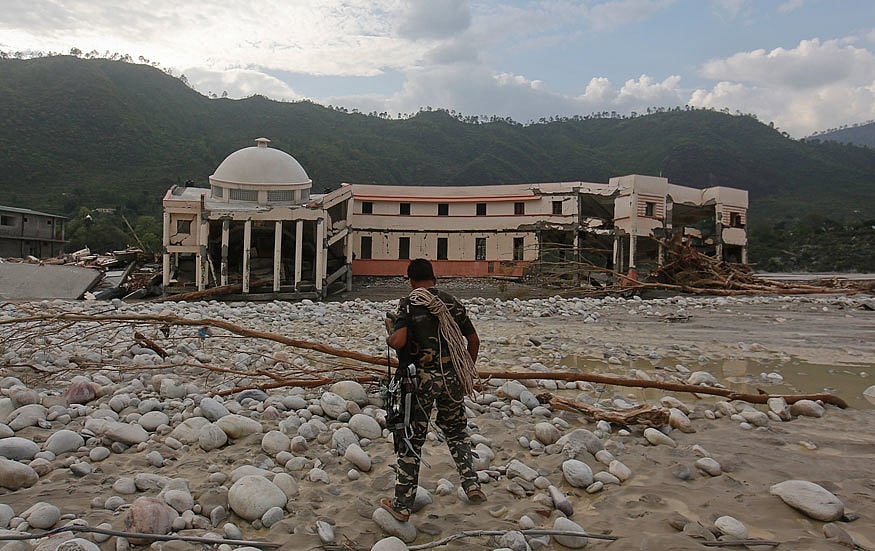
Army and ITBP men on Friday descended from choppers to save people stranded at Rambada and Junglechetti completely cut off due to heavy rain and massive landslides. A makeshift helipad was set up to speed up rescue.
Sources said the biggest mistake many stranded pilgrims committed was to wait for rescue.
"Not accustomed to hills and having fear of the unknown, stranded people once sat in one place as they waited for rescue. They could not be spotted from above in the jungles. Many more would have survived if they walked and tried to cross over to the other side of the hill. These terrains are not very difficult to trek but people panicked," said an ITBP officer.
Sources said several survivors in the Valley had trekked across the hills and were saved.
"Some young men had trekked and survived on what they found in the jungle, eating leaves of certain plants and drinking water from springs. But it's difficult for older people and one needs great will power to do something like that," added the officer.
Difficulties are being faced during the rescue of the bodies which are decaying and a putrid stench is spread over the several areas in the region. It has also raised fears of an epidemic breaking out in the area and could affect local villagers. "We are also trying to rescue as many villagers as possible," said a senior ITBP officer.







