Published :
17 May 2014, 01:41 AM
Updated :
08 Aug 2022, 06:46 PM
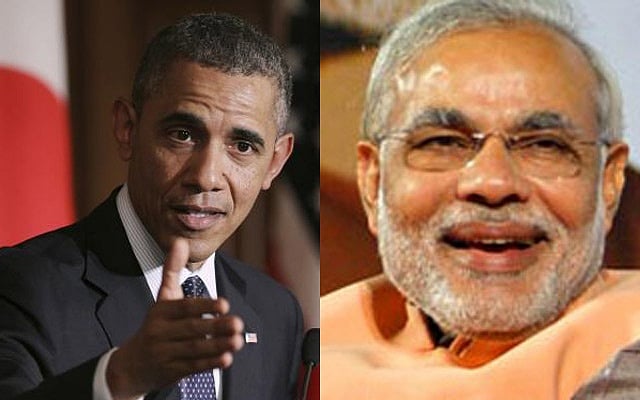
Obama said that the largest democracy in the world has given a "decisive mandate" and that he wished that under Modi's leadership, India will contribute at the global stage.
Both leaders discussed the India-US Strategic Partnership and the prevailing global economic situation.
Obama told Modi he looks forward to working closely with him to "fulfill the extraordinary promise of the US-India strategic partnership," a White House statement said, reported Reuters.
It said, "The president invited Narendra Modi to visit Washington at a mutually agreeable time to further strengthen our bilateral relationship."
This was the first high-level contact between Modi and the US leadership ever since 2005 when the Gujarat chief minister had been denied a US visa due to his alleged complicity in the 2002 riots in the state.
Obama joined a number of world leaders including British Prime Minister David Cameron, Pakistan Prime Minister Nawaz Sharif, Afghan President Hamid Karzai, Bangladesh Prime Minister Sheikh Hasina, Sri Lankan President Mahinda Rajapaksa, Australian Prime Minister Tony Abbott and Israeli Prime Minister Benjamin Netanyahu who have congratulated the Bharatiya Janata Party leader on the overwhelming win in the general elections.
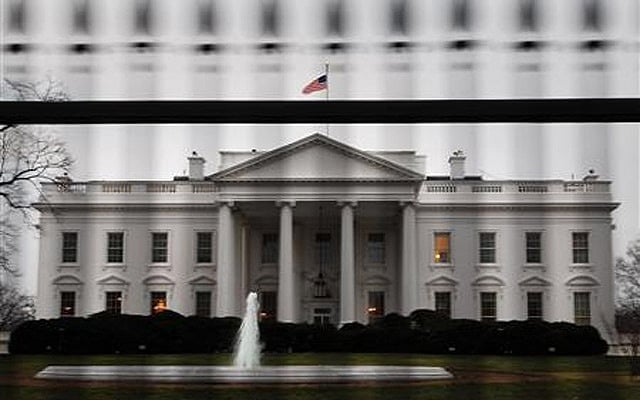
Meanwhile, congratulating the BJP on its "historic" poll victory, the White House and Secretary of State John Kerry Friday said they look forward to working with the new Indian government.
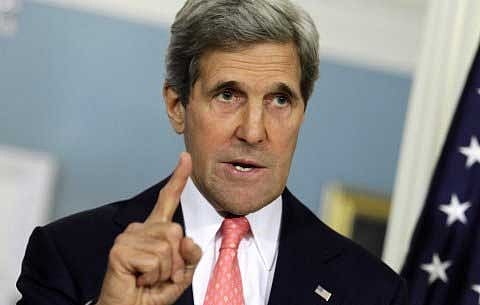
"Congrats to narendramodi and BJP," Kerry tweeted. "Look forward to working w/you/growing shared prosperity/security w/world's largest democracy."
Earlier the National Security Council (NSC) of the White House also congratulated BJP in a tweet, but without mentioning the architect of the victory, Modi.
"US congratulates BJP on its victory in India's historic election; we look forward to working with the government once formed to advance our partnership," it tweeted.
Obama and the State Department had both Tuesday said that the US was looking forward to working "closely" with the next government in India.
But even as it became clear that Modi whom the US has shunned for over a decade over his alleged role in 2002 Gujarat riots, was all set to become the new prime minister, neither made a reference to the BJP leader.
During the course of the election, various US functionaries have twisted themselves into knots time and again to suggest that America is ready to do business with a new leader with any label chosen by the Indian people, while acting cagey on the issue of a visa for Modi.
The formulation seemed to be that Modi, the man whose business visa was denied in 2005, is still unwelcome, but Modi as prime minister would be another matter.
However, Washington has been now making preparations for months to face the prospect of Modi, the leader of a country that Obama has famously described as "one of the defining partnerships of the 21st century".
Though late in following other western nations, the US signalled a major change in its outlook since the emergence of Modi on the national scene with outgoing US ambassador Nancy Powell meeting Modi in February.