


Published : 28 Mar 2014, 11:28 PM
Updated : 19 Oct 2022, 07:26 PM


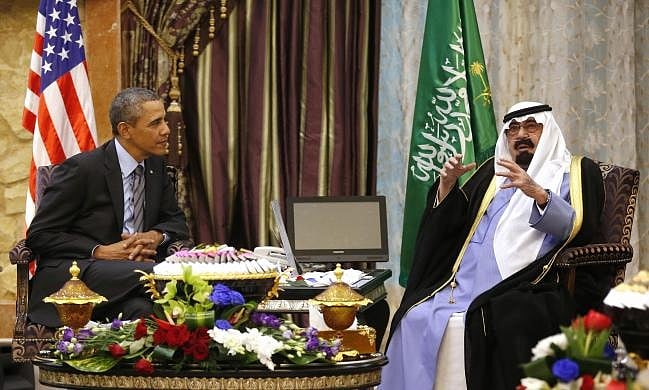
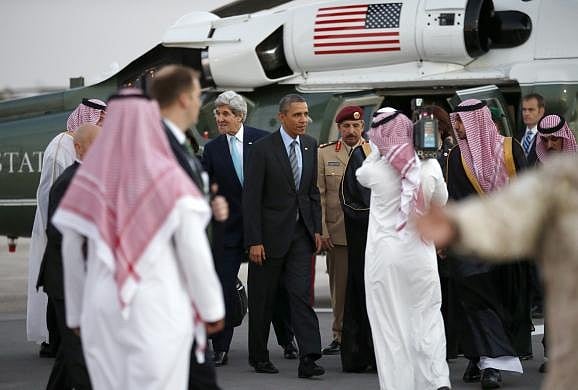
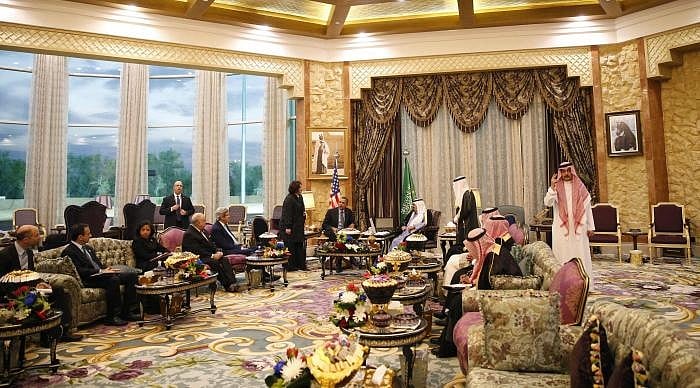
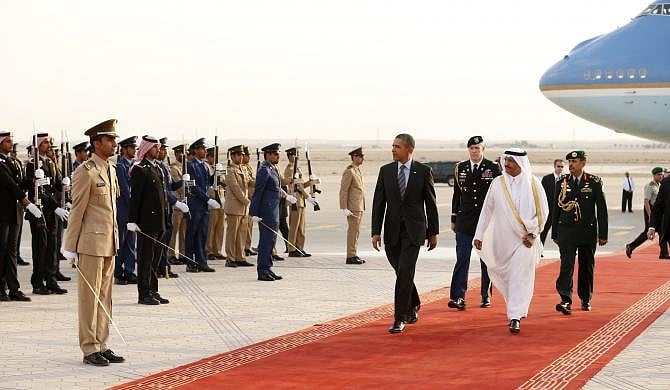
The elderly king, accompanied by a number of senior princes, had what appeared to be an oxygen tube connected to his nose at the start of his meeting at his desert farm at Rawdat Khuraim northeast of the capital Riyadh, witnesses said.
Obama and King Abdullah said in plush chairs and talked to each other through translators. The king, dressed in formal robes and head covering, appeared alert and engaged.
The US delegation seated at Obama's side included US Secretary of State John Kerry and National Security Adviser Susan Rice. The leaders made no public statements.
Saudi Arabia wants the United States to shift its position on support for Syrian rebels, particularly Washington's reluctance to supply them with surface-to-air missiles, sometimes known as manpads.
Overwhelmingly Sunni Muslim Saudi Arabia is backing the insurgents in their battle to oust Syrian President Bashar al-Assad, who is supported by Riyadh's rival, Shi'ite power Iran.
While Saudi Arabia, the world's largest oil exporter, supplies less petroleum to the United States than in the past, safeguarding its energy output remains important to Washington, as does its cooperation in combating al Qaeda.
Deputy National Security Adviser Ben Rhodes said coordination with the kingdom on Syria policy, particularly regarding providing assistance to the Syrian rebels, had improved.
"That's part of the reason why I think our relationship with the Saudis is in a stronger place today than it was in the fall (autumn) when we had some tactical differences about our Syria policy," he told reporters on Air Force One.
But he added Washington still had concerns over the supply of manpads to rebels, and that one of the main topics Obama and Abdullah would discuss would be how to empower the moderate opposition to counter Assad and isolate extremist groups.
King Abdullah and his family believe it is a strategic imperative to end Assad's rule to block what they see as a threat of Iranian domination in Arab countries, a view not shared by Washington.
The Saudis hope that by strengthening the rebels, they can change the balance of power on the battlefield enough to make Assad's main foreign backers more open to the idea of a political transition that involves a change of government.
However, Obama has shown himself wary of being drawn into another conflict in the Muslim world after working hard to end or reduce American military involvement in Iraq and Afghanistan.
IRAN FEARS
The Saudis also want more reassurance on American intentions regarding talks over Iran's nuclear program, which might eventually lead to a deal that ends sanctions on Tehran in exchange for concessions on its atomic facilities.
Riyadh fears such a deal could come at the expense of Sunni Arabs in the Middle East, some of whom fear that Shi'ite Iran will take advantage of any reduction in international pressure to spread its influence by supporting co-religionists.
An editorial in the semi-official al-Riyadh newspaper on Friday said Obama did not know Iran as well as the Saudis, and could not "convince us that Iran will be peaceful".
"Our security comes first and no one can argue with us about it," it concluded.
Rhodes said Washington would not ignore Saudi concerns about Iranian action in the Middle East while it pursued a deal on Tehran's nuclear program.
"We'll be making clear that even as we are pursuing the nuclear agreement with the Iranians, our concern about other Iranian behavior in the region, its support for Assad, its support for Hezbollah, its destabilizing actions in Yemen and the Gulf, that those concerns remain constant," he said.













