Published :
13 Aug 2011, 08:06 PM
Updated :
10 Aug 2022, 05:16 PM
By Arshad Mahmud
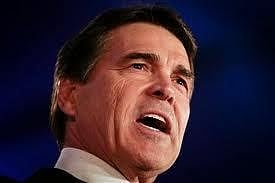
Washington, Aug 13 (bdnews24.com)—The American media has dubbed him as an "800 pound gorilla" and it is largely because of his hard charging way he governs his state that has earned him the sobriquet.
So it is no wonder why Texas Gov. Rick Perry's entry into the presidential race has shaken the Republican base, especially at a time when the present cast of GOP candidates including former Massachusetts governor Mitt Romney and Congresswoman Michelle Bachman has failed to generate much enthusiasm among the conservatives.
Needless to say Perry's candidacy has caused a big headache for Obama and his advisers. Despite his ebbing popularity, most analysts so far agreed that the other Republican candidates were no match to Obama's charisma and charm.
Perry's formal announcement to enter the race on Saturday came nine months after he publicly said he was not interested in running in 2012 election.
So what changed his mind? Analysts say he must have been emboldened by the falling popularity rating of President Obama caused by the faltering economy and his inability so far to make a dent in the bleak job market. Furthermore, economic observers predict the unemployment scenario is unlikely to improve by the time the election is held in 18 months time.
By contrast Perry has proved to be a better manager of the economy in Texas and that has set him apart from other Republican candidates.
In Perry and the state he has led for more than a decade, Republican voters are being offered the Platonic ideal of the GOP model for economic growth — low taxes, scant regulation and limited public services.
Texas has no income tax, ranks 46th overall for the taxes it collects per capita and has the strongest job growth in the country. The state has accounted for about 37 percent of the net new jobs in the country in the past two years.
The contrast with Obama — and GOP rival Mitt Romney — extends beyond policy, to Perry's profile as a swashbuckling former Air Force pilot from West Texas. He became governor in 2000 after George W Bush quit governorship to run for president.
At 61, Perry is a gun enthusiast who carries a weapon when he goes jogging. For 11 years, the longest tenure of any Texas governor, he has unapologetically presided over the most active death-penalty regime in the country. These are the other qualities that made him the darling of the hardcore Republicans.
Last weekend he hosted a prayer session in a Houston stadium over protests from critics who said it breached the barrier between church and state.
Perry not only defends the Texas approach but has taken the lead in resisting the Obama administration's activism on health care, education and the environment, going so far as to raise the spectre of secession from the union.
"On the one side you have the Washington way of doing things — big spending and the idea that the heavy hand of government has to be present in economic life," Joshua Trevino of the conservative Texas Public Policy Foundation told the Washington Post. "And on the other hand is the model of very limited government and explicitly low taxes. That is such a stark contrast."
Garnet Coleman, a Democratic state legislator from Houston, sees the contrast from the other side. The Texas approach, he said, is "that you can step on the feet and hands and neck of your citizens and still make people rich and have low taxes. This is the new model and Perry is saying [to the rest of the country], 'let me show you how to do this.' "
Perry is eager to set the two models side by side. "If you want to just get down to the pure epicentre, the nucleus of the problem in Washington, D.C., is they're spending too much money," he said in an interview with Time magazine this week. The Texas alternative, he said, is to "have a tax structure that's fair, and as low as you can have it, and still deliver the services that the people require."
If Perry has any weak spot in this regard, it is that Texas relied heavily on federal stimulus funds to balance its budget, despite Perry's criticism of the initiative.
Texas ranks relatively low in its per-capita reliance on federal funding. But this is set to change under the health-care law, which will result in a surge of federal dollars to cover most of the cost of expanding Medicaid (a program to support the poor) eligibility in the state.
bdnews24.com/am/bd/0305h