


Published : 01 Jan 2020, 10:12 AM
Updated : 08 Apr 2022, 02:18 AM


Kim also said the world would witness a new strategic weapon “in the near future,” according to the North’s official Korean Central News Agency, though no details were provided.
North Korea has not conducted a long-range missile test or a nuclear test in more than two years. Kim had announced his moratorium at a time when he hoped negotiations with the United States — and his budding personal relationship with President Donald Trump — would prompt the United States to begin lifting crippling sanctions.
Trump, who has met Kim three times, has often cited the North’s restraint as a major diplomatic achievement.
The North had set a Dec 31 deadline for the United States to make at least some concessions, complaining that its 18 months of diplomacy with Trump had yielded limited results. And for weeks, US officials feared Kim might test an intercontinental ballistic missile, or ICBM, to make his point.
During the party meeting on Tuesday, Kim said his country “will shift to a shocking actual action” that will make the United States “pay for the pains sustained by our people,” the North Korean news agency said.
It remained unclear if a test was imminent. It is possible that Kim’s announcement on Wednesday is, by itself, the warning shot he wants to send to prod Trump, on the eve of a presidential election year, to begin lifting sanctions.
All of the North’s state media gave prominent coverage to Kim’s remarks, indicating that they may have replaced an annual New Year’s Day speech that he had been expected to deliver. In its New Year’s Day edition, the North’s main party newspaper, Rodong Sinmun, filled its front page with Kim’s remarks, including an exhortation to his people to “foil the enemies’ sanctions.”
Kim, who had hoped to shift his focus to finally reviving his country’s economy, has been growing frustrated in recent months as his negotiations on denuclearisation with the Trump administration have stalled.
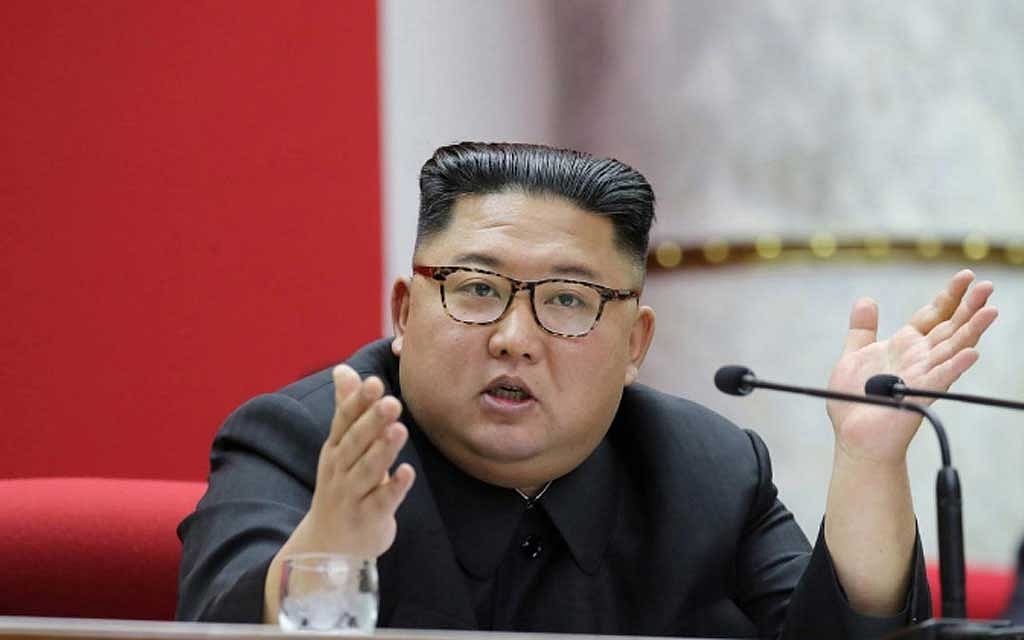
He made the latest remarks about the moratorium on Tuesday, the last day of a four-day meeting of the Workers’ Party Central Committee, the North’s highest decision-making body. The remarks threatened a major shift in North Korean policy.
He stressed that North Korea “should more actively push forward the project for developing strategic weapons” now that Washington’s “gangster-like acts” have stymied economic growth.
The unprecedented rapprochement between the United States and North Korea began nearly two years ago, after months of nuclear and ICBM tests and threats from both sides. Two months after Kim announced his moratorium — saying he had now completed his nuclear force — the two leaders met in Singapore in June 2018 in the first summit meeting between the two countries.
The summit ended with a commitment to “work toward complete denuclearisation of the Korean Peninsula,” but the pledge was never understood the same way by the two sides. The administration insisted that meant Kim would give up his nuclear weapons, his stockpile of fissile material and his missiles, but the North argued that it also meant the United States would withdraw troops and offshore ships and submarines that could launch nuclear weapons.
Subsequent negotiations have failed to close the gap.
On Tuesday, Kim addressed denuclearisation saying, “If the US persists in its hostile policy toward the DPRK, there will never be denuclearisation on the Korean Peninsula,” using the initials for the North’s formal name, the Democratic People’s Republic of Korea. “The scope and depth of bolstering our deterrent will be properly coordinated depending on the US future attitude to the DPRK.”
That remark, and Kim’s reluctance to clarify when North Korea would officially resume testing, indicated that he might still be open to further negotiations with Washington.
While the North has demonstrated that its fleet of missiles could likely reach parts of the United States, the country still has not shown it could design a nuclear warhead that would survive the heat and huge forces that come with re-entry of a warhead into the atmosphere.
Secretary of State Mike Pompeo said on Tuesday night that the Trump administration continued to hope that Kim would “take a different course.”
“President Trump came into office with the threat of war from North Korea real, and a true concern for the American people. He took a tack — we said we can deliver a better outcome for the people of North Korea,” Pompeo said in an interview with Fox News.
“We’re hopeful that Chairman Kim will make the right decision, and he’ll choose peace and prosperity over conflict and war,” he added.
© 2019 The New York Times Company










