


Published : 05 Mar 2015, 05:48 PM
Updated : 23 Apr 2022, 12:26 PM


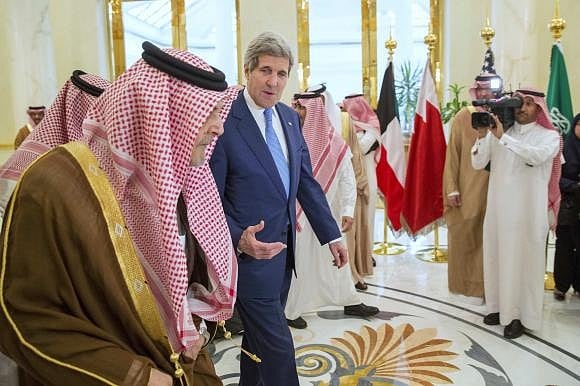
Kerry arrived in Riyadh late on Wednesday from Montreux, Switzerland, where he said he had made progress in talks with Iranian Foreign Minister Mohammad Javad Zarif.
China, one of the six nations involved in the Iran negotiations, which aim to establish a framework accord by late March, said on Thursday an agreement might be at hand.
"We do think that it's a last stage and hopefully we could reach an agreement," said Wang Qun, director general of the arms control department of China's Foreign Ministry.
Gulf countries, like Israel and many Western states, fear that Iran is using its atomic program to develop nuclear weapons capability, something Tehran denies.
Sunni Muslim Saudi Arabia regards Shi'ite Iran as its main regional rival and the two countries back opposing sides in wars and political struggles in Syria, Iraq, Bahrain, Lebanon and Yemen, often along sectarian lines.
As such, Saudi Arabia and its allies worry that the mooted atomic accord will not stop Iran from gaining the bomb. They are also concerned that it would lift international pressure on Tehran and give it more room to intervene in regional issues.
The Baghdad government, which is close to Iran, said on Thursday it believed the nuclear negotiations would prove fruitful.
"We believe these (talks) will lead to a peaceful solution and will resolve controversial points," Iraqi Foreign Minister Ibrahim al-Jaafari told a U.N.-sponsored conference in Geneva.







