


Published : 20 May 2014, 11:15 PM
Updated : 19 Oct 2022, 07:29 PM


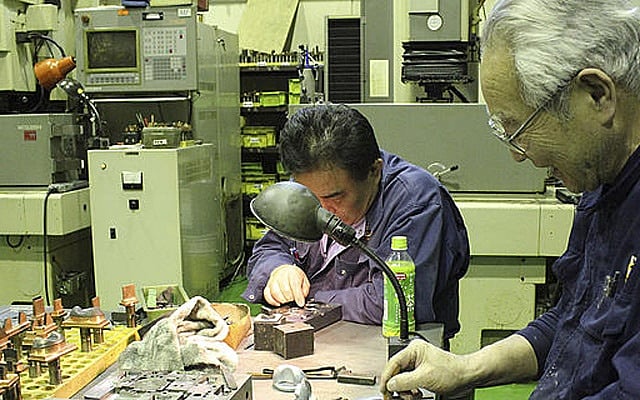
And through new research, several promising solutions have already begun appearing on the horizon.
These days, Hiroshi Kobayashi of the Tokyo University of Science is working on the design of a machine that helps bed-ridden people get up from the bed and another that helps them sit on and get up from the toilet.
The project, that years ago would have seemed unreal, is one of many that the private sector is working on in the Asian country where the number of very old population is rising.
According to data published in April by Japan's ministry of health, there are nearly 32 million Japanese above 64 years, a figure that represents 25 percent of the country’s population.
Out of these, 5.4 million require some kind of assistance, a figure that will be even higher by the year 2050, when the elderly will constitute nearly 40 percent of the society, according to government forecasts.
Among all of Kobayashi's projects, one that is already a reality is an exoskeleton designed especially for the elderly care sector.
The device that is now being mass-produced by the Kikuchi corporation, allows a person to lift 30 kg effortlessly.
Kobayashi specifically designed this system for carers after the head of a company dedicated to elderly care spoke to him about the lower back pain that the employees of the company suffered from by having to put the elderly in and out of bed or bath.
The equipment is perfectly suited to move dependents using a system of "artificial muscles".
These muscles, supported on the back of the person using the mechanism, become taut when the user blows through a reed, activating an injection of compressed air.
The subject then just needs to be held, while the machine does the rest, producing the strength of the spine muscles and pushing back the shoulders.
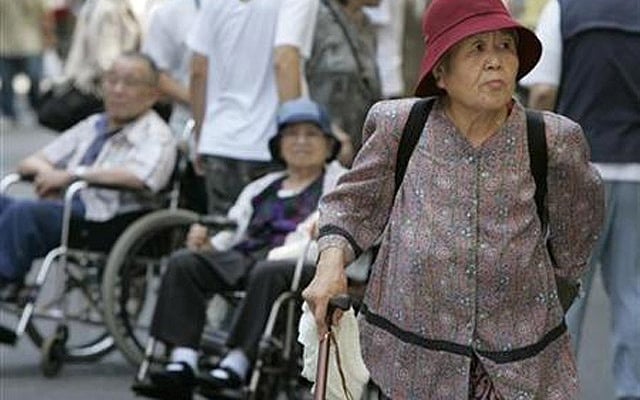
A woman strolls through Tokyo's Sugamo district, an area popular among the Japanese elderly, September 20, 2007. Credit: Reuters







