


Published : 24 Dec 2017, 01:26 AM
Updated : 19 Oct 2022, 03:53 PM


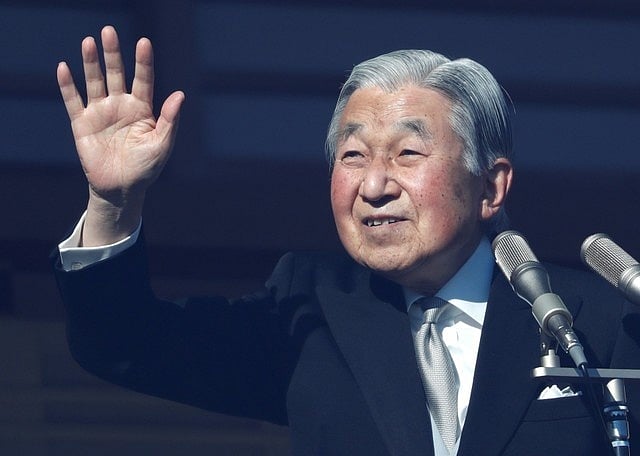
The emperor's birthday is traditionally marked by a national holiday and an address at the Imperial Palace, which opens to the public on the day.
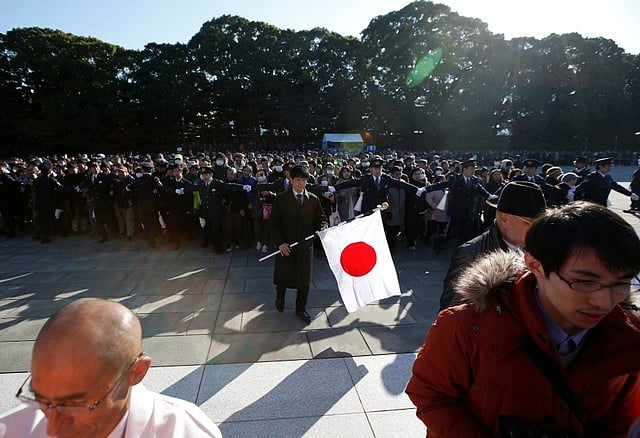
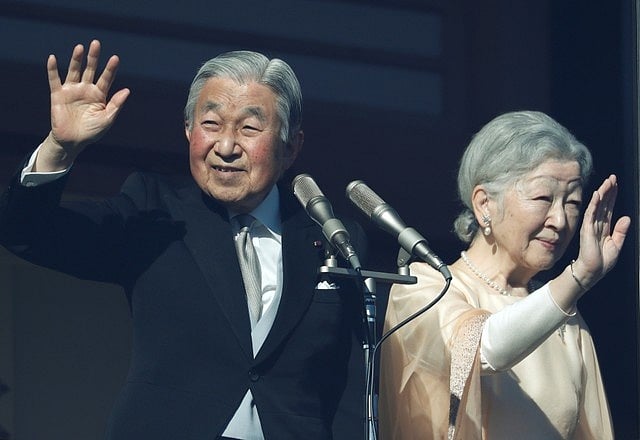
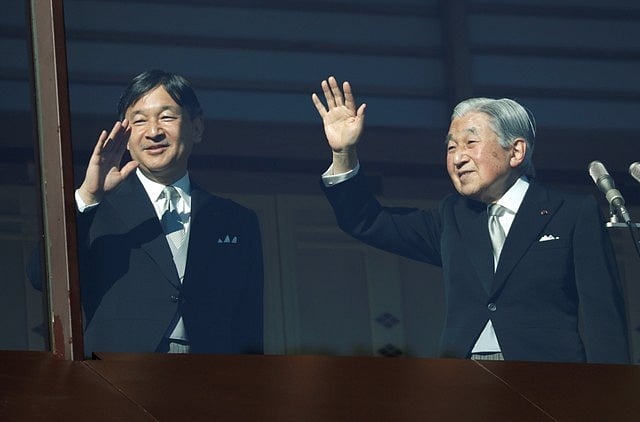
Well-wishers waved small Japanese flags and held up smartphones as Emperor Akihito, whose position is ceremonial with no political power, addressed them from a balcony, flanked by his wife and other members of the imperial family.
Well-wishers are led by Imperial Guard officers as they gather to celebrate Japan's Emperor Akihito's 84th birthday at the Imperial Palace in Tokyo, Japan, December 23, 2017. Reuters
"On this day as we face the cold, my thoughts go out to those who suffered from typhoons and heavy rains, as well as the victims of the Great East Japan Earthquake who continue to lead difficult lives," he said, referring to the 2011 earthquake and tsunami that killed and displaced tens of thousands on the country's eastern seaboard.
Japan's Emperor Akihito, flanked by Empress Michiko, waves to well-wishers who gathered at the Imperial Palace to mark his 84th birthday in Tokyo, Japan, December 23, 2017. Reuters
Earlier this month, a 10-member Imperial Household Council agreed that Akihito would step down on April 30, 2019, before passing the Chrysanthemum Throne to his eldest son, Crown Prince Naruhito.
In comments made to media, Akihito said he would use the remaining days of his reign to carry out his duties and prepare to "pass the torch to the next era."
Japan's Emperor Akihito, flanked by Crown Prince Naruhito, waves to well-wishers who gathered at the Imperial Palace to mark his 84th birthday in Tokyo, Japan, December 23, 2017. Reuters
Japan passed a law this year allowing him to step down in a one-off provision as existing law did not provide for abdication.
The last time a Japanese emperor abdicated was in 1817.
Throughout his reign, Akihito has consistently urged the Japanese never to forget the horrors of war. His conciliatory remarks contrast with gestures made by Prime Minister Shinzo Abe, who has adopted a less apologetic tone over Japan's past military aggression.










