Published : 18 Jan 2013, 08:32 AM
Updated : 09 Aug 2022, 10:07 AM


Algerian forces stormed a desert gas complex to free hundreds of hostages, including Japanese, but 30 were killed in the assault along with at least 11 of their Islamist captors, an Algerian security source told Reuters.
"The action of Algerian forces was regrettable," Chief Cabinet Secretary Yoshihide Suga said earlier on the day, adding Japan had not been informed of the operation in advance.
Three Japanese workers of Japanese engineering firm JGC Corp have been confirmed safe but 14 others remained unaccounted for, he said.
Abe will hold a scheduled summit with the Indonesian President Susilo Bambang Yudhoyono and a joint news conference on Friday and then fly home.
"Agreement has been made with the Indonesian side so that events, after the summit meeting and a joint news conference, will be cancelled," Deputy Chief Cabinet Secretary Katsunobu Kato told reporters on Friday.
Abe was scheduled to give a policy speech later on Friday in which he was expected to push for closer ties with Southeast Asia to counter increased tensions with neighbours China and South Korea over territorial disputes.
Arrangements are now being made for Abe to return to Japan before dawn on Saturday, instead of Saturday evening, said Kato.
Abe needs to handle the hostage crisis carefully and not attract domestic criticism ahead of an upper house election in July, which he needs to win to push forward his policies including the easing of constraints on the military under Japan's pacifist constitution.pic-6...Top-3Britain to drift out of European Union without reforms: PM
Photo
Thu, Jan 17 2013
By Andrew Osborn and Peter Griffiths
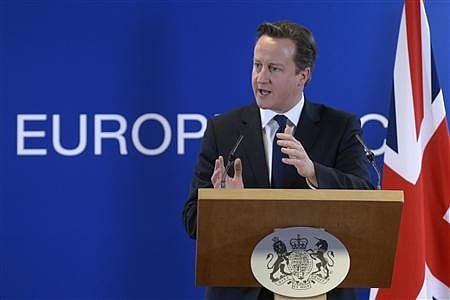
LONDON (Reuters) - Britain will drift out of the European Union and the European project will fail unless the bloc tackles three serious problems it faces, British Prime Minister David Cameron had planned to say in a postponed speech on Friday.
Cameron delayed the long-anticipated address on Europe at the last minute to deal with the hostage crisis in Algeria. Aides said a new date and venue would be announced later.
He had been expected to spell out his plans to renegotiate Britain's membership of the 27-nation bloc and to promise a rare referendum on any deal he struck. Some politicians said that move could redefine Britain's role in the world, alienate key allies and determine Cameron's own political fate.
Cameron had been planning to say that the EU faces three major challenges: the euro zone debt crisis, faltering competitiveness and declining public support, particularly in Britain.
"If we don't address these challenges, the danger is that Europe will fail and the British people will drift towards the exit," Cameron had been due to say, according to extracts of his postponed speech released by his office.
"I do not want that to happen. I want the European Union to be a success and I want a relationship between Britain and the EU that keeps us in it."
But, he intended to say there was growing frustration about the widening gap between the EU and its 500 million citizens and that the status quo was untenable.
AUSTERITY
Harsh austerity measures imposed in many European states are making the problem worse, Cameron planned to say.
"There is a growing frustration that the EU is seen as something that is done to people rather than acting on their behalf. And this is being intensified by the very solutions required to resolve the economic problems," he was going to say.
"People are increasingly frustrated that decisions taken further and further away from them mean their living standards are slashed through enforced austerity or their taxes are used to bail out governments on the other side of the continent."
Cameron, who wants to stay inside the EU, has argued that the upheaval created by the euro zone crisis has given Britain a chance to renegotiate the terms of its membership of the bloc.
There was no mention in the advance extracts of a possible referendum on Britain's role in Europe.
International allies, business leaders and political rivals have all warned that the debate over Britain's future in Europe risks isolating London and could pave the way for a British departure from the EU after 40 years.
But Cameron had been due to say it would be wrong to avoid the debate on reforming Europe and Britain's place in the Union and that voters across the continent were losing patience with the EU.
"There is a gap between the EU and its citizens which has grown dramatically in recent years and which represents a lack of democratic accountability and consent that is - yes - felt particularly acutely in Britain," he was to have said.
Under pressure from all sides, Cameron must tread a delicate path on Europe, a politically toxic issue that brought down former prime minister Margaret Thatcher, and will have to confront the problem in the coming weeks.
A vocal minority in his Conservative Party is lobbying for a referendum on whether Britain should leave the EU. A bigger group of mainstream Conservatives on Wednesday published a list of areas where it wants to reclaim powers from the EU.
The popular mood has hardened against Brussels in recent years in Britain, polls suggest.
The UK Independence Party, a fringe group that wants to quit the EU, has pulled ahead of the Liberal Democrats, Cameron's pro-EU junior coalition partner, in some surveys and Cameron is trailing in the polls before an election due in 2015.
In his postponed speech, he had been due to urge EU states to join him in addressing his worries about the Union's future.
"Europe's leaders have a duty to hear these concerns. And we have a duty to act on them," he was going to say.